Episode 283 · July 19, 2025 · 15:14
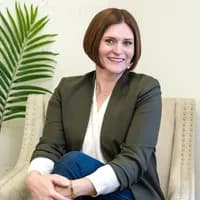
Kalaida Holmes
Former Chief Human Capital Officer at AmeriCorps, AmeriCorps
Beyond HR: Why Financial Acumen is Your Strategic Superpower
Episode 283 · July 19, 2025 · 15:14
Beyond HR: Why Financial Acumen is Your Strategic Superpower
Key moments
In Kalaida's words
“you need to always show me the money. And so I don't present ideas if I can't somehow tell you what the cost savings would be and what it would cost in in terms of resources, time, and money.”
“one of the things we did was I looked at the makeup of the workforce, and AmeriCorps is quite different from many other agencies. Their average age is about 35 to 40, when most agencies you're talking 50 to 60 or a lot higher... so we had to support them differently.”
“I went and found calculators developed by think tanks and well-known research organizations like Gallup, Forbes, where they could show you that, hey, if you reduce turnover or if you improve engagement, here's how you can calculate that dollar saving.”
Transcript
Read the transcript2,737 words
HostWelcome to the Built by People podcast, where we share the stories and insights of the world's top HR leaders. Join us as we dive deep into the minds of HR executives, uncovering their strategies, challenges, and triumphs in shaping today's workforce. I'm excited to welcome Kolata to the Built by People podcast. Thanks so much for joining us today.
GuestAwesome. Thank you all for listening. So my name's Kolata Holmes, and I have about 20 years of overall HR experience from various levels of human capital. My career did not start in HR. I actually have a master's in logistics. When we completed the program, they asked, what do you want to do with this experience and this investment we made? And I decided I wanted to go into HR, originally training and equal employment opportunity were the areas I was interested in. Over time, I developed an affinity for strategy and data analytics and got a great opportunity to create the first human capital strategy for PEO Ground Combat Systems at the time. And then after about 7 years or so there, I decided I wanted to move to the D.C. area, spent some time with the Environmental Protection Agency Office of Inspector General, and also was working on creating their first workforce plan, revised their performance management system, and really just had some great opportunities to see human capital at another agency at a headquarters level. And then I went into consulting, so spent some time ping-ponging between some of the Big Four. I was at Deloitte. Twice, and then PwC and some others doing different projects. And so I really got to literally see the world doing training, implementation, and change management for Navy Medicine, ServiceNow, and USAID. I've always, and we'll talk about this a lot more later, I always sought opportunities that were challenging, but also would allow me to learn just something new so that I can continue to add value. Some people ask, why did you move around so much? That was the reason. I want to always make sure that I'm adding value and can participate in any conversation. And sometimes that requires moving. I came back to the government during COVID to Veteran Affairs, where I was their director of human capital strategy and strategic planning, I think was the title at the time. There, really worked on some major initiatives around employee engagement and employee experience in the organization. And then I decided I was up for new challenges and accepted the role as Deputy CHICO at AmeriCorps. Where I, for the first time ever, was doing everything at once, growing the team from 15 to about 40-some people over the 3 years and really taking on some major strategic initiatives. And right now, government is in flux, and so I have left AmeriCorps, and so I'm now working with a technology firm in order to continue to provide federal services, but from a different lens. So, it's been a very interesting career, but I'm very thankful for the journey and opportunities I've had.
HostPaulette, how did you discover the importance of understanding business financials as an HR leader, and what specific knowledge challenges did this knowledge help you overcome?
GuestYes. So, earlier I talked about starting in this program around logistics. It was called the AMC Fellows, or Army Materiel Management Command. And as a part of that program, they really focused on the idea of us being cross-functional leaders. They were like, regardless of whatever area you choose, whether it's finance, logistics, or HR, you should know a little bit about the world around you so that you could be more helpful. And one of the things we did as a capstone project was we had to develop these briefings about an initiative we wanted Army to invest in and brief to someone pretending to be a general. And they really, like, some of these are so critical. It was like being in front of Judge Judy, the way they would question and ask. And so what you were really expected to do was to demonstrate well-rounded knowledge of not not only why you want to do that thing, what is the context of it? So for example, if you're talking about building a community center, what is that in the context of the community? How big is the population? How many people would participate? What barriers might be in place? So you can do pros and cons and financial analysis. And then the biggest thing I was told right away, which relates back to your question, is you need to always show me the money. And so I don't present ideas if I can't somehow tell you what the cost savings would be and what it would cost in in terms of resources, time, and money. They're all resources, but making sure I can paint that picture and then say, at the end of this investment, here's the cost savings you'll find, here's the employees that you can realign. Early in my career, I got to create a personnel database, and I was able to use that at PEO GCS because we were manually counting people. And as you can imagine, manually trying to keep track of people meant that every day you got different answers. And so I had this idea to build a system which would take resources. It— we had a Scrum team, a business analyst, and all of that. But I was able to show them the cost of 3 people making at the time an average of $68 to $70 an hour, spending 4 to 5 hours every 2 weeks, like, counting people manually and then recounting them the next week wasn't really the best use of government funds, and we could create significant savings by making this investment. That was so successful that not only did my organization adopt the system, they actually expanded it across the organization so that others could experience that cost savings. So for me, it's always about show me the money.
HostCan you share a specific example where your understanding of employee personas across different levels of the organization led to a more strategic HR initiative rather than just reacting to data?
GuestYes. So often we talk generally about employee engagement or employee satisfaction or employee, and then we'll come up with some one-size-fits-all strategy. One of the things I did was I looked at the makeup of the workforce, and AmeriCorps is quite different from many other agencies. Their average age is about 35 to 40, when most agencies you're talking 50 to 60 or a lot higher. And they also have longer tenures, which is not the same at AmeriCorps. So you're dealing with this mid-career yet new workforce. So they didn't need the same kind of training a mid-career person would need. Say, at a Department of Defense or Veteran Affairs, who already had that buildup through the government and the HR training and the background and development. No, they were coming in from these other private industry sectors and other places, so we had to support them differently. So, one of the things we did was, first, we had a very extensive change management strategy, but our comms within that was much more robust than any agency I've ever worked for. Because we realized the gap in the people we were talking to was very different. When you're at other agencies or you're rolling out new initiatives, there's actually less comms around those initiatives because of the fact that they already have that baseline knowledge and experience, and there's a bunch of senior employees around who could mentor them and help them deal with initiative as well. But we didn't have that, so we really had to provide much better communication. Additionally, we realized when we thought about leadership development, we couldn't just have one program at the end of your career or almost at the leadership level or a one-size-fits-all. So, we identified 3 different leadership programs at every level. So, at the entry level, the mid-career level, and senior level to address all of those different needs. And we worked with the vendors to make sure we were addressing those gaps, especially in that mid-career yet new, which is a little different for the government that we had an abundance of at AmeriCorps. And because of that, we were able to really reach the entire workforce and people really started to feel more like their differences were being heard and we were still being inclusive and reaching an outcome, which was to develop leaders in AmeriCorps, which was one of our strategic goals to support several audit findings as well as some congressional recommendations for our
Hostagency. What approaches have you found most effective for articulating the ROI of people-focused initiatives, especially when speaking with finance teams and CFOs?
GuestYes. So I have found that the ROI can't just be the people words, right? People will be happier, people will work here longer. No, you have to tie it back to data and research and really use words that they are going to care about, like time to fill, 'Cause sometimes it's financial data, and sometimes you start with these HR metrics or data points that then lead you to financial stories, but time to fill, because if you can't fill a job quickly, then that's a gap in being able to provide a service or a resource to some other customer or client. So then you also want to talk about things like vacancy lag, productivity. But one initiative that I can share specifically about is we were redesigning an onboarding system in an organization.. And we found that the onboarding process had so many gaps that was impacting employee engagement. And we decided, I wanted to show that there is money attached to this because the organization was making a multimillion-dollar investment. So what I was able to do is I said, let's take a conservative estimate and say this program only improved 10% of the workforce's engagement. And I think the average engagement for most companies was about 60%, right? That's the high number. So we said, let's just say 10.. And then we said, if these 10% of the workforce decide to stay longer, you don't have to recruit again, and all of these other factors, and produce more work that actually is more effective in some ways, it actually would result in multimillion-dollar savings. Now, did I do all that math myself? No. And something I would encourage your listeners to do is remember that we are not really inventing anything. A lot of what we've done, there are experts and researchers who've already done the analysis. And so what I did to get to those dollar savings is I went and found calculators developed by think tanks and well-known research organizations like Gallup, Forbes, where they could show you that, hey, if you reduce turnover or if you improve engagement, here's how you can calculate that dollar saving. And I told everyone where I got it, so I didn't pretend that I was some mathematician, but I made sure that people knew that these are reputable resources and something that we could rely on. And it was at the point where they were deciding if we should continue with this multimillion-dollar investment, and having this data to show them the potential impact helped them make the decision to continue on. So, I would say always try to find some way to get to the money. And I know people get uncomfortable. I don't want to promise that. I don't want to make assumptions. But it's not about promising it. It's a projection, right? Like, you can only do it based off what you know, and there'll be other environmental factors and changes. But if you use good resources, you're upfront about your assumptions and your data, people will listen to you and come to the table with that. Another thing is just making sure that if you're asking for more people, because HR tends to be underfunded, or for more resources for a project, you are going to have to come to the table with either some sort of ROI or a trade-off. We're going to end program X to bring in program Y, or this will allow us to free up these resources to do something else. So, make sure that is always part of your pitch to either continue a program or to get something new in your organization.
HostHow have you balanced responding to new legislation or compliance requirements while maintaining a strategic focus on an organization's unique business needs?
GuestYeah, so that's always a fine line because sometimes there's legislation that comes out and it's so quick, you have to execute right away or within a day. So you don't even really have time to figure out how it fits in. You just have to do it. But to the best of my ability, I usually try to look at that and say, how does it fit into our long-term goals? And so, as I mentioned, I've been doing strategy for about 20 years, even if you're in a different organization, but we generally are in HR strategy trying to improve some of the same things. Like, we're always trying to retain more people, develop more people, make sure people feel good about the workplace and themselves. And so, like, Psychological safety is a term that I wouldn't have talked about on a strategy like 10 years ago or even 15. Most of the time you can find the fit for new things into how they fit into your long-term strategy and your goals. And then there's times where they really don't, or they might be opposite of what you think your goals are. And the one example I'll give is the shift to move away from the word DEIA. And so, as human capital professionals, we had to think about what does that mean? Does that mean we stop being transparent? Does that mean we stop being consistent and compliant? No. So when we really thought about it, it really didn't change the way we did business. We just had to stop using a term. But at the end of the day, if you are a good human capital professional, you're always trying to be inclusive. You're promoting belonging, you're complying, and if you're following laws and it's consistent, you are still in that way making sure that the environment, despite not using the terms, is diverse and equitable. If you're hiring the best talent, from all sources, you're still gonna achieve that diversity. And if you're consistent, compliant, and transparent, you're always gonna achieve that equitability and inclusivity. So that's really what I've tried to do is always look at what is my mission, what are the things I hold valuable as an HR professional, and what does my organization want to accomplish? And then I basically plug it in. And that's also something really with my staff, helping them understand like, yes, we're using new terminology, but does that change our job in any way?
HostActually not really. What parting advice would you like to
Guestshare with our community? I would say always be curious and willing to learn because to be able to participate in some of the financial conversations or understand your personas or the needs of your different organizations, you're going to have to learn about these different things as well as ask questions and develop a good peer group along with that curiosity. 'Cause sometimes there were things where I truly didn't know, I couldn't grasp the concept, and being able to call someone to say, help me walk through this so we can come up with a solution together, was very helpful for me and allowed me to achieve many career successes. So I would say a combination of being curious and maintaining a good network and peer group is going to be critical for any leader, to be quite honest, in order for you to be successful and continue to add value to your organization.
HostGladys, thank you so much for joining us today on the Built by People podcast.
GuestThank you so much for having me.
More conversations like this