Episode 319 · September 5, 2025 · 11:13
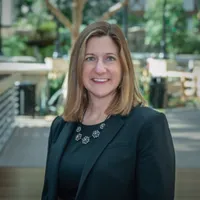
Kristin Lewandowski
VP Global Talent Engagement & Recruiting, Quantum Metric
Unlock HR Superpowers: Authenticity, Empathy, and Culture in Hypergrowth
Episode 319 · September 5, 2025 · 11:13
Unlock HR Superpowers: Authenticity, Empathy, and Culture in Hypergrowth
Key moments
In Kristin's words
“I walked in the room and there were, like, 200 people there, and it hit me that I was really responsible for bringing so many of them into the company.”
“The adage of like HR stands for Hardly Recognized kind of went out the window. It was like, wow, like this happened. All this work that I was so in the trench just doing the thing that I hadn't taken the time to turn around and realize what was being built while the work was being done.”
“I think authenticity is a superpower. Empathy is a superpower.”
Transcript
Read the transcript1,873 words
HostWelcome to the Built by People podcast, where we share the stories and insights of the world's top HR leaders. Join us as we dive deep into the minds of HR executives, uncovering their strategies, challenges, and triumphs in shaping today's workforce. I'm excited to welcome Kristen to the Built by People podcast. Kristen, thank you so much for joining us today. And as a starting question, I always love to ask if you could share a little bit more about your career journey.
GuestSure. Thanks for having me, Dave. Yeah, so this is actually my second career. I am currently the VP of Talent and Recruiting at Quantummetric. But act one, I actually got my master's in psychology, and I really thought I was either going to go into clinical or industrial organizational. And the first phase one of my career, I was really nurturing that more clinical side, and I was a Medicaid service coordinator, which essentially was social work focusing on people with developmental disabilities and serving an underprivileged population. Um, but it burnt me out. I was there for about a decade and then had a family, started to reconsider like what I wanted to do and entered like this era of career exploration. So I started a wellness company with a friend, sold it to her after about a year. I did wine sales for a small boutique distributor and ended that after about a year. So it was just kind of like figuring out what I wanted to do and, um, ultimately led me to an ops position in a biometric screening company and it really brought me closer to that industrial organizational side of like my passion for people and, and developing people, hiring teams, and like creating internal and external communications, that kind of stuff. So, had a family, had to move, then that brought me to a part-time position as a recruiter. And it was a small recruiting consultancy, very focused on startups and scale-ups, and I absolutely fell in love with it. I loved it. It was my first big account was Boston Globe Media, and I hired their whole stat and news technical team. It just was so exciting to be a part of tech. And then I went on to go full time. I transitioned to being like a more seasoned consultant and recruiter, worked with dozens of startups, and really just felt like I was missing out on the like fruits of my labor. You know, I was working with some really big companies that were getting funding and I wasn't really part of it. You know, I was kind of on the outside. So, I had this goal that I wanted to go internal and I reached out to the CEO of Quantummetric, actually trying to sell recruiting services to him. And he was like, actually, how about I hire you? So, after about 6 months of going back and forth, I joined Quantum right after they secured their $20 million Series A. That was in 2018. I was half of the HR team at the time, super early days hire. I think I was like 40-something as far as headcount. And, um, by the end of 2019, I had hired about 100 people. 2020, had a small team, hired 100 more people. Uh, we became the first unicorn of 2021 with our $200 million Series B. And that just was like this massive confirmation that I was where I belonged. So, I'm still here. I'm still leading the recruiting talent team. I served as our interim chief people officer for a year while we reorganized and restructured. And then, I've just worn a ton of hats over the years. So, I oversee employee resource groups, my team owns employer branding, and I'm also an HR business partner for product and engineering.
HostKristin, thanks for that great introduction. Curious if you could tell us about a career-defining moment in your HR career.
GuestYeah, I think there's been a few. One I always go back to when I need to, like, remind myself of, like, how I got here and where I am, um, is really the beginning of 2020. I walked in the room of our first company kickoff since we had this, like, massive hypergrowth, and I walked in the room and there were, like, 200 people there, and it hit me that I was really responsible for bringing so many of them into the company. And we're remote first. So, when I joined and there was like 40 people, it was, you know, it was very intimate. It was very, you know, few people. And then I walked into a room the second, at the second CCO that I attend, and I didn't recognize some people. Like suddenly I was part of this huge organization. Like, to me it was huge. Of course, in the scale of businesses, 200 people isn't that much, but I just felt this overwhelming sense of, oh my God, like, I do? There's so many people here. We are responsible for giving them like a great experience as an employee. Like they believed in us and I just felt super overwhelmed. But also it was like, wow, like that's a big thing to do to, to be a part of something growing so fast. Later that night there was, um, we had an employee dinner and you know, there were these awards that the founder was giving out. There were founders awards. It was his first year. Giving out, um, and there's only 5 of them, and I received one of them. And the adage of like HR stands for Hardly Recognized kind of went out the window. It was like, wow, like this happened. All this work that I was so in the trench just doing the thing that I hadn't taken the time to turn around and realize what was being built while the work was being done. You know, and I think that there was a lot of imposter syndrome up until that point. And I probably still, but I had like convinced myself that I was like faking it till I made it. And in that moment it was like the becoming of like, oh, actually I'm a professional in this. This wasn't— I'm done with the career tour and like, I found what I'm good at.
HostKristin, can you talk about how that specific career-defining moment had an effect on both the company and the employees at Quantummetric?
GuestYeah, I feel like after that I had reached this awareness that I had the credibility and confidence to build more, to try more, to like venture outside of my like more limited hiring mandate. So looking into things like employer branding and making compelling arguments to invest in things like gosh, at the time, like just building out more in our rewards program and things like that, more benefits for employees and kind of stepping out of my comfort zone because I felt like, okay, we've, we've achieved a mastery here. How can I now take these 200 people that I'm staring at and make their experience everything that I promised during the interview process?
HostKristin, can you talk about a challenge that you faced in your career and how you overcame it?
GuestYeah, so there was a time, there was about a year where I served as an interim chief people officer here, and that was an enormous stretch for me because the majority of my life has been in this recruiting capacity where it's a lot of good news. Like, of course, there's a lot of rejection and there's really delicate, compassionate ways to deliver that. But when you step into that more classic HR side of the house, it does, it can get heavier, you know? And I realized pretty quickly that this is maybe my someday goal, but I don't think it's my today goal. You know what I mean? I think I come to this, um, the Peter Principle. And essentially what the Peter Principle is that we get promoted into our inadequacy. And that's why there are so many bad managers. And I don't, not to say I'm a bad manager, not a bad manager. I think I did a good job while I was in the seat, but what I realized was it was the recruiting side of the house that gave me the most joy for right now, and that's where I really need to stay and nurture. And it was a really humbling experience. There's so much that goes into HR. There's so much that goes into comp and benefits and like ER relations and things like that, that like you really need to rely on your experts and make sure that they're executing on things like self-care and not burning out. And I think like that time in seat was just such a, um, it was a great experience. I'm really proud of the work that the team was able to accomplish, but I'm also really glad to just now be focused in recruiting and talent development and, um, you know, promoting the company.
HostWhat's a legacy you hope to leave as an HR leader and why?
GuestYeah, so I actually asked my people team leader, like, if I were to hop on a rocket today, leave Quantum and everything behind, like, what would people say about me, you know, when I leave? And she said that my ability to build relationships and make people feel seen and heard, and I really thought about that. Like, what does that mean? You know, like, is that a skill? I think authenticity is a superpower. Empathy is a superpower. And if you're a recruiter and you can't sell opportunities or be an ambassador, if you don't believe in the company or the culture or the people, then you really should not be there. You know, like you have to stay where you can believe. And I'm going on my 7th year here now. So I would say I'm like a 7-year believer going strong., and the legacy I wanna leave is to just follow, like, or stay in the places that give you joy and stay in the places that you can believe in.
HostKristin, what parting advice would you like to share with our HR community?
GuestYeah, I found that a lot of the work of classic HR, um, the mental, emotional, personal work is, it can be similar to social work, like going back to like career number one for me. And there is just, there can be like a loneliness, right? Because you're dealing with some really sensitive issues within the business or with personal individuals that are going through a tough time or need additional support, and it's in a confidential space. So, you can't necessarily talk about it. You shouldn't in a lot of instances. So, you have to make sure you're giving yourself the space. To carry the load.
HostKristen, thank you so much for joining us today on the Built by People podcast. It was a pleasure to have you involved.
GuestThanks, Dave.
More conversations like this