Episode 280 · July 17, 2025 · 13:30
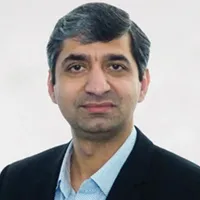
Eduardo de la Loza
CHRO, SABORMEX
Stop chasing HR trends: Culture is the operating system that powers your business.
Episode 280 · July 17, 2025 · 13:30
Stop chasing HR trends: Culture is the operating system that powers your business.
Key moments
In Eduardo's words
“people are at the core of business success.”
“one of my proudest achievements there was leading the implementation of SuccessFactors across the entire organization while also driving at the same time the ship toward a more agile, employee-centered HR model.”
“It was at the end a balance between, I will say, global consistency and local relevance, which was of course very hard, but that was really the difference to make all this transformation stick in the organization.”
Transcript
Read the transcript1,794 words
IntroWelcome to the Built by People Podcast, where we share the stories and insights of the world's top HR leaders. Join us as we dive deep into the minds of HR executives, uncovering their strategies, challenges, and triumphs in shaping today's workforce.
HostI'm excited to welcome Eduardo to the Built by People podcast. Thanks so much for joining us today. And as a starting question, I always love to ask if you could share a little bit more about your career journey. Journey?
GuestThank you for having me. It's been quite a journey, actually. I've spent over 20 years in the field of human resources, always driven by the idea that people are at the core of business success. So my career started with foundational roles in global companies like BASF and Yum! Restaurants International, KFC, Pizza Hut, Taco Bell, A&W, where I pretty much focused on compensation, organizational design, and HRIS. So my first steps into this technology, starting with very limited functionality at that moment in time, 20 years ago, but making some very good steps towards what we have today. And then a major turning point came when I joined Orbia, a global company with operations in over 39 countries, probably 42 today. There I led the— continent. I was also corporate HR business partner for some of our global functions. One of my proudest achievements there was leading the implementation of SuccessFactors across the entire organization while also driving at the same time the ship toward a more agile, employee-centered HR model. That experience really helped me shape my vision of HR. As a strategic enabler of growth and innovation. So later on, I joined Traxion as Corporate Director for HR and Safety, Health and Environment. Then the COVID came exactly at that moment. So it was a massive digital transformation project for me and for the organization that impacted roughly 70,000 employees. It taught me the importance of aligning HR strategy with operational performance and business results. In the recent years, I've taken on senior leadership roles, different companies, also serve as chairman of several corporate governance and compensation committees. Those roles have allowed me to influence culture, succession planning, executive compensation at the highest levels, and all kind of stuff, even recruiting and training for board members, which was a very rich experience. If I have to define my areas of expertise, I will say that include culture and change management, talent strategy, digital HR transformation, employee experience, governance, and people analytics. But more importantly, I'm passionate about building environments where people can thrive and feel a true sense of belonging. So that's me in a nutshell.
HostThanks for the great introduction. Can you share a specific example where you had to address a challenging cultural issue within an organization? And how your approach made a meaningful difference?
GuestAbsolutely. One of the most challenging cultural issues I faced was during my time at Klaxion, a company with over 7,000 employees, as I said before, and across multiple business units. The organization was growing very fast, but the culture wasn't keeping up. So it was fragmented, reactive, and highly hierarchical. So rather than launching a traditional top-to-down approach to change and culture, we flipped the script. We co-created a new culture narrative by listening to people at all levels in the organization, from operators, managers, the leadership team. And by doing this, these listening experiences, as I call them, these listening groups, we identified the specific behaviors that will enable agility, and trust across all the organization. This created a space for people to grow beyond job titles and take ownership in more flexible team-based environments. The result? Higher engagement, faster decision-making, and also a culture that people felt they could shape, not just follow.
HostWhat was the most difficult cultural transformation that you've led across the 37 countries that you've managed and How did you navigate the complexities of different regional perspectives?
GuestA very good question. Thank you for that. The most complex transformation was definitely at Orbia, where we had operations in almost 40 countries, 23,000 employees, and also I have to say 10,000 contractors, because that was also part of the equation. So we were trying to shift from this traditional silo-based HR function to a global digital employee experience-driven model. Each region has its own history, labor laws, cultural expectations, ways of doing things. So what worked in Germany didn't resonate in Brazil at all. So for me, the key was first humility, a lot of humility in co-creation. You have to be there where the action actually happens. In each business, I have to visit all of these countries and spend a lot of hours with them. We didn't try to impose a global culture. That is the way of big companies, right? I'm the big boss, so you need to align. We didn't follow that route. We definitely defined a shared purpose that was very powerful and allowed each region to bring it to life in their own context and in their own terms, right? So that helped a lot. Also, yeah, spending a lot of time on the ground was really helpful for me, coaching local leaders, facilitating cultural dialogues and all these kind of very open, very honest conversations, but also ensuring at the same time that all our HR tools, especially SuccessFactors, weren't just implemented but truly adopted. Adoption for me today is the biggest challenge in any system that you need to implement. So It was at the end a balance between, I will say, global consistency and local relevance, which was of course very hard, but that was really the difference to make all this transformation stick in the organization.
HostHow have you seen organizations prioritize trendy HR initiatives over cultural foundations, and what were the consequences that reinforced your belief that— Wow.
GuestOkay. So I've seen it more times than I I would like to admit, to be honest. One example, organizations rushing into this AI and people analytics and all the trends that we are seeing today without first building a culture of transparency and trust are doomed to failure. That's from my personal experience. The tech is powerful, I give you that, but without a strong cultural foundation, it actually creates fear. Instead of insight, instead of trust. Yeah, let's take Agile Squads, for example. That was one model that I implemented at Orbia. Many companies adopt this model because it's trendy, it works, but at some point, if your culture still rewards individual heroes, as I call them, or these heroics at an individual level, punishes failure, and clings to hierarchy, agility becomes a threat and not really a transformation, right? So yeah, at Orbia and everyone in my corporate governance roles and board roles, I've seen the opposite approach work. That is culture first, then tools. When your culture supports collaboration, feedback, learning, I believe me, every HR initiative from digital, structural, or procedural has a much higher chance of succeeding. That's why I always say culture isn't something you support, it's the system everything runs on.
HostIn your 20 years of experience, what cultural implementation strategy produced the most significant positive impact on the organization's performance and how did you measure the success?
GuestWow. So measure culture and measure the success. It's, for me, one strategy that's truly moved the needle was implementing a continuous feedback culture. Tied to employee experience moments. So not just annual reviews or these static metrics that you normally find in every organization, these KPIs, but really make it matter to the employee. We introduced this by embedding feedback loops into daily rituals in the organization. So project debrief, check-ins, squad reviews, this was part of the day-to-day tasks of the managers. And we also train them, we train the managers to become coaches, not just evaluators, right? So we link the culture shift with recognition because that is also very important, especially when you're working culture, you need to recognize and celebrate. Also to wellness practices and to leadership development. So it wasn't a silo, it was really a systemic approach to changing culture. The impact was visible. The employee engagement scores increased, voluntary attrition dropped, and performance cycles became faster and more adaptive. So we were measuring all these things, but I will say more than numbers, the mindset changed. And that was really for me the most important thing, mindset, because people started to own their own growth, right? So for me, that's the real measure when we're talking about cultural success.
HostEduardo, what parting advice would you like to share with our community?
GuestOkay, so if you take one thing away from this conversation, let it be this: design for culture first. Because when culture drives, everything else follows. In a world full of trends, tools, and transformation, For me, HR's most powerful role is to be the guardian of culture. Ask yourself constantly, is what I'm doing reinforcing the culture we want, or is it just ticking the box, right? Forget about fitting people into processes. Build processes that fit your culture and watch people thrive. Don't underestimate the power of culture. Culture isn't just a nice-to-have, it's the operating system of your organization. So in my experience, many HR functions get caught up in the processes, systems, and frameworks. Important things, yes, of course, but they often miss the deeper driver behind it all, the culture. I've learned that if your HR strategies, whether it's talent management, compensation, or even governance, aren't aligned with and reinforcing your culture, they are just noise. I decided to eliminate job descriptions. Job descriptions are for me a limited approach to things. And instead of that, I introduced what I call role awareness, okay? So it only worked at that moment in time because our culture was ready for empowerment, agility, and trust. When I led all these digital transformations across Orbia, Traxion, and later on at my board roles, the real success didn't come from the technology. It came from creating a culture and embrace change, continuous feedback, and accountability. So culture sets the tone for how people show up every day. It drives decision-making, collaboration, innovation, and ultimately business performance. That's why HR leaders should be culture architects. That's my personal opinion. Everything we design from onboarding to performance to recognition should start with the question, does this reinforce the culture we want to build? Yes, my advice is put culture at the center, let it guide your systems and not the other way around. When you do that, Everything becomes more current, human, and effective.
HostEduardo, thanks so much for joining us today on the Built by People podcast.
GuestThank you, Dave.
More conversations like this