Episode 208 · May 22, 2025 · 8:33
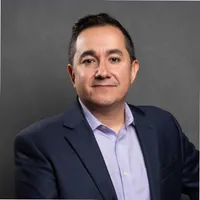
Alex Salas
Assistant Chief People Officer, New Jersey Sports and Exposition Authority
Unlock HR Leadership: Why Community & Diverse Views are Your Growth Engine
Episode 208 · May 22, 2025 · 8:33
Unlock HR Leadership: Why Community & Diverse Views are Your Growth Engine
Key moments
In Alex's words
“I think it's important as you progress throughout your career, whether it's at your jobs or whether it's in an HR community or local chapter, it's important to have good people around you. When you have a strong team, when you invest in your team, when you invest in your people, you are going to create a lot of things because we have a saying in New York City that it takes a village.”
“When you start aligning yourself with an— on the other HR community, when you're aligning yourself with the local chapter, what you're doing is you're expanding that view, right? So if in my instance, I saw leadership at my employer as one way, but then when I got to New York City SHRM, I saw different types of leaderships.”
“I think with human resources, that really doesn't apply as much in the sense that we all follow the same laws. We all follow the same regulations and we're all dealing with people.”
Transcript
Read the transcript1,467 words
IntroWelcome to the Built by People podcast, where we share the stories and insights of the world's top HR leaders. Join us as we dive deep into the minds of HR executives, uncovering their strategies, challenges, and triumphs in shaping today's workforce.
HostI'm excited to welcome Alex to the Built by People podcast. Alex, thank you so much for joining us. And as a starting question, I always love to ask if you could share a little bit more about your career journey.
GuestDave, it's, it's great to be here. Thank you. My career journey, I feel like, is a very unique one. Right now, I am doing a dual role. Where on one side I have the HR practitioner role, and on another side I am the president of New York City SHRM, which I've been there for about 12 years now.
HostAwesome. And as the president of New York City SHRM and assistant chief people officer, how do you effectively balance those two significant roles while maintaining high performance in both?
GuestI would just say lots of coffee and just a lot of planning. I think it's important as you progress throughout your career, whether it's at your jobs or whether it's in an HR community or local chapter, it's important to have good people around you. When you have a strong team, when you invest in your team, when you invest in your people, you are going to create a lot of things because we have a saying in New York City that it takes a village. Not one person's going to be able to do it all. So I've been very fortunate enough that I have great teams here at NJSEA and as well as New York City SHRM, and together collectively, we're able to tackle everything that comes up and actually create some great things too. We do have an annual conference coming up, which we've been planning for about a year now. Great. It's about people.
HostAlex, what value have you found in being actively involved in HR associations?
GuestIt's had a tremendous impact in my growth. When you start your career, you are aligning yourself with a particular employer, with a particular company, and within that company, you have your team that you deal with on a day-to-day basis. Whether you like it or not, you're taking everything in, you're observing everything, as well as being mentored by like your managers or even like mentorship. I don't believe it's just top-down. I believe it goes top-down. Down, up, and as well as lateral. As you're taking everything in, you're subjected to one perspective, one view of how to do things. When you start aligning yourself with an— on the other HR community, when you're aligning yourself with the local chapter, what you're doing is you're expanding that view, right? So if in my instance, I saw leadership at my employer as one way, but then when I got to New York City SHRM, I saw different types of leaderships. And in New York City SHRM, as a president, you rotate. So it's a 2-year term. So I got to see several presidents and I got to see, okay, this is— you sometimes look at that and you want to emulate certain things, or there's certain things that kind of really tug at you and you're like, you know what, this is what I want to do and I'm going to put my flair to it. So I think it's crucial that people, if you want to focus on personal development, align yourself with a local chapter to basically open your eyes and just expose yourself because it is another experience that you're having.
HostAlex, for HR professionals who are considering getting involved in their local SHRM chapter or other HR communities, what steps would you recommend they take to get started?
GuestGo to your SHRM website, go to your national SHRM website. You go to shrm.org. There you'll be able to see the locations all across the United States. There are several chapters throughout. I know we're in every single state. They even have a SHRM in Guam, believe it or not. And so go to the SHRM website and then reach out to them, reach out to your local chapter. There should be somebody there that you can actually reach out to and educate yourself. The benefit of doing that is you're going to get a lot in return. So besides the experience, I'll expand on that just for a second. Say you go to your local chapter, they're going to have events, they're going to have programming, right? You're going to have educational events. Hopefully they have some networking events. At New York City SHRM, we do a lot of that in the sense that we go above and beyond that. So not only do we offer educational networking, but Just yesterday, I was— we kickstarted our mentorship program that we have, right? And we try to do a lot of fun and engaging things to bring people together. And it's like our motto, to connect, to learn, and to grow.
HostAlex, how has your experience in government HR leadership differ from private sector experiences? And what unique insights has that given you about building effective HR communities?
GuestThat's a great question. And in my career, I've been fortunate enough to be in different industries. So I've been, I started off in finance, went to luxury retail, I went to nonprofit, and now I'm basically in government. I have to say there are differences. I'm not going to lie. There are definitely differences within each industry that you go into. However, in the end, you're dealing with people. I've been successful every step of the way, but I think it's because sometimes industries like to hire within that industry. They see, okay, you need to have a banking experience to join a bank. And I think with human resources, that really doesn't apply as much in the sense that we all follow the same laws. We all follow the same regulations and we're all dealing with people. So I think in government, it's been fantastic so far, my time here working for a New Jersey state agency. As far as how that connects. With the HR community, I just feel like when you're dealing with your local chapter, hopefully your local chapter is basically open to all. So what we do is we're open from, say, an internship to a senior-level leader, and it doesn't matter what industry you're in. The point is, when you're talking about HR community, it's about bringing people together. It's about learning from each other regardless what industry you're in, because at the end, we're dealing with people.
HostAlex, from all your experience and across all of these different industries, and you know, you've got a major focus on, you know, networking through, uh, SHRM, what advice, uh, would you give to folks who are trying to improve their professional networking in today's environment?
GuestI think besides what we covered already with the New York City SHRM and getting together with your local chapter, I think having an online presence is crucial as well, especially in today's day and age. We just ran a webinar yesterday where I was able and fortunate enough to speak to 3 HR influencers, juggernauts in my opinion, Steve Brown, Claire Stroh, and Jeffrey Shapiro, tons and tons of followers. And you need that, you need an online voice, right? I think in today's day and age, it's, you need to put yourself out there, right? And you need to promote yourself, whether it's a publication or an article that you might've done. Following certain people and that sort of thing. So I think, yes, a local chapter is great in doing that, but I think you also need to supplement that with an online voice so that when recruiters do look at you, like, they are seeing who you really are.
HostAlex, what parting advice would you like to share with our community?
GuestI would just say for all of those that are listening, just get involved, right? I think for me, it's all about leaning in. It's about being present, right? So it's not just about showing up, but it's about leaning into whatever you want to do. So whether it's about community, whether it's about networking, whether it's about personal development in any way, lean into it because the more effort, the more that you put into it, the more you're going to get back.
HostAlex, thanks so much for joining us on the Built by People podcast. It was a pleasure to have you involved.
GuestThat was great to be here. Thank you, David.
More conversations like this