Episode 323 · September 11, 2025 · 14:49
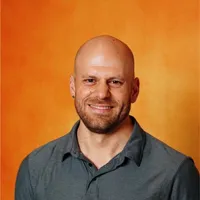
Trent Cotton
Head of Talent Acquisition Insights & Analyst Relations, iCIMS
HR's New Playbook: Make Talent Acquisition a C-Suite Business Driver
Episode 323 · September 11, 2025 · 14:49
HR's New Playbook: Make Talent Acquisition a C-Suite Business Driver
Key moments
In Trent's words
“Now, I would go over the normal KPIs in recruiting, like time to fill and some of the others, but I always related it to business outcomes that was for that group.”
“My suggestion is always bring them in on the first, you know, the first phase. So, you know, if I'm looking for a new piece of TA tech or a new platform, I may narrow it down to my top 3. I'm going to bring in some of my C-suite executives to participate in that demo, to be able to ask questions, to be able to provide me feedback on which one do they think as a co-user is going to be the most beneficial for them.”
“Every key aspect of the TA tech that you're trying to use should relate to one of those key levers within the business because business leaders, they don't speak HREs or TAEs or whatever the different languages that a lot of HR professionals like to stay in. They understand key drivers.”
Transcript
Read the transcript2,522 words
HostWelcome to the Built by People podcast, where we share the stories and insights of the world's top HR leaders. Join us as we dive deep into the minds of HR executives, uncovering their strategies, challenges, and triumphs in shaping today's workforce. I'm excited to welcome Trent to the Built by People podcast. Trent, thank you so much for joining us today. And as a starting question, I always love to ask if you could share a little bit more about your career journey.
GuestInterestingly enough, I did not major in HR. I did not even think that I was going to end up in HR. I started out my career putting myself through school, working as a banker because that's what I thought I wanted to do. And in 2004, I've been doing it, what, 7 or 8 years, and was kind of bored. Um, had done commercial lending, private wealth, you know, run sales teams. At the time, I was running 4 states for a mortgage company, and I just, I wanted to change. And so I got into recruiting as a contractor and spent the first 6 months being trained by People who call themselves recruiting, but I don't know, they really spent a lot of time trying to tell me that I would never make it in HR, but I have spent close to 21 years in HR in a variety of different roles. The only thing that I haven't done is payroll and benefits, and I am totally okay with that. But now I've actually made another pivot. I am currently working for iCIMS as their head of talent insights and analyst relations. So, I get to work a lot with industry analysts. Inform them of what's going on with iCIMS, keep them up to date, but also, you know, learn from them about what's going on in the market, responsible for thought leadership. And then our Talent Insights program, which is our monthly workforce insights. Let me try that one more time. Our monthly workforce report. I always want to say insights because that's, that's where the power is. But what we do is we take data from our platform and turn it into a report that helps talent leaders, HR leaders, and the C-suite know what's really going into the market so that way they can make the talent strategies that they need based off of data. And, you know, ISIM's a large company. We've got over, you know, thousands of enterprise companies worldwide. About 24% of those sit in the Fortune 500, and we leverage all of that data and give it back to the market. And, you Our goal is just to continue to innovate in the recruiting space and just, yeah, it's a lot.
HostTrent, it's a really interesting background and also the shift that you experienced from a traditional HR role to leading thought leadership and also insights and how those two can drive company strategy moving forward. I'm curious, What sparked that change inside of yourself and also the organization? Why did the company view this as a necessary step for, for your career trajectory?
GuestSo the interesting thing I think with TA Tech is there's a lot of amazing stuff going on and being able to have someone that has been a practitioner that has been through the hard knocks, be able to come in and provide that voice of the client. I think that was probably one of the benefits of this particular type of position. It's, it's definitely a unicorn position, which makes me really excited. There's not another position like this out there. So it's exciting and terrifying all at the same time. So exciting that, you know, you can kind of create your own mark, but terrifying that I can't really call up a colleague and go, how do you handle this? Uh, because this is new territories. So, very exciting work.
HostChuck, can you share a defining moment when you made talent acquisition a strategic function? How did it shift your company's approach?
GuestWow. So, whenever I first took the role in recruiting, it, it was very much a reactionary transactional type of position. And my approach was very different because, you know, coming from a sales type of role, I was used to developing, maintaining, and executing on a pipeline. I was used to knowing what was going on on in the market. And I've found that really good recruiters, they, they knew what was going on in the market, and they talked to competitors daily. And one thing that I was able to do, because at the time I was supporting the growth division within a pretty large financial institution and reporting kind of that, that group that was reporting to the COO, and I established a monthly meeting where I would just do a recap. Now, I would go over the normal KPIs in recruiting, like time to fill and some of the others, but I always related it to business outcomes that was for that group. The other part that I would do is, and I would always save this to the end, was a market overview. What's the intel? What's the scoop? And it could be something along the lines of our competitors are changing their compensation plan, and this is what I think that means for us in being able to go and acquire that talent. It could be, you know, different movements and products. There was a ton of market intel that I was able to bring that was completely ancillary from your typical recruiting job. And for me, that was a pretty significant pivot because it moved the viewpoint of the perception of TA from being kind of a reactionary, you have to deal with these people, to I really want to go and talk to Trent because he's got a command on what's going on in the— Trent, only 27% of CIOs view TA as a growth driver versus 88% of HR leaders who are leading change.
HostHow have you bridged that gap?
GuestWell, interestingly enough, the statistic actually came from our 2025 CHR report, which is completely free. You can go out there and look at it yourself. But this statistic really jumped out at me when we were gathering the data. For me, it was always, you start with the relationship. You know, you build those strong relationships and kind of approach the principle of seek first to understand. And then once you're able to you're able to get some buy-in from a lot of your partners. So, in this case, you know, working with CIOs, you know, if you don't have a very strong relationship with them, it's going to create a lot of disconnect. So, you as a TA leader may think that you're going in the right direction, but the CIO actually needs you in something else. But I think the biggest change in a lot of the value of HR across, it starts with building those key relationships and also listening to your partners. Leveraging business acumen, you know. So, as an example, if I'm talking to a sales organization about time to fill, I'm going to say time to fill, but I'm also going to say, now remember, we've already estimated that for every day that this position is open, we are losing X amount of revenue. That's speaking to them in their language, and it really helps you be able to bridge that gap. So, deepening that relationship, understanding how the business works, and then talking to them in business terms, not necessarily the TA catchphrases.
HostTrent, what challenges have you faced adopting AI or TA tech in HR, and how do you handle pushback from IT or leadership when trying to get solutions like that adopted?
GuestWell, you know, interestingly enough, another fact from the report is that only about a third of the CHROs said that their organizations review TA as being a very core strategic function within the organization. So that means 66% say that, you know, it's either a support function or very, very transactional. So that's a very large hill that you need to get over. Again, it comes back to that relationship. You know, if you've established that credibility, if you've really taken the time to understand the business unit that you're supporting, what are the key levers? What are their KPIs? And What is it that how you are handling something, how does that directly relate to the KPIs and being able to push that business forward? So, I think the other part, so let's talk a little bit about TA Tech. I think a big mess is that in HR, most of the time, we kind of go through and say, this is what we want, this is what we want. And then we bring in the key stakeholders at the very end. That's not— that never works out good for anyone. My suggestion is always bring them in on the first, you know, the first phase. So, you know, if I'm looking for a new piece of TA tech or a new platform, I may narrow it down to my top 3. I'm going to bring in some of my C-suite executives to participate in that demo, to be able to ask questions, to be able to provide me feedback on which one do they think as a co-user is going to be the most beneficial for them. For their organization and for the firm altogether. Because if you have key stakeholder buy-in on the front end, you create champions throughout. So, you know, to me, that's just a— that's a step that's always overlooked. And if you get that right on the front end, it's so much smoother sailing.
HostTrent, with most CHROs boosting TA budgets and prioritizing TA tech, how are you tying those investments to business results?
GuestEvery key aspect of the TA tech that you're trying to use should relate to one of those key levers within the business because business leaders, they don't speak HREs or TAEs or whatever the different languages that a lot of HR professionals like to stay in. They understand key drivers. So, you know, I gave an example earlier, time to fill, you know, for the growth organization, there is a hard dollar amount, or at least an estimate that you can be able to calculate and say, okay, if this particular role is responsible for bringing in $12 million of revenue, that's $1 million a month. You can break it down by the day and say, every day this is open, we are losing the opportunity to attain this much in revenue, or it's putting us behind our revenue target. When you're able to go in and communicate that way to your key partners, it helps them understand that you are aligning yourself with making them successful. And in the end, that is always an equation that works best for everyone.
HostTrent, how are you using internal mobility mobility and upskilling to future-proof talent? And what's a legacy in this work that you hope to leave?
GuestI have always been a huge advocate of internal mobility. It, it amazes me, especially in enterprise-level companies, how much data they're sitting on in their applicant tracking system. And a lot of that is internals who have applied and, you know, elevated themselves. Because to me, internal mobility makes sense because you've already invested time resources and development in this workforce, why would you not promote them? Why do you want to go to the street automatically rather than taking a good look inside? So, you know, one of the biggest issues that we found in the report that's keeping CHROs up at night is how am I going to elevate and get my current workforce prepared for everything that's going to happen with the future of work, primarily with AI? And for me, internal mobility, it just kind of makes sense, right? It's really, really time for us to start rethinking how we develop our talent. We need to reskill them for the org of the future, and then we need to redeploy them and kind of really go into that market and get that market share that sometimes only internal mobility really knows how to do it. They have the operational knowledge and the precedential knowledge, and yet we kind of let them sit there and we bring in someone and start the whole process over again. My hope is that because of some of these constrictions in the market, that organizations really take a good hard look and say, how do we elevate and promote what we already have?
HostTrent, what parting advice would you give HR and TA leaders who are working with CIOs to increase HR's strategic impact through AI?
GuestFor CIO, whenever I supported the CIO division, we were in lockstep. So, The beautiful thing about most tech organizations is that they use the agile methodology, so they work in sprints every 2 weeks. And so I leveraged that with our CIO, and we had our own little sprint process. We had our planning meeting every— I think we started, they moved from Mondays to Wednesdays, but the first day of the sprint, he and I would have about a 30-minute one-on-one. I'd recap with him what did we accomplish in the last sprint.. And then he and I would work together on where did he want my focus and my team's focus for the next 2 weeks. What was critical in that sprint? And what I found is, you know, probably after the first couple, we got our stride, but it really opened up a lot of text messages of, hey, Trent, do you have 10 minutes? I want to run something by you. And it was about talent in general. It wasn't give me an update on this role. It was, hey, I'm looking at my organizational sprint plan, 2 or 3 weeks from, or 2 or 3 sprints from now, we're actually going to need X, Y, and Z. Can we go ahead and start working on that now? And we just became in lockstep. And for me, the more you interface with your CIOs, the deeper that level of trust comes. And the deeper the trust, the higher the capability and the credibility. And that always equates to speed. Honestly, once you lock in and you've got that trust and that deep relationship, to me, that's where the fun happens because it's just— it's game on. And that's where I like to be. I like to be in lockstep with my executives, making them successful, aligning my organization with their KPIs. And to me, that's usually whenever you find that good, strong harmony to where everyone's playing to their strengths.
HostTrent, thanks so much for joining us today on the Built By People podcast. It was a pleasure to have you involved.
GuestThank you so much. I appreciate the opportunity.
More conversations like this