Episode 322 · September 10, 2025 · 12:38
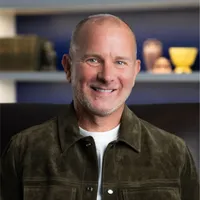
Cary Sparrow
Founder, Wagescape
AI's Challenge to HR: Escape Inertia, Lead with Data, Unleash Talent.
Episode 322 · September 10, 2025 · 12:38
AI's Challenge to HR: Escape Inertia, Lead with Data, Unleash Talent.
Key moments
In Cary's words
“You're never going to starve because you're really bright... The world is a great place if you just go after it and have confidence in yourself and your abilities.”
“I told her that I really admired her business acumen... and thought that she could be a commercial leader someday and not just an HR leader.”
“When you start a business, the worst thing you can do is go slow... But when you're a lot of times on a corporate role, ... the safest thing you can do is go slow.”
Transcript
Read the transcript2,361 words
HostWelcome to the Built by People podcast, where we share the stories and insights of the world's top HR leaders. Join us as we dive deep into the minds of HR executives, uncovering their strategies, challenges, and triumphs in shaping today's workforce. I'm excited to welcome Cary to the Built by People podcast. Cary, thank you so much for joining us today. And as a starting question, I always love to ask if you could share a little bit more about your career journey.
GuestYeah, thanks a lot, Dave, and thanks for having me here today. It's a pleasure to talk to you and, and the folks out there. You know, my career journey is really different from most HR leaders' career journey. I started off studying engineering. When I got out of college, I was an officer in the Navy. I was in nuclear-powered submarines for an entire stint. So, you know, total of 12 years doing that. When I left the Navy, I joined a large management consulting firm right at the bottom and worked my way up. To be a managing partner there. And a lot of what I did was help organizations improve their performance. And for the last probably 7 or 8 years of doing that, I helped HR functions in particular set up HR strategies and then organize around those strategies and all dimensions of human resources programs and structure. So that led to a corporate job where I was, you know, in a big, really big, like it would've been, it's a private company, but it would've been a Fortune 10 company overseeing their global HR infrastructure. Sat on the global leadership teams of both HR and IT there, learned a ton. And then that brought me to Wagescape and saw an opportunity in the market where, uh, there was a better way to do things as it relates to understanding what's happening in the market for jobs and pay and skills. Talent. So I founded WageScape to, to take advantage of that opportunity. And it's been quite a ride. That was 10 years ago, actually. It's coming up in 10 years this month, in fact, August of 2025. So not the typical career. I don't, frankly, I don't know many HR professionals that started off in engineering. And, you know, but there's always been a kind of new business thread and innovation thread, an analytics thread, and a really strong people leadership component in everything I've done.
HostJerry, can you tell us about a career-defining moment that you've had related to your HR career?
GuestYou know, I, I have a number of kind of career-defining moments. I'll tell you two. One was a real confidence builder. It was when I was really young. Uh, I was in the Navy and, uh, I was struggling, uh, to learn something new and, and struggling with some leadership, uh, opportunities. I was really super young. I was like 24, 25, and My boss, you know, just said, hey, Kerry, take it easy. You're never going to starve. He goes, you're really bright, you know, regardless of how things turn out, you're never going to starve. You're always going to find something that, that works well for you. And that always stuck with me. Here I am many years later, and I think about that every single day. I'm like, you know, the world is a great place if you just go after it and have confidence in yourself and your abilities. And, and that's kind of stuck with me and it's allowed me to explore things that a lot of people I don't think would've ordinarily explored, allowed me to move in directions that other people may have felt nervous about doing that. And I've run across that so many times where people don't realize all the ways their talent could take them because they're just frankly a bit afraid to step out. And I've tried to pass along that perspective to lots of people that I've had the opportunity to work with and be friends with and offer advice to throughout my life. And, uh, so that really struck with me. And then kind of coming full circle from that, another thing that I think about, you know, often is I had a chance, someone, uh, was working for me, a, uh, a woman who was kind of earlier in her career, but she was really smart. And she was, she had started in more administrative roles, uh, and moved into HR. And I was, you know, having a typical performance discussion with her. And I told her that I really admired her business acumen. And the way that she looked at kind of starting, you know, with what's, what's the business doing first before getting to anything else, and thought that she could be a commercial leader someday and not just an HR leader. And she went on to be a general manager of a major division in the company that, uh, that we were in. And she came back and told me it was that conversation that gave her the confidence to, you know, to start to bend the arc of her career, uh, you know, beyond just what she was doing in HR. And so, it comes back around and, and I try and, you know, keep that in mind all the time.
HostTerry, can you tell us about a challenge that you faced in your career and how you overcame it?
GuestWell, I'm laughing because running your own business is a constant array of challenges. And so, you know, I think that, and I'll speak to those who, who are thinking about ever branching off on their own and, and starting their own business. Because I know a lot of us do it. A lot of us see opportunities and we think, I've I got a great idea, or I really want to try my hand at starting a business. And one of the biggest challenges, and for me it was fairly easy to overcome, but I recognized really quickly that, you know, this was something that was very different, was when you start a business, the worst thing you can do is go slow. But when you're a lot of times on a corporate role, You're working for a corporate, you know, the safest thing you can do is go slow. And a lot of what your role is, is actually taking risk out of a, you know, an organization, taking risk out of a process, out of a team, out of the way that you're doing things. And going slow is one of the tactics that you can use with that. But when you're running your own business, the biggest risk is going slow. And so you have to know that. Everything you do is gonna be wrong in some way. It's more important to just do it and adjust and keep them, you know, keep building momentum. 'Cause otherwise you run outta support, you run out of, you know, a competitive advantage, you run outta money, you run out of everything you need in order to grow as a business. So the mindset that you have to have growing a business is completely different than the mindset you have to have being a, you know, being a corporate executive. Corporate leader, but the talents aren't necessarily different. You just have to kind of look at your role and look at what's important in a very different way.
HostGary, what was the big motivator for you transitioning from, you know, big corporate to startup entrepreneur?
GuestYou know, I've always pursued jobs where I've worked myself out of today's job and moved into the next job. And so there was some of that that was going on, and also I had just seen an opportunity where a lot of my job on the corporate side was about setting up new capabilities in a global environment. And there's a lot of kind of, you know, a lot of consultants, a lot of technology firms that'll tell you the way to do it, and they'll start listing things off, and it's processes or it's organizational structure or it's technology. And we did all of those things, right? We did all of them and did them, you know, to differing degrees, did some of them really well, did some of them not so well, but we moved the ball in all those areas. And We came to realize that the thing that was the biggest bottleneck for making those kinds of changes was actually, in that kind of environment, was actually data. It was horrendous to migrate from a really chaotic data environment, which many, many companies had and still have, frankly, where you got data in lots of different places or it doesn't exist at all and it's in different systems and it's got to be consol— All of that stuff has to be consolidated into the same format, the same, you know, same systems and stuff and really gets in the way. And the underlying reason for that was different systems and, and different ways of expressing data. And as HR was moving to the cloud, and I realize I'm going really long on this explanation, it's very geeky, but as HR was moving to the cloud about, you know, 10, 10 years or so ago, one of the conditions that made data so horrendous was being addressed in that, that companies were moving, you know, their data into common systems. And, and another reason, the fact that data was set up differently by organization was a solvable problem because we solved that in the company I was in and I knew it was a solvable problem. And so I went and started talking to all the consultants that we worked with and all the technology firms. And I said, hey, if you suddenly can see all the talent landscape, right? All the, you know, all the conditions for the workforce everywhere through the same lens, that's a fully transparent labor market. And that means innovation. That means efficiency. You guys are at the forefront of this, you guys being the biggest technology and service providers in the world. And so, what do you got coming our way? You know, what can I expect? What should I start setting expectations about with my own stakeholders here in my company? And they all, you know, nodded their head and but generally looked at me like I had horns growing out of my head. And, you know, they just weren't seeing it. And I came to understand that that's just not how they innovate and thought I could make a go of it. And that was 10 years ago.
HostHarry, looking back on your career, what's a legacy that you hope to leave as a leader and why?
GuestSo I gotta tell you, I saw, I, I thought about this question and 5 years ago it would've been really different. It would've been about making my mark on the profession. It would've been about, you know, changing the way people think about labor market economics and what they can do when they can see you know, about making a difference on careers and things like that. Now, to be honest with you, what I think about is all the people I've touched. And I think about, you know, I think about the balance, right? The, the scales. Did I touch them in a good way or did I touch them in a, in a way that wasn't so favorable? And, and I think that on balance, you know, the legacy is, you know, one person at a time trying to make a difference for them. Yeah, that's just where I've come to. And that's really what I'm I, you know, plan on focusing on, you know, going forward.
HostWhat's changed in the last 5 years for you to go from X to Y?
GuestOh, I think that my expectations have just gotten, I, I don't know, you call it, I've just gotten a little bit older and the things that stick with me, I was always chasing the next, you know, new kind of innovative thing. And after a while it just accumulates when I realize, you know, that I, I have people reaching out to me that I worked with 30 years ago that inevitably it comes up. What we did together and the impact that that's had. And that just kind of accumulates. You know, there's an accountability there that, you know, to keep, you know, pushing that idea forward.
HostTerry, what parting advice would you like to share with our broader HR community?
GuestThere's so many different things. So as it stands right now in 2025, the one thing I would say is if you're not heavily into AI and understanding its implications, you need to be. The world of AI is moving faster than the vast majority of us realize. And it's showing up on our doorstep now in ways that we never could have imagined. I mean, think about, um, the, uh, the kinds of conversations we have right now about what we use AI for and whether or not we ever thought about having those kinds of conversations even a year ago. Well, the next year it's gonna be more profound, and the year after that it's gonna be even more profound. And the way that we do work and the way that we think about work and what we should be doing is being fundamentally changed by AI. So that's something that if you think it's for someone else and you think that you don't need to pay attention to it, I would push back on that and say you actually need to look at it, you know, pretty heavily and ask pretty critical questions and, uh, and embrace the things that are really empowering and be really cautious of the things that are risky. Dave, thanks so much for having me. I really liked it.
More conversations like this