Episode 321 · September 9, 2025 · 11:30
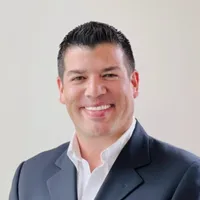
Andrew Bartlow
CHRO & PE Operating Partner, Altamont Capital Partners
Beyond HR Basics: Cultivating the Strategic Mindset of Tomorrow's Leaders
Episode 321 · September 9, 2025 · 11:30
Beyond HR Basics: Cultivating the Strategic Mindset of Tomorrow's Leaders
Key moments
In Andrew's words
“I think I would recommend both of those things, you know, work somewhere where they know what good looks like and you can learn from people and also work somewhere without a, without a safety net. Where you have to figure it out on the fly.”
“I've done every element of this job at greater scale than you'll need it. The only thing I haven't done is officially taken that, that top job in the standalone role.”
“My purpose now and for the past few years is to help other HR leaders grow their career, build more confidence, strengthen their confidence.”
Transcript
Read the transcript1,727 words
SpeakerWelcome to the Built by People podcast, where we share the stories and insights of the world's top HR leaders. Join us as we dive deep into the minds of HR executives, uncovering their strategies, challenges, and triumphs in shaping today's workforce.
HostI'm excited to welcome Andrew to the Built by People podcast. Andrew, thank you so much for joining us today. And as a starting question, I always love to ask if you could share a little bit more about your career journey.
GuestDave, thanks a lot. Great to be here with you. Boy, it's been a journey. 30-plus years in the human resources field. I was fortunate to, you know, start at academy organizations that are known for having great HR functions, Pepsi and General Electric, right out of grad school. And yeah, I went to grad school for this, for this HR work that I do. And actually, between Pepsi and GE, which are arguably the top two functions in, in our space, I was the head of HR at a high-growth startup at age 22, 23. I took a company global and we grew from 20 people to 150, and then we went outta business during the dot-com bust. So I, I had some really strong formative experiences early on and followed opportunities geographically, moved between a bunch of different industries, moved out here to the West Coast maybe 15, 20 years ago.. And yeah, in 2014, I took my first public company chief HR officer job, led that organization actually through, through an IPO twice. That's more, more to that. And I pulled my parachute back in 2018, headquarters moved from California to Dallas. And with that, you know, it was, too good not to, not to, uh, take the, uh, the silver-lined parachute with equity vesting and, you know, reasonable severance. And, and so 7 years ago, I hung my single shingle as a consultant. I wrote my bucket list book, um, Scaling for Success. And, um, I've been teaching and advising other HR leaders for the past 7 plus years working in private equity, working in venture, and it's been a great ride. A wild ride, but a great one.
HostThanks for that great introduction. I want to dive in to understand some of your career-defining moments in the field of HR. Sounds like you've got a lot in that 30-year span, and I'd love to understand the highlights.
GuestYeah, a lot of highlights and, you know, plenty of lowlights too. You know, I've been through a bankruptcy. I've laid myself off a few times. You know, highlights, I think my first job right outta grad school just was a great launching pad. Working at a high-quality academy organization that's known for being good at what I do, you know, helped me be set up for success early on. And, and then after that, you know, taking a chance on myself. Joining as the first ever HR person. I think I was hire number 20 or 22, a startup that grew really rapidly. And that was, that was scary. And it, it didn't work out, you know, with the company, but it worked out in terms of building experience. And so, you know, I think I would recommend both of those things, you know, work somewhere where they know what good looks like and you can learn from people and also work somewhere without a, without a safety net. Where you have to figure it out on the fly. And, and I learned pretty quickly what, what fast felt like as well.
HostAndrew, can you talk about one of the major challenges that you've had to face in your career and how you overcame it?
GuestYou know, a major challenge, hey, one was, one was living through an acquisition of my company. Was really, really happy at Wachovia, which at the time was one of the largest banks in the United States. I had a big job there, was doing well. Company was doing well also until the mortgage meltdown hit in 2007, where the, the bottom just dropped out of the company. And I'm sure that a lot of people have, have been through downturns and, and layoffs. You know, for me, boy, my cheese was moved in, in a big way. And, and, uh, we, we ended up in a combination with Wells Fargo that at the time had a very different take on the HR function. It was more transactional, it was more generalist. Wachovia was more strategic, different type of work. I felt like I didn't really fit in, but there were no good HR jobs to speak of elsewhere to bounce into. You know, 2007 was just a, you know, really difficult time in the job market. So, you know, I felt like I was trapped. So that career-defining moment was just like, stick it out, do good work, put a toe in the water and, you know, see where other opportunities were at. But again, just try to contribute where I was. And, you know, ultimately that led to doing some pretty interesting things at Wells Fargo. I actually helped them transition to a more strategic shared services HR model across the company. And so we actually did a little bit of a takeover from within where the HR, you teams started looking a little bit more like the Wachovia Strong team, but I ended up moving on. It was, you know, I was on a quest to become a CHRO and it wasn't gonna happen at Wells. So yeah, that was a tough time and I think it was an important time for me as well.
HostAndrew, you mentioned being on a quest to become a CHRO and leaving Wells Fargo was a part of that journey. Uh, can you walk us through what steps were necessary for you to transition from Wells Fargo to being prepared to take on that initial CHRO role? Was it the startup experience going from 20 to 150? Was it just a combination of those, you know, big corporate jobs plus the startup? Any other color you could provide there?
GuestYeah, I, I actually share this experience and this advice with people that I, coach, um, on their careers. I'd work with a lot of other HR leaders. I, I think of, uh, the image of a pyramid with a, with a broad base, and you need to build that broad base of experience to be able to move up more effectively. So I was looking for, and I'd already accumulated some really good experience, largely in HR business partner, and I built up experience in talent acquisition. I took a role as the head of total rewards and talent management. And so if you plug together, you know, those constituent components of, of the work, I'd, I'd really led every major element other than, you know, taking a top job. And so that, that's ultimately what convinced the, the founder and CEO of what at the time was was Waypoint Homes became Invitation Homes. You know, I talked to Doug Bryan and he asked, why should I hire you? And I said, I've done every element of this job at greater scale than you'll need it. The only thing I haven't done is officially taken that, that top job in the standalone role. And so that, that made it low risk for him and it made it low risk for me.
HostAndrew, what's a legacy you hope to leave as an HR leader and why?
GuestI feel like my My purpose now and for the past few years is to help other HR leaders grow their career, build more confidence, strengthen their confidence. And I feel like so many people in HR are just doing the best we can and figuring it out as we go along. Like, not everybody has the benefit of a master's degree from a top program and a, you know, great academy organization to learn how stuff works. And so I'm trying to pass that on largely to investor-backed technology company HR leaders who, you know, for the past dozen-plus years had been in the war for talent and just growth at all costs and easy capital. And, and now we find ourselves in, in a world where productivity and efficiency actually matters again. And so many HR leaders don't know how to operate that way. And so I, I'm trying to help other HR leaders. Understand what being really deeply connected to the business looks like, what being strategic really means. It's easy to use the buzzwords of a seat at the table and HR business partnering, but understanding what that really— what you do, what you don't do, how you prioritize, how you interact with your stakeholders, you know, that's different. They don't teach that in a classroom, and it's hard to learn that on the job. And so I'm doing a lot of really direct mentoring today. That, that's the legacy. I wanna help others navigate, you know, the, the bumpy waters.
HostAndrew, what parting advice would you like to share with our HR community?
GuestI'd, I'd say intentionally grow, intentionally learn. The model of adult learning is 70% on the job and 20% in the classroom and maybe 10% reading on your own. Self-study, you can and should still be selective about all 3 elements of that. So learning on the job, don't just stay put and stick it out, like actively look for those opportunities to stretch yourself. And for me, that was moving around geographically, moving around between companies, moving around between industries. You know, as fast as I could grow, I pushed myself to do that and found myself in, in a lot of positions of discomfort along the way, but that was my learning edge. And I'd say just push yourself to intentionally grow.
HostAndrew, thank you so much for joining us today on the Built by People Podcast. It was a pleasure to have you involved.
GuestThanks so much, Dave.
SpeakerWelcome to the Built by People Podcast, where we share the stories and insights of the world's top HR leaders. Join us as we dive deep into the minds of HR executives uncovering their strategies, challenges, and triumphs in shaping today's workforce.
More conversations like this