Episode 161 · April 16, 2025 · 19:07
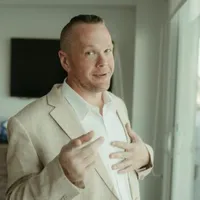
Robert Sklans
Former CHRO, N/A
From Cost Center to Profit Driver: HR's Transformation into a Strategic Asset
Episode 161 · April 16, 2025 · 19:07
From Cost Center to Profit Driver: HR's Transformation into a Strategic Asset
Key moments
In Robert's words
“Although I was in HR, I would read the market research. I would attend the global franchise leadership meetings in R&D. I would always ask folks about what were they were doing, what was the work they were doing. I would attend poster sessions and I would try to learn as much as I could.”
“Without involvement, there is no commitment.”
“At a startup, a life science startup where I was the CHRO, one of the principles that we had was productive on day 1.”
Transcript
Read the transcript2,715 words
HostWelcome to the Built by People podcast, where we share the stories and insights of the world's top HR leaders. Join us as we dive deep into the minds of HR executives, uncovering their strategies, challenges, and triumphs in shaping today's workforce. I'm excited to welcome Rob to the Built By People podcast. Rob, thank you so much for joining us. And as a starting question, I always love to ask if you could share a little bit more about your career journey.
GuestDave, thanks so much for having me and for the opportunity to connect and share my experiences with your audience. So growing up, I wanted to be a doctor and I actually started volunteering in a hospital by our local hospital when I was 14 years old. I did both volunteer and paid. I worked on the emergency medical service for about 13 years. And serving my community has been a personal value for most of my adult life. But working in EMS per diem and at the hospital too, there were times where I could hear employees, I guess I would use the word complaining about their supervisor. And then there were other times where I would hear supervisors getting frustrated with employees. Although I was pre-med in undergrad, I was always a psychology major, and I took my first industrial and organizational psychology class, and I was hooked. I was like, this is what I've been seeing the whole time. And I knew that's what I wanted to do. My career journey is more of a lattice than a ladder. So after grad school, I started in an organizational development and training role. And then moved into a generalist role. And then I had the opportunity to come to Johnson Johnson where I had some really formative experiences. I started as an HR director in their consumer business. I was supporting Johnson's Baby and Band-Aid brands and actually had the opportunity to propose and co-lead the launch of a new growth platform for Johnson's Baby, and that was called Johnson's Buddies. I was then asked to join the J&J global HR transformation project where I started as the change management lead. And then once I designed the design process, I was asked to lead the design of the HR service delivery model for J&J globally. Then I moved into a specialist role and ultimately into the newly created talent management COE. I did that role for a couple years and then decided to leave J&J. I spent about 8 years in specialty chemicals. Where I had the opportunity to build a North America talent management function, then moved into my first HR VP role, and then ultimately into a CHRO role. And after a few years, that role moved from New Jersey to London. And so I took a step back and said, I like this HR transformation work and maybe I should try consulting for a little bit. And so I spent 2 years consulting and, and was enjoying it, but then I was asked to come back. To take an interim CHRO role for a, a small pharmaceutical company that was purchased by a private equity firm out of bankruptcy. And after that was completed, then I was given the opportunity for a more permanent, in quotes, CHRO role for another life science company. And then my last role was head of HR for North America for a biosimilars company. Over the course of my career, I've been really fortunate to just have some wonderful business and HR leaders who were really generous with their advice and coaching. And I've tried to pay that forward with my own passion for developing HR talent. As a matter of fact, I still coach and mentor folks who worked with me from 15 and 20 years ago. So I hope that gives a, a good little synopsis.
HostRob, thanks for that great introduction. What's obvious to me is that throughout your career, you've demonstrated HR's role beyond traditional people management, like your work with Johnson's Buddies. How can HR professionals position themselves as true business partners?
GuestGreat question. So just a little background. As an HR director, I was supporting the global Johnson's Baby franchise, and I was also supporting the consumer R&D organization. And working at Consumer really taught me, and they are laser focused on the end consumer. And so I would attend global franchise, uh, leadership meetings, and the marketing folks were saying that parents were leaving the franchise. They were moving to competitors when their babies were anywhere from 9 to 18 months. And at the same time, The R&D organization, besides doing product development, they also did basic research. And so they were doing research on human hair, and they found that at about 9 to 18 months, baby hair thickens and becomes more like adult hair. So those moms were leaving because the extremely gentle Johnson's Baby products weren't necessarily cleaning their baby's hair quite as well. At the same time, one of our global marketing folks saw a competitor in France that was making a foaming hand soap with a really large base so it wouldn't tip over if a toddler was using it. So we had a line of Johnson's kids products, but it was targeting 10-year-olds, and that was way after parents had already left the franchise. So it wasn't necessarily as successful as it could be. Although I was in HR, I would read the market research. I would attend the global franchise leadership meetings in R&D. I would always ask folks about what were they were doing, what was the work they were doing. I would attend poster sessions and I would try to learn as much as I could. And so because I was in HR, I could easily move between departments. Where the folks who were working there sort of more stayed in their own area. So that broad cross-functional perspective is what enabled me to piece together the insights that we needed a new line of products that was focusing on toddlers. So, you know, children who were like 18 months up to 5 years old. And, and so as most folks know, it's always easier to keep a customer than to try to have to win one back once they've left, or to try to get a new one who's never been, bought your products before. And so I worked with the VP of marketing to develop a proposal, and after it was approved, I asked if just for my own development, could I co-lead the launch of the product? And they said yes, and it was an invaluable learning experience., and it was actually a pretty successful product line at the time. And so it was because of that broad perspective that I had as an HR person that I could talk to employees across the functions. It's what HR does every day. I chose to talk and learn about the business as a way to get to know folks and to learn about how they spent their day. So as HR as folks in HR, we don't need to ask permission to do this. We just need to be deliberate in our focus. And so focusing our conversations around business growth drivers and market dynamics and learning the financial model of the business, that's how you become a much more valuable HR business partner.
HostRob, you've led 7 HR transformations from global companies to startups. What are the universal principles of successful HR transformation work that apply regardless of size?
GuestCompany size? Thanks for that question. I can kind of boil this down into 6 principles and then one just overall rule. So the first principle is, and this may seem obvious, but HR transformation has to align with the organization's strategies so that it can drive measurable value. So for instance, at Johnson Johnson, at the time, there was a very clear growth agenda. And we calculated we would need 500 new leaders in the next 5 years if we were going to accomplish that growth agenda. Now, HR at the time was decentralized throughout J&J. It reported to the presidents of the 250 operating companies that existed with J&J. There was no way we were going to be able to build a pipeline like that with our current structure. And we needed to look for a new model. And having that clear understanding of what's working and what's not gives you the why in terms of why we need to transform, which then leads into the next principle. And that's around effective change management. And so I try to follow the principle, without involvement, there is no commitment. So when I was initially building the change management strategy, I was looking for how could we build change management into the design process itself. Again, we were highly decentralized. So how do we ensure all of these different stakeholders feel heard? And we had a dedicated work stream and dedicated resources. We actually partnered with IDEO, the global design firm, and ran all of our design team members through Design University. And we invested in tools and we also made sure obviously that our design teams were global and cross-functional and we had business leaders involved in our design itself. The next is you want to try to always standardize policies and processes. For global organizations, you want to do that at a country level. Implementing cloud-based HR systems certainly helps with that. It can automate workflows and improve efficiency and reduce the administrative burden. Now, having standard policies and processes is great, but to what end? So Thinking clearly about who do you wanna be as an employer? What's your employer value proposition? Then you can design HR processes and tools to create that desired employee experience. For instance, at a startup, a life science startup where I was the CHRO, one of the principles that we had was productive on day 1. So for us, as we were designing our onboarding processes, That was our touchstone. So how do we get all the data entry done? How do we get the payroll set up? How do we get people set up, signed up for benefits, have their credit card ready, have their laptop ready so that when they walk in on day 1, or if they're in the field at their home office on their day 1, everything is there and they're ready to go. The next principle is encouraging adaptability. And so one of the tools that we used from Design University was rapid prototyping. HR, we gotta get stuff right. And doing pilots gives you an opportunity to learn from successes and also setbacks. And it also helps you think about building agility into your future processes and so that you're able to respond to future workforce needs. The last principle is transparency. And so creating action plans with measurable milestones and timelines and stakeholder involvement. HR has touchpoints with every single employee in the company. Everyone has a vested interest in what is happening in HR. And so being transparent as the transformation is happening is critical. And so that leads me then to my overall number one rule of HR transformation. Don't mess up people's paychecks. So look, I'm gonna implement a new process and the technology we said would be ready on January 1st, and it's not gonna be ready to go live until February 1st. People give you a fair amount of grace with something like that. But you mess up their paycheck, that is a completely different conversation. And so anything that touches payroll is triple-checked. We run in parallel, and it is the number one rule that I follow. So I hope that
Hostthose principles help. Rob, at Johnson Johnson, you introduced a unique stakeholder engagement process during an HR transformation. Can you walk us through how you turned initial resistance into enthusiastic adoption? And you mentioned that without involvement, there is no commitment. How do you practically implement this principle
Guestwhen designing change management strategies? Great question. Thank you. And it's something I'm passionate about. So we wanted to follow that principle. Without involvement, there's no commitment. And again, at the time, HR was completely decentralized. And so getting operating company presidents to potentially give up control over HR was going to be a significant challenge. And so my focus was, how do I build change management into the design process itself? So we structured our design teams to make sure they were cross-functional. So we had finance and business leaders on our design team to make sure also that this was a global project. So we wanted all of the regions to be represented as well. And we most importantly wanted to provide an opportunity for feedback and to basically demonstrate Hey, we're listening. So the way that we did this is we took our design process and broke it into 4 parts as opposed to just going all the way through and then going ta-da at the end. After each one of the design sessions, we would conduct regional validation sessions. So our global design team members would go back into their region and then we would have 2 to 3 day regional validation sessions where we would have cross-functional people, we would have members from the HR community, and we would have the key business leaders attending those meetings. So I remember the first North America regional validation session. We had over 100 participants, and we were in this auditorium seating kind of room. On the very back top row, were all of the Canadian presidents sitting next to each other. And during the first one, they're sitting there with their arms crossed with basically a big no stamped across their forehead. We used these validation sessions to collect feedback and we would be extremely detailed and deliberate in the feedback that we were collecting. After those validation sessions, we would come back as a global design team and review the consolidated feedback from across the regions. And for each theme, for each piece of feedback, we would say, okay, can we use this? And if so, then we would make adjustments to the design. And if we couldn't, we would capture why, why can't we do this? Transparency was key, and we wanted to build trust that we were listening and that those regional validation participants had a voice in our design process. We would do the next series of design, then we would come back to the next validation session. Before we would show them anything in terms of the design, we would say, okay, here's what you told us, and this is what we could use, and here's how we used it, and here's what we couldn't use, and here's why. We repeated that 4 times. And at the 4th validation session, again, the Canadian presidents were sitting in the top row at the North America session. And at the end of that session, those 4 presidents stood up, raised their hand, and said, we volunteer to go first. And so you can overcome resistance by using each step of the design and the implementation process. As a change management opportunity. You can do this whether it's a large company or a small company. It's a decision you can make and you make it each time. Every step you take can be a change management opportunity if you choose
Hostto make it one. Rob, what parting advice would you like to
Guestshare with our community? I guess first is be curious. Be curious about the business. You don't need to ask permission to talk with folks and learn about what they do and how the business works. Learn about and focus on the end customer or the consumer. And lastly, use your broad perspective to gain insights and focus on how you can move the business forward. Whether that's from a people or a
Hostprocess or a product standpoint. Rob, thank you so much for joining us on the Built by People podcast.
GuestIt was a pleasure to have you involved. Thank you so much, Dave.
More conversations like this