Episode 64 · January 27, 2025 · 11:21
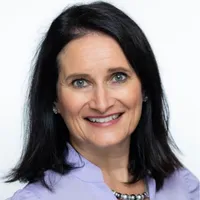
Jamal Salim
Chief People Officer, American Institute of Chemical Engineers
Authentic HR Leadership: Embrace Conflict, Build Trust, Lead the Future
Episode 64 · January 27, 2025 · 11:21
Authentic HR Leadership: Embrace Conflict, Build Trust, Lead the Future
Key moments
In Jamal's words
“One of my biggest regrets was not having a job that translated into the civilian world. And when I got out, I worked a ton of odd jobs.”
“So I literally go out of my way to show them that I am approachable. I am rational. I am caring, empathetic, and really making that extra effort to be available and approachable to them.”
“But uniquely, when it comes to HR, the military taught me not to avoid conflict and how to tackle it in a way that is tactful and conducive to a mutual agreement or amicable solution.”
Transcript
Read the transcript1,619 words
HostWelcome to the Built by People podcast, where we share the stories and insights of the world's top HR leaders. Join us as we dive deep into the minds of HR executives, uncovering their strategies, challenges, and triumphs in shaping today's workforce. I'm excited to welcome Jamal to the Built By People podcast. Jamal, thank you so much for joining us. And as a starting question, I always love to ask if you can share a little bit more about your career journey.
GuestAbsolutely. So a very non-traditional journey I had, I actually joined the military right out of high school. It was right after 9/11. I joined the Army and about 6 months later, I find myself in Iraq preparing for the initial invasion in 2003. So I spent 7 years in total in the Army, of course, 1 year as deployed in Iraq and I was artillery. So One of my biggest regrets was not having a job that translated into the civilian world. And when I got out, I worked a ton of odd jobs. I was bank security. I used to bounce at a nightclub in Brooklyn. I delivered bread for a mobbed-up place in Bensonhurst in Brooklyn. I did it all, man. All that led to me being a doorman. On the Upper East Side of Manhattan. It was a unionized building. They just started with a CBA negotiation and their union rep was unreachable. So the staff took a liking to me on my first couple of days. They handed me the contract and they were like, hey, read this. And, you know, started asking me questions. And next thing you know, they voted me to union shop steward like a week and a half into the job and threw me into a CBA negotiation. I had No idea what I was doing, but successfully negotiated a CBA, which sparked an interest for labor relations. I used my Montgomery GI Bill from the military to go to school for organizational management, uh, with the hopes of being a union rep. But someone who was on the other side of the negotiating table reached out to me and he said, hey, I own an advertising agency. My HR person is leaving. Uh, would you want to come work for me? That is how my journey into HR started. From there, I worked at 4 different agencies, a media company, and I've led HR at an executive level for about the past 7 years, but been in HR for a total of about 16 years at this point. So it's been one hell of a ride, man.
HostJamal, how has your experience shaped your perspective on breaking the stigma around HR as being unapproachable or seen as the bad guy?
GuestWell, you know, it, it's, I go out of my way to be approachable. I'm very self-aware, right? I'm a combat veteran. I'm a big guy. I got tattoos and, you know, I, I know that people initially may find me intimidating. So I literally go out of my way to show them that I am approachable. I am rational. I am caring, empathetic, and really making that extra effort to be available and approachable to them. That requires a lot of my time because of course, as you know, as a chief people officer, you have so many responsibilities, but Um, I make a conscious effort to put in the extra time to have those little moments, to make time for those little interactions that go such a long way towards people's perception of you.
HostJamal, what unique contributions do veterans bring to HR roles, and how can companies better support and integrate them into the profession?
GuestWell, I'll tell you this, if you ask other veterans, they'll give you a template answer of, oh yeah, the military teaches you discipline and, uh, you know, it teaches you to focus on the mission. And that is all true. Don't get me wrong. But uniquely, when it comes to HR, the military taught me not to avoid conflict and how to tackle it in a way that is tactful and conducive to a mutual agreement or amicable solution. I find a lot of my peers try to avoid conflict or eliminate it, which is an unrealistic proposition. Conflict is unavoidable. When you work with a certain group of people for a long time, you're eventually going to land on certain topics that you disagree upon. So embracing that conflict, but creating a culture where conflict doesn't have to be toxic. It could be resolved in a way that is beneficial to, uh, a productive solution.
HostWhat strategies have you found effective in making HR more accessible and fostering trust within an organization?
GuestSo new staff members or people who are looking to join an organization, I go out of my way to be a part of the recruitment process because I want to pre-build that relationship with someone coming into the organization. So they already know that they can come to me and I've spent some quality time with them. For those that are existing staff members, it's all about availability and engaging with them in a productive manner in a way that is True to who you are. I see a lot of peers of mine do this, but they do it in a way that sometimes doesn't come off as authentic, right? I try to be myself and not be true to myself while also remaining professional. And it's a little bit of an art. I won't lie. It's not something that everyone I think can do masterfully, but it just so happens to be something that I'm good at. And I actually attribute that to my experience as a doorman on the Upper East Side of Manhattan because you have a situation where you have 200 different personalities in a building. And the way you interact with, you know, the rich guy who wants to pretend like you don't exist versus the cool guy who wants to talk about the Knicks all the time, you have to adjust your communication style and your personality in a way that is conducive to what, you know, what the audience is, right? But doing so in a way that doesn't betray who you are or come off as disingenuous, that takes a lot of practice, in my opinion.
HostWhat advice would you give to future HR leaders about balancing the role of policy enforcer with that of an employee advocate?
GuestI'm going to quote Thanos from The Avengers here. It's all about balance, right? You have to be able to walk that line and understand when to use a velvet glove and an iron fist. But most of all, knowing you must be fair and try to be as objective as possible. While also when you are using that velvet glove, being emphatic about it and making sure you genuinely mean what you're saying when you're heaping praise upon someone or giving someone recognition. People can tell when something is just a part of your job and you have to do it versus you actually being excited for someone and giving them that encouragement and being proud of their career growth and things like that, right? So, you know, I would say the most rewarding thing in my career is seeing the people either who work directly for me or people I've recruited, seeing them grow into directors and VPs or C-level in some cases and becoming my peers. Honestly, out of everything I've ever done in my career, all of my accomplishments, That's the most rewarding for me.
HostHow do you see HR evolving in the next 5 years to address some of these misconceptions and challenges?
GuestI do think with AI automation, I absolutely see the administrative side of HR being phased out relatively soon. Which means you should be putting more of an emphasis on HR strategy, employee relations, and organizational development. Those will be the key areas of HR going forward. The things that a computer can't do or won't be good at doing. Think about those areas and really put your efforts into shoring up those strengths.
HostJamal, any parting advice you'd like to share with our community?
GuestYeah, I would say, you know, I'll share a story. When I was a young HR professional, I remember the first time I had to terminate somebody. I was an emotional wreck. I was on a fire escape smoking a cigarette, shaking like a leaf. And my CEO recognized this. He came up, he put his arm around me, and he said, hey, man, If you are going to do this for a career, you're going to have to get a little more calloused at that side of things because it is a part of your job. But the fact that you feel something is a good thing. And if you ever feel like you get to a point in your career where you feel nothing, then you've become a monster. Then you should stop. So recognize that being the bad guy sometimes is what you signed up for, but always keep in mind that you do this for good reasons, that you want to see people grow. You want to help people. That's why I do it. I genuinely enjoy helping people and keep that in your heart, in the back of your mind as you do your job on a day-to-day basis.
HostJamal, thank you so much for joining us on the Built by People podcast. It was a pleasure to have you involved.
GuestPleasure to be here. Thank you.
More conversations like this