Episode 113 · March 7, 2025 · 16:29
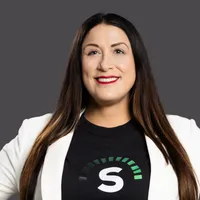
Gena Smith
Chief Human Resources Officer, LVMH North America
Beyond Burnout: Building High-Performance Cultures That Truly Care for People.
Episode 113 · March 7, 2025 · 16:29
Beyond Burnout: Building High-Performance Cultures That Truly Care for People.
Key moments
In Gena's words
“The number one core belief at LVMH is that people make the difference. So the organization is really centered around people.”
“I think you can have a culture of high performance and a culture of well-being. I think that these things can mutually exist. And we're really finding more and more ways that they can.”
“This idea of transmission of skill, again, is really rooted into the DNA of how we think about development. It doesn't just apply to the creative roles that we have within the group, but it's the same philosophy that we bring to business.”
Transcript
Read the transcript2,632 words
HostI'm excited to welcome Gina to the Built by People podcast. Gina, thank you so much for joining us. And as a starting question, I always love to ask if you could share a little bit more about your career journey.
GuestThank you, Dave. Thank you so much for having me. I'm excited to be here with you. I grew up in Texas, and I always sort of talk about a pivotal moment, which for me was a study abroad opportunity that I had. During college, it was the opportunity to go and work and live in Greece. And I, I mentioned that because it was really the first moment that I had been out of Texas, and I was working at a 5-star hotel and just sort of rotating across all of the different areas of the hotel. But it was really the moment that I realized how much I loved people and culture. And I didn't associate it at that moment with human resources. So I went back, changed my major to international business. And over the next 15 years, I worked in a variety of different international companies. I spent many of those years working in executive recruitment. That was sort of accidental, but I met a woman that worked with international companies and she ended up recruiting me. And I was drawn to the types of clients that she worked with, which just happened to be fashion and luxury. And then in 2011, I was recruited to LVMH, and it was my first HR position. It had a talent bent, which was the type of work that I had been doing in executive recruitment. Fast forward now to 2025, I sort of realized how I've come full circle. Going back to that experience I had in Greece where my work around people and culture is really all about HR, working in a, in a French company and international environment. So it was sort of that pivotal moment that really defined for me at least the type of work that I should be doing.
HostWhat are you doing to foster a culture of growth, innovation, and belonging there?
GuestI think at LVMH, our number one value— I mean, we're a values-based organization like so many companies out there. And, uh, the number one core belief at LVMH is that people make the difference. So the organization is really centered around people. Uh, we have about 213,000 people around the world. We have over 75 brands we call maisons, or houses, that are in our portfolio across a number of different business sectors, primarily operating or headquartered in France, Italy, and the US. And at the end of the day, we, we really believe that our number one core asset is our people. There is nothing that we can deliver to our clients that doesn't start with having really exceptional people. So the ability for us to recruit, retain, develop people is core to our ability to deliver exceptional product. What we need to be able to do is create an environment where we can cultivate the absolute most, you know, creative people, entrepreneurial people, drive innovation and positive impact within the organization in order to be able to recruit, retain, and develop people. So this is, again, the, the sort of the essence of who we are as an organization. I think we've been able to marry that with creating an organization that also provides a sense of holistic care about— around our people. We're a very high-performance culture. And I do think— and more and more we're focused on this, especially in my region, which is North America, where we have about 42,000 employees. I think you can have a culture of high performance and a culture of well-being. I think that these things can mutually exist. And we're really finding more and more ways that they can. So the focus is on creating a culture where you put people at the center. And you have our values, innovation, entrepreneurial, and creativity, but then having tools in place where you take care of your employees and you support their mental health, wellbeing, and, and other aspects to ensure that they're having a holistic experience while they're, while they are your employees.
HostCan you share some examples of the learning and development programs at LVMH? And what are some of the unique and effective approaches that have helped to accelerate the upskilling of your employee base?
GuestI think, again, you know, talking about people, you know, I think learning and development is another core part of the DNA of our culture. If you just go back to the products of our group, if you think about jewelry or fashion or leather goods, many of the— or wines and spirits, it applies to most of the product. And if you think about the origination of how these products were developed, Most of these products were created by craftspeople or tradespeople. A lot of the transmission of these craftsmen's crafts or artistry were passed through generations, and we have continued to cultivate that same type of learning and training through all aspects of our business. So this idea of transmission of skill, again, is really rooted into the DNA of how we think about development. It doesn't just apply to the creative roles that we have within the group, but it's the same philosophy that we bring to business. Our industry is rooted in this idea of apprenticeship. So how are we teaching future generations the things that, whether it's retail or marketing or merchandising, all of the different trades that exist within our business? So we've always tried to incorporate different types of training programs. Concretely, we have the LVMH House, which is our learning and development center. So we have a house in North America. We have a house in London. We have a couple in Asia Pacific that provide a number of different programs targeted to different employees. We also have many different training programs that exist within each brand. So you could have different product training programs that you could have leadership programs. You could have. Programs when you are joining a new organization to indoctrinate you into the organization. We have very specific programs for retail talent, again, at the brand level or also at the group level. If you think about a function such as retail that has evolved and changed so much over the last several years, really every function has. So we're constantly looking at How are we providing new opportunities for our talent to continue to learn and grow? Not only are we thinking about what are the skills that they need today, but what are the skills that they're going to need over the next 5 or 10 years? Not just the selling skills, but the types of soft skills that they need in order to manage a team, to engage with customers. We have multiple leadership development skills, our leadership development programs We have programs that focus on artistry because we have so many different trades that are critical to the success and future of our business that are not necessarily being taught in schools anymore. Different aspects of jewelry design or watchmaking or leather goods training. And so we've cultivated and built from scratch many different training programs to to upskill or reskill people from all different backgrounds that are either within the company today or even outside the company. So I mean, I could go on and on about the different types of programs that we have for current existing future employees that target all different levels of employees that are interested in working within our group to support the current and future business needs, and also just making sure that our employees continue to be on a learning journey and learning path within the group.
HostGina, how does your company's commitment to values manifest in day-to-day operations and also your long-term strategy?
GuestI mean, I think we've always felt— I mean, we have a sort of a catchphrase that is, at LVMH, we are diverse by essence and inclusive by choice. Again, if you look at the global nature of our group, if you look at the fact that we have over 75 brands, within our portfolio across multiple business sectors, if you look at all of the ethnicities, the races, the international scope, we are a very, very diverse organization by essence. So it's actually always been embedded in our culture. We started doing some of the first DE&I work over 20 years ago prior to even my joining the group. I joined LVMH in 2011. And that's also when we started in 2000— late 2011, 2012, when we started doing more work in North America, particularly around race, ethnicity, and then a couple of years later around more LGBTQIA+. We believe that it's absolutely core to our business. We've always wanted to make sure that our business is reflective of the world that we live in, which we believe is highly diverse.. And in order to do that most effectively, we think that our employee population needs to reflect the world that we live in. That's how we are most going to be able to reflect from a product, from a services, from a communication standpoint, really the world that we are living in and be able to address the needs of our customers.
HostHow does LVMH foster community and also drive business outcomes?
GuestAgree. We are very fortunate that we have our women's ERG. LSVMH is the longstanding ERG that was launched initially in 2007, and it's been a very effective ERG in really helping to bring awareness globally around the importance of women in the workforce, the needs that our women are facing. We have our ERG for LGBTQIA+, we have an ERG for Black and African American employees, and more recently in North America. We've launched an ERG for people with disabilities. That's not to mention any of the ERGs that exist within our brands because we have multiple ERGs that are existing across touching many different demographics. Our ERGs are, I think they've been incredible at helping us to mobilize employees of different backgrounds, bringing employees to help address different initiatives that we're trying to bring awareness to, to engage with employees, again, of different backgrounds, to bring awareness to certain topics that we're trying to address, to inspire employees, to provide mentoring opportunities, community outreach. We've done so much work from a CSR, from an employee volunteering standpoint. We've done a lot of work intersectionality, bringing employees together and different ERGs together from an allyship standpoint. We've had a tremendous amount of success, although I think there's more opportunity there. And I think from an employee standpoint, to give employees a safe space to have a voice, to share their questions, their concerns, to feel that their voice is heard equally, I think has been really important. And to celebrate their accomplishments, their achievements. We do sometimes even use, and we have used, and worked with some of our ERGs as focus groups on certain business-critical topics to get their perspective and point of view. One area that my head of D&I and I speak about a lot is how do we make sure that we have more allyship and that, for example, when we have an event— let's talk about our women's ERG— that you have more men attending those events, for example, because I think that's where you have more learning and you create more opportunity for awareness and understanding of the needs and challenges maybe that those women face that a man wouldn't necessarily think about. And that's what actually begins to change the conversation and hopefully drive more inclusivity and new ways of working.
HostThanks for that, Gina. In an increasingly competitive job market, what are some strategies that your company has found most effective for attracting and retaining top talent?
GuestI think one of the key areas, and we're still working on it, it's transparency. So we have, again, over 75 brands. And so one of the reasons that people join LVMH is this employee promise of being able to have a very diverse and rich career across potentially multiple geographies, multiple brands, multiple functions. And that is something that we want employees to be able to take advantage of. We, and that's what we're working on, is how do you navigate that? Because we are a very complex organization. So we are actually rolling out, we're in the process of rolling out a tool called Career Compass, which puts the, in a way, power in the hands of employees. So it's really going to allow employees to understand and have very concrete tools and visibility of this is how the process works. These are the jobs that are open in the group. These are the skills that you need. This is sort of where you are today on the skills. These are the skills that you need to get to this job. These are the steps that you take. And basically sharing with employees how the process works, because I think that employees really want to be, and we see that, we see that through LinkedIn and other tools, employees want to be more in the driver's seat of their career, right? And so this idea that an employer is making the decision is sort of a very old-fashioned way of career management. For me, it's a collective, right? It's about HR, the manager, and employees. They all have a role to play. So we are in the middle of really leading a transformation. Part of that transformation is actually making sure that employees have the level of transparency, and I think that will be a game changer. We have a pretty good rate of being able to attract and recruit. Retention is always the goal, right? To be able to recruit or retain people over a long period of time. And I think we're fortunate because we have so many different paths that we can take people on. We just need to really show how that can be a reality. And that's, again, the journey that we're on.
HostGina, what parting advice would you like to share with our community?
GuestThe two things I would say is I do think that for high-performance organizations, we are on this journey now really focusing on how you are building a high-performance culture while still focusing focusing on the health and welfare of your employee. And these are things that can mutually exist. We have some amazing partners that are helping us. COVID wasn't that long ago, but people are still extremely fatigued and tired from that period. We see it and we hear it in every employee survey that we've done since then. I think we have to listen to our employees, and they're telling us that they, they want to work hard, they're dedicated, they're determined, they're focused. It's not solely our responsibility to solve the crisis that we're facing in terms of mental health and wellness in the workplace, but there are things that we can do to provide them access to tools, especially when you know that organizations like ours are demanding a lot. You drive a high performance, but recovery is really important. And that recovery period allows you to also maintain those peak periods. We're doing a lot of work in those areas, and I really believe in that.
HostGina, thank you so much for joining us on the Built by People podcast. It was a pleasure to have you involved.
GuestThank you. Thank you very much for having me.
More conversations like this