Episode 112 · March 6, 2025 · 22:53
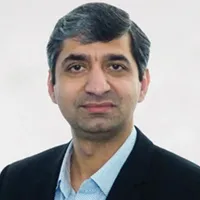
Julian Dalzell
Former VP HR, Shell Oil Company, and University Professor, Shell Oil Company, University of South Carolina
Stop Being Driven By Business: How Global HR Wins With Humanity.
Episode 112 · March 6, 2025 · 22:53
Stop Being Driven By Business: How Global HR Wins With Humanity.
Key moments
In Julian's words
“The first responsibility is to take account of saving lives.. And then if things transpire, that doesn't work out, inshallah.”
“We could both describe what happened in identical ways. We would interpret it in diametrically opposite ways.”
“There's a big difference between HR being driven for the business and being driven by the business.”
Transcript
Read the transcript3,944 words
HostWelcome to the Built by People podcast, where we share the stories and insights of the world's top HR leaders. Join us as we dive deep into the minds of HR executives, uncovering their strategies, challenges, and triumphs in shaping today's workforce. I'm excited to welcome Julian to the Built By People Podcast. Julian, thank you so much for joining us. And as a starting question, I always love to ask if you could share a little bit more about your career journey.
GuestWelcome. Thank you so much. Yeah, it started pretty inauspiciously working as an operations trainee in Shell's organization in the UK, working actually at a truck depot to start with as a trainee, dipping tanks and stuff like that. And then second assignment was actually in labor relations, somewhat, you know, an unusual assignment for a young trainee, but I loved it and went back there subsequently. And then it was very obvious I didn't have any real experience in how to lead people. And so they sent me out to a depot in the East End of London in the docks as a shift supervisor. So working 6 to 2, 2 to 10, 10 to 6 with truck drivers and trying to persuade them to do things that they really didn't want to do, but think it was their idea. It's a skill that helped me over the years. And by that stage, labor relations had become more of a passion. I had a couple of UK labor relations assignments. And then the sort of staff planning system took over and said, only ever done labor, only ever worked in the UK, only really been involved with the trucking business or the downstream business. So we're going to send you to Brunei where you'll be doing talent management, working in the upstream. So the exploration and production world. So it was literally within a week I was recruiting in the Philippines. I'd never done a recruitment interview before. I was totally unprepared for it. But one of the learnings was throw yourself in the deep end because you've got to learn how to swim very quickly. So I spent 5 years there and then moved down the coast to the Malaysian LNG plant for a couple of years. Then to Kuala Lumpur doing talent management for the rest of Shell Malaysia, which was a terrific assignment before immigrating to the States. Joined Shell Oil in Houston, spent some time in compensation, some generalist roles, but started migrating more and more into the talent space for 2 other roles. New Orleans for 2 or 3 years. Went there when the price of crude was $40 and climbing and left when it was $9 and dropping, which was a pretty traumatic period, but gave me some real experiences of dealing with large-scale change. Moved to the Shell trading role, looking after the global HR team for Shell trading with offices in Dubai, Singapore, London, Houston, Calgary, et cetera. Then came actually another opportunity to work in the Far East. So I went to Singapore. And was looking after Asia Pacific, Middle East. In the West, Saudi Arabia, Dubai, et cetera. In the East, Fiji. In the North, China. In the South, New Zealand. So about 11 hours time change between one part of the zone and another. Great experience for a couple of years before back to London to help design and implement the global reorganization. And then finally back to the States and I ended up looking after their HR team. In the US. That was where I retired from and then decided I didn't want to actually retire, but re-tire as in putting tires for the next phase of the journey. And I became a university professor. So the last 14 and a half years I've been teaching at the University of South Carolina, mainly human resources in the global firm, but also some consulting and organizational development work. And for one semester, actually taught labor relations. So 43 years in Shell, 14 of them with the University of South Carolina. That's a brief summary in one long breath.
HostThanks for that, Julian. So throughout your 43-year tenure at Shell and taking into account all your global experience, how did you navigate the balance between maintaining corporate values while also respecting local cultural perspectives?
GuestAnd I think this, I think it's an interesting question. And the reason is that I, there's perhaps a perception that those two can conflict as opposed to be collaborative for one of the better words. The Shell guiding principles, I think even today were honesty, integrity, and respect for people. How those actually played out in the different cultures had some subtle variances and nuances. But the core of it, as long as you can rely and say, am I behaving and acting and delivering business according to those principles, even though culturally there may be some difference, you, you are pretty secure. And let me give you an example of a local application of a global principle. So road safety actually is one of the biggest exposures for an oil company that's got any downstream business.. And in Pakistan, we had something like 140 road deaths in a single year, not directly with our employees necessarily, but one of our tankers was in a road and somebody ran into it. The tanker may have been stationary, but had Shell not been there, those people impacted would've been. So at the time there was a global project called Hearts and Minds. Which is about a standard way of getting people to realize that safety was their own personal responsibility first and foremost, and to take care of themselves and take care of others and do that on a consistent basis. So when we started getting to the root of what was the cause of some of the road accidents, it transpired that one of them was a tenet of Islam, which was inshallah, which literally means if it's the will of God, then it's going to happen. And that was being interpreted as if you overtake on a hill and there's something coming the other way and there's a, like a truck. Yeah. Inshallah. And so we addressed this by using the local imam, the local priest, and said, tell us more about inshallah, what it means and what it means in these circumstances. And he said, no, that the first responsibility is to take account of saving lives.. And then if things transpire, that doesn't work out, inshallah. And so we used the imams to educate the families. So we brought the families into the plants. We had the imams in there. They talked to the families about this concept in great detail. And the result of that, along with a few other things, was we had zero road deaths for 2 years in a row following it. It was a local application of a global principle. But if you imagine trying to translate that into the States and say, let's get out to the nearest Southern Baptist church and have a conversation about road safety, people would laugh you out of the— it would be absolutely ridiculous. So I think having those core principles applied across all of the world and then adapted, but staying within the framework was a really important way in which we managed to balance the, the two. So I think that's the one that would stand out to me.
HostJulian, we talked in the past about a powerful story about student contracts in Brunei. Can you share more examples of how cultural misunderstandings shape your approach to global HR leadership?
GuestWould you like to talk about that one in Brunei briefly? That'd be great. Okay. So, um, very quickly, Brunei was a small Muslim sultanate on the north coast of Borneo. At the time, there were no local universities. And given the fact that we wanted to increase local presence and we wanted to give back to the community, we provided high school students with the opportunity to go to universities in the UK. And we paid for their tuition, for their books, for their housing. We gave them a stipend. We flew them back to Brunei twice a year, et cetera. And because we, this is obviously quite a big financial outlay in order to make sure that they came and worked for us afterwards, we made them sign a contract that said, we've given you all this money, you owe us by coming back to work for us. I thought that frankly was on the edge of immoral because these were the children of rice farmers or government civil servants or relatively poor background. And there were only two employers of any real size in Brunei, the government and Brunei Shell. So what choice did they have to come back? And if they didn't come to work for us, how could they possibly afford the expense of paying back all the money that we'd poured into them? So I argued that. I said, this is just unethical. And with a team at the moment, that time was totally Western. I won that argument. Everybody saw my point. Point of view and said, yes, we should do this as part of our outreach, as part of our contribution to society in Brunei. Went away on vacation for, I don't know how long, 2 or 3 weeks, and came back and found that the policy had been reverted back to what it was before. And I went in and saw my boss and said, I really think this is inappropriate. And he said, look, we've got a bit of a greeting, a little sort of tea party with the students. And why don't you come down? And listen. Don't talk, just listen. Okay, so I went down and the subject of these contracts came up. And one of the students said, we're so glad you changed your mind on that. I said, well, tell me more. And he said, we realized that when you made us sign a contract that we would come back to work for you, you really wanted us to work for you. And when you removed that, the message was whatever. I mean, yeah, we are giving you this money. Nobody cares. Want to come to work for us? So they saw it as a commitment and I saw it as a constraint. I was 180 degrees wrong. We could both describe what happened in identical ways. We would interpret it in diametrically opposite ways. And that was one of the big examples. And I think the second one was going into Singapore. I needed to get to pass the theoretical test for my driving license. And my administrator said, you need to leave the office for your driving test at 5 o'clock this afternoon. Okay. So at about 4:15, I packed my things up, went to the driving test center, and they showed me up to a room and it was sort of three-quarters empty room. And they said, okay, you can start the test now. We will check your credentials as you, as we're going around. So they Eventually came to me and he looked at my driving license and looked at my passport and saw that I was the person I claimed to be, but also looked at the booking slip that I showed for the test. And he said, your test is at 6 o'clock. My assistant had said, you need to leave the office for your driving test at 5 o'clock. I interpreted leave the office at 4:15 to get there for a 5 o'clock test. She meant leave the office at 5 to get there for 6. So I said, okay, then I'll just carry on now. And he said, no, your test is at 6. Okay. And then logic kicks in. Is it a different test at 6? No, but I've already seen all the questions. Yes. So what do you want me to do? I want you to leave. How long is it going to take me to get another test? Come back at 6. So I came back at 6, went through the same thing. He checked my all of my credentials again. I'd been out in the parking lot. I was able to look up all the answers. So I came back in there and surprise, I actually passed. So the lessons from that to me were twofold. The first is make sure you really listen. When they say your test is at 5 o'clock, then it's clear. It's leave the office for your test at 5 o'clock, isn't it? But the second thing is there are ways to getting to win-wins if the definition of win is different. So the instructor's definition of win was my taking the test on time. My definition of win was getting a license. Neither one of us cared whether or not I'd actually seen all the rules of the road and stuff like that. So we had different definitions of win, and I carried that with me pretty much in what I was doing labor relations, both in the US and the UK. That idea of, you know, understanding what win looks like in the view of the other person is really important. And I think that spans across cultures and nationalities as well.
HostJulian, in your view, how can HR leaders better restore the balance between human and resources in today's business environment?
GuestI think academia has some, something to answer for here. I think a dear friend of mine called Pat Wright, who's one of the sort of world's leading thinkers of HR. I used to go and do guest lectures for him at Cornell, and now he's a colleague at University of South Carolina. And one of the things he stressed was HR needs to be driven for the business. And I would agree with that. HR needs to understand the business. It needs to have its legitimate seat at the business table. But there's a big difference between HR being driven for the business and being driven by the business. But I think at times we get too carried away with teaching them all about financial accounting and management accounting and metrics and stuff like that. If we forget the danger of ignoring the human in human resources. So if I'm thinking about what does that look like doing that big, that operation in New Orleans where we had to downsize pretty significantly. One of the best leaders I worked for, a chap called Rich Paterosi, was the general manager there at the time. And he called my HR team in before we went through the downsizing. And said, look, Julian, I want to speak to your team. Okay. This doesn't always go well, but let's try this. I trusted him. He was a great leader. And he brought us in and he said, firstly, I want to thank, I want to thank you because I know that the next 6 to 8 weeks is going to be incredibly stressful and painful on you. New Orleans is a small community. You see, you're going to be saying goodbye to friends, perhaps even relatives. And I know that's going to be really difficult. But I want to be crystal clear about who's accountable for what. My line leaders and I are accountable for deciding who goes and who stays. Your accountability is to hold our feet to the fire. Such that we do that ethically, legally, and compassionately. And how I will test success on that is whether or not employees get the sense that they had left with their dignity and respect intact. And that was our guidepost. It was putting the human into human resources, treating people compassionately, carefully, listening to them, not being judgmental about it, but helping them. So what's the next phase? And helping them with that. We ended up without a single claim for unfair dismissal and nearly 1,000 people left the organization at that time. So I think that's really important. And the last very quick one is that the best example is managing director's wife in Brunei and Everett. And we used to have a curry lunch every Sunday. They had a curry lunch every Sunday and they would invite people from all sorts of strata of the company with their children. And we provided them with a briefing on the employees and a photograph and something about them and stuff like that. But I went to one of those one time and after about 5 minutes, Anne would say, hey, John, come over here and play with Ishak. Shoo, come over here and play with Long. And I said to her, Anne, how do you remember all these names? I know we give you a briefing, but how do you do it? And she just looked at me with this lovely smile and said, if you care, you remember. And demonstrating that one person at a time, I think is really important. And in HR, remembering what's important to the individuals, remembering that some of them only come to you when they've got a real issue. They don't say, no, let's go to CHR and see how they are this week. Normally when people come to you, it's because they have a problem. And remembering that problem may be in their mind, in your view, totally unrealistic. But just understand each and every one has come to that view through their own process. So understanding why they think what they think, how they've come to that conclusion, what has been the past, etc. I think you can demonstrate that one person, one interaction at a time. And I think it's something that as academics, we need to stress.
HostJulian, you obviously have a gift for storytelling based on this conversation today. And with your extensive experience in corporate HR and academia, how do you use storytelling to effectively teach and implement
GuestHR principles? I think that's one of the, one of the, yeah, it's a hallmark of my teaching. So I use storytelling mainly because having the examples of having worked in the business, I think adds relevance and context to how I'm teaching HR. But I think the Native Americans were absolutely brilliant at storytelling. There's a superb YouTube video on Native American storytelling, which is about the how the Native Americans understand the context of the mosquito. And most of us think that's a pretty annoying insect. I would encourage our listeners to go Google that on YouTube. But to me, it was a way of demonstrating fundamental truths about when you start ignoring your environment and take advantage of it in tough times, nothing good will happen. And that's basically the moral of the story. I think case studies are actually a storytelling technique in themselves. And so one of the things I do, for example, there's a study on a chap called Mark Chan who is a Singaporean, gets posted to London, goes with his wife. They're all very happier there. Gets another opportunity to move to Holland. And at that same time, his wife's father dies and the widowed mother in Singapore is anxious to return. So it's a fairly common tension between career and life. And what I do with that is other than just the case, I actually have 6 students come up and I have one, the first of them is one acts as Mark Chan and the other one acts as the wife and they're having this conversation. And then the next couple of students act out where the wife is talking to the brother back in Singapore and the brother's not too pleased to be left with his single life constrained by the fact that he's got to look after his father at the moment. And then the third one is Mark Chan talking to HR. And so I get them to experience what it feels like when somebody's saying, you are not doing enough for me. You should have sent me back to Singapore. Or the wife saying, hang on, I sacrificed, I came here and now you're not willing to do this. And then when she talks to the brother, it always ends up she's defending her husband. So it's a real life situation that does occur quite a lot. This conflict between being fully mobile in advancing your career in an international context.
HostJulian, what do you believe are the most critical skills for HR professionals working in a global context today?
GuestI would put 4 out there. The first is being inquisitive, seeking to understand before seeking to be understood. Different cultures interpret circumstances in different ways. So research, be inquisitive, research the cultures with whom you're interacting. Things like Trompenaars and Hofstede are two great frameworks where they actually look at the cultures in a very structured way. But I think that's really important. The third one is understanding your own personal and cultural biases. Biases are like noses. Everybody's got them, but some of them are privy of numbers. I've just realized that they are shorthand ways, which as individuals, we interpret things. It's like having this sort of mask sitting in front of your face and stuff comes towards it and you pick out bits and frame it based on your biases. It's a shorthand way of doing it. So biases don't have to be bad, but they have to be recognized. And then the last one, I continue to breathe. You got to be rooted in the business. You need to understand how your organization functions., and if it's a for-profit one, which not all are, obviously, then you need to understand what's it there for, how it makes money. So those 4 things, be inquisitive, research the cultures, understanding your own biases, and lastly, always be rooted in the business or the organization and the goals that it seeks to achieve.
HostJulian, what parting advice would you like to share with our audience?
GuestDon't be afraid to take risks. Going to Brunei was a big risk. Emigrating to the US was a big risk and be willing to take on tasks that other people have been unwilling to take. The second one is never stop reading, never stop learning rather. In the field of HR, if you're not keeping pace, you're out of date. And this function is changing so rapidly with things like AI. And other ways of delivering HR that standing still and imagining that's not going to happen. You're burying your head in the sand. So embrace technology. If you don't, you'll get left behind. And then frankly, this is a simple math thing. Be mobile. It's math. The more mobile you are, the more jobs are available. And you and I both know that having experiences, whether it's outside of the country or just within the US. It's really important to get different perspectives and then develop good mentors, be willing to reach out to people. And then when you get the chance to do so, repay the favor. Remember that people mentored you once and respect that, remember it and repeat it.
HostJulian, thank you so much for joining us on the Built by People podcast. It was a pleasure to have you involved.
GuestYou're very, very welcome. And I hope it was useful. Thank you for giving me the opportunity.
More conversations like this