Episode 16 · December 5, 2024 · 17:00
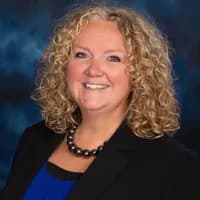
Armi Noorata
Global Head of Total Rewards, Fireblocks
Unlock Loyalty: Why Growth and Purpose Outweigh All Your Benefits
Episode 16 · December 5, 2024 · 17:00
Unlock Loyalty: Why Growth and Purpose Outweigh All Your Benefits
Key moments
In Armi's words
“You just need to be open to opportunities. If somebody gives you an opportunity to do something that seems a bit out of your comfort zone, like joining a podcast, for example, you should take the opportunity.”
“75% of individuals facing fertility challenges have said that it impacts their productivity at work.”
“68% of participants... said they would switch jobs for better fertility benefits, which is which is a mind-blowing number.”
Transcript
Read the transcript2,495 words
HostWelcome to the Built by People podcast, where we share the stories and insights of the world's top HR leaders. Join us as we dive deep into the minds of HR executives, uncovering their strategies, challenges, and triumphs in shaping today's workforce. I'd like to welcome Armi to the Built By People podcast. Armi, it's great to have you involved, and I'd love to start out with the question of tell me about your career journey and what are some of the key lessons that you've learned along the way that you'd like to share with our audience?
GuestLet me say thank you for inviting me to the podcast. I always find it exciting to have a chat about Total Rewards. In terms of my journey, I've had a pretty unconventional journey. My mom, she was in advertising in Sri Lanka and she had a really tough time as a single mom working, you know, really long hours. And she didn't want that life for me. And so she kind of nudged me towards a non-office job. So right after high school, I kind of became a beauty therapist, which I was for a short time. And then from there, I jumped to the obviously very obvious path of becoming a server-side backend web developer, and I did some programming work there. And then eventually I moved to New Zealand, and from there I couldn't find a job doing web development, even though I kind of had a portfolio of work I could show. But so I ended up getting an entry-level legal assistant role in an investment firm. And then after that, after a year about doing that, and I kind of realized it wasn't for me. And so I kind of ended up going into an HR coordinator role. Never done HR before, went into an HR coordinator role at Deloitte in New Zealand. Getting that kind of foot in the door was great because eventually they recognized me for my analytical skills. And so I became a business intelligence analyst. And then I was working, you know, as a business intelligence analyst for the financial controller at Deloitte. And that's kind of where I got a bit of a taste for analytics and people analytics. And so from there, basically, I ended up in compensation analytics, which, you know, felt like home to me where I was supposed to be. And interesting because it's kind of a little bit like the prior 3 jobs I had where, you know, when you think about total rewards and people ops, it's kind of a mix. So I had to, I had to kind of know tech and systems, you know, as a web developer I got that. And as a legal assistant, legal assistant, I kind of learned the importance of compliance and audits and then finance, you know, I work with numbers and data. So it's interesting. I always think everything happens for a reason and all those changes kind of led me to, you know, where I am just, you know, so grateful for, you know, all of that experience.
HostAmrit, do you want to talk about a couple of key lessons that you've learned along that career journey that has shaped you into who you are today as a professional?
GuestYes, that change can be great. You just need to be open to opportunities. So, I always advocate for, you know, trying new things. If somebody gives you an opportunity to do something that seems a bit out of your comfort zone, like joining a podcast, for example, you should take the opportunity. You never know, it might open other doors for you and give you opportunity to learn something, if nothing else. So that's the key lesson I've all— I've learned throughout my, you know, prior 20 years of doing so many different things. And so being open to things and going with enthusiasm for everything, I think that really helps.
HostAwesome. I want to switch gears here and talk about family-forming benefits.
GuestSure.
HostCould you talk to me about what family-forming benefits exist within the space and what impact those types of benefits are having on the workforce today.
GuestSure. So family forming benefits is very close to my heart. It's— it actually, it really hits home because I went through a huge journey. I'm in my 40s. I had my kids in the last 3 years, 2 kids, and I went through 7 rounds of IVF. I it was really, really tough. And then to make matters worse, pregnancy was difficult, labor was difficult, delivery was difficult, postpartum was difficult. So I place a lot of value in family forming benefits. When we talk about family forming benefits, typically what we're talking about is, what you see most when you're talking about family forming benefits is really fertility treatments. It might be adoption, surrogacy, anything relating to trying to form a family, right? And so having had this tough journey, I find there's a lot of things I learned just going through that difficult journey. And so that's why I've advocated for it. But it's interesting because you would think, oh, it's just one of those altruistic benefits, something you're doing because it's the nice thing to do or the right thing to do. But really, as much as, you know, having gone through my personal journey and thinking that it's important for people to have this, I think there's a lot of value for companies with this. And whenever I've gone to the executives, I've always had data to back up how it was advantageous for the company. And I did this in my, you know, current company and my last two companies. And I mean, I can, let me throw you some stats, right? 75% of individuals facing fertility challenges have said that it impacts their productivity at work. Like, that's huge. Like, and everybody's trying to form a family. If you are not, that's unfair to say, but, Many people tend to form a family. It's a very natural part of your journey in life, right? So if you're finding that a significant portion of your workforce is saying it's impacting their productivity at work, it makes a big difference when the companies kind of step up and provide some support towards, you know, family forming. It kind of sends that really powerful message that, hey, we value you. And we want to kind of help lower that financial burden for you so that— and it makes room for engagement and attraction, actually, because there was a study that said that like something like 68% of participants, it was a very specific study, but 68% of those participants said they would switch jobs for better fertility benefits, which is which is a mind-blowing number. And so I really think it impacts attraction and retention. I would, I would and have gone as far as to say it's a game changer for employers.
HostWhat are some of the specific family-forming benefits that your organization offers and what kind of feedback have you been receiving from employees on those offerings?
GuestSure. So we offer assistance towards any of the family forming that people might have. So if it's fertility treatments or IVF, IUI, all of these things, surrogacy, adoption, even mental health issues during the process of going through fertility, all of this is actually covered. So what we do is we give people financial assistance, they get reimbursement for it. So yeah, I think it's important to not pigeonhole what family forming would be because for different people it's different things and issues, right? Not everybody wants to do IVF, not everybody wants to adopt, not everybody wants to go through surrogacy and so on.
HostSo financial help, that brings me to our next topic being financial wellness. It's obviously increasingly important for employee well-being. I love to reference Mercer's Employee Mind Survey, which indicates that the number one concern among American workers is covering monthly expenses. I'm curious to get your perspective on some of the programs that you have in place related to financial wellness and how you're measuring their impact.
GuestSure. So we have employees globally and it's different in each geo, but I can talk more specifically in the US. And, you know, you're right, like that we don't really need a survey to tell us this. Like, we know this. We also know that, you know, when people are worried about things or when they're not worried about things, they're more likely to bring bring their whole self to work and be, you know, better teammates, more engaged, more productive. And financial wellness is one of those things. You know, employees are constantly worried about money, they're less likely to be engaged at work. So at Fireblocks, we partner with Sequoia and Fidelity over like a few resources that we have for employees. So financial education, like webinars and workshops, we have given them access to personalized financial coaching sessions, which are really amazing. So basically employees can set up some time to call and discuss, you know, their individual financial situations and kind of get some tailored advice, which, you know, is great. These sessions are really kind of designed to help people build that knowledge and skills that they need to kind of make informed decisions on their finances. And there are so many really neat tools. Like, I mean, you get the usual of, you know, how to well track and manage your expenses and manage like student loans and debts and so on. And but one of the other tools that we recently, and one of the other, I guess, benefits that we had just rolled out is this one called Stash. We just rolled it out like 3 weeks ago. Which kind of incentivizes and sort of gamifies saving and investing. So based on their goals, employees, you know, can, you know, grow their money in like different ways, like more personalized saving or investing solutions and so on and so forth, which is really neat if you think about it because that's a really good way to push yourself to save because we don't tend to do it as, I mean, we do our retirement savings, we tend to put some money away, for retirement because it's what we've been taught, right? Everybody says, go put some money in your 401(k). But I think just saving in general is not a habit people seem to be able to implement in their lives because they've just got all of those expenses to deal with, just like you just said. So I think what we're offering is really neat. It helps people save more and just build on their investments over time.
HostAny trends that you're seeing in the financial wellness or family forming benefits space that you want to shed some light on during our conversation?
GuestYeah, I think with finance, it's very interesting. If you'd asked me 10 years ago if it makes sense to offer employees assistance with family forming. It's not something we would have thought about more than— like, it wasn't something that even came up, at least in my experience. And I think what's interesting is when you're thinking about trends, we've grown— like, the technologies have grown and changed things so much just in the last couple of years. Tesla's made robots to assist in household chores. Like, that's mind-blowing. So, I mean, I don't think it would be crazy to imagine a world where companies would start assisting with things like that. Like, where someone comes in and takes care of your errands and gives you more time to work and focus on your work. I think I think it's just things change at such a rapid pace, it's almost hard to predict. But I spoke to somebody maybe 6 months ago and he had this concept of— and they were starting a business. It wasn't just something we were just pulling out of thin air. He had a concept of starting a business where they were considering finding ways of getting employers to help employees in the housing market. So it's so hard for people to buy a house these days. How can you, how can, how can you as a company help them buy their house? I mean, the company was just in concept stage. I don't know whether they were ready to go to market with anything, but I see, I see a future where those kinds of things can happen and it's so exciting. And now with AI, there's just I feel like there are so many things we just don't know we don't know, you know? So I think with, you know, finding and keeping talent in the future, companies will definitely be more creative with those kinds of benefits.
HostWhat parting advice would you like to provide to our audience?
GuestI think to stay competitive in total rewards, I think organizations should kind of focus on three things: flexibility, personalization, and alignment with employee needs. And I think the way to do that is first you have to make sure that employees are aware of the rewards they have, because often people aren't aware of everything they have available to them. Then you get regular feedback to kind of understand what employees value the most, and then I would— I always recommend using data and analytics to kind of assess that effectiveness of, you know, the whole strategy. And then that way you're investing the right funds and energy on the right benefits for your people. So that's definitely a big thing. And then it's kind of important, though, to look beyond just the total rewards. I think you want to balance your offering with both monetary and non-monetary rewards. And I think, you know, of course, wellness programs is a big thing that people do, but then there's also professional development where, you know, you want to think about growth and then you want to think about purpose, right? I coined this phrase recently. I felt like, oh, that sounds like a nice soundbite, maybe I could use it, which is, Total rewards will make people stay a while, but growth and purpose makes them go that extra mile, right? Like, if you think about it, you can do all of these great things with total rewards, but really you want people to feel connected to the organization, and usually that purpose does that. And then the development in them, that investment in them, that growth makes them actually want to go all the way and stay and make a difference in the organization.
HostAmrit, thank you so much for joining us for the Built by People podcast. It was a pleasure having you on.
GuestLikewise. I'm so happy to be here.
More conversations like this