Episode 4 · October 29, 2024 · 23:18
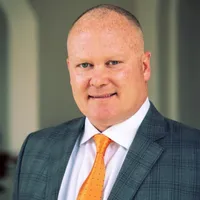
Wade Galde
Director Global Total Rewards, The Knot Worldwide
Beyond Loyalty: How Transparency & Purpose Reshape the Modern Employer Contract
Episode 4 · October 29, 2024 · 23:18
Beyond Loyalty: How Transparency & Purpose Reshape the Modern Employer Contract
Key moments
In Wade's words
“if you get it right, you know, you kind of, you take that off the table from an employee perspective. But if you get it wrong, it's like paramount. It's the one thing people focus attention on.”
“my general feeling is, you know, it's better to do it because you want to and not because you have to.”
“it really comes down to, do they value the employee? Is this a place where the employee can be taken care of and can be effective and really enhance their broader goals even outside of the 9 to 5, right?”
Transcript
Read the transcript4,550 words
HostWelcome to the Built by People podcast, where we share the stories and insights of the world's top HR leaders. Join us as we dive deep into the minds of HR executives, uncovering their strategies, challenges, and triumphs in shaping today's workforce.
GuestYeah, I can— so I can kick things off. So I actually kind of fell into this as a career, which I feel like is the case for a lot of people that do total rewards, like I hope he gets a degree in comp and ben. But it's a really fascinating sub-function of the HR organization that focuses attention on, you know, both compensation and benefits or wellness, ensuring that companies, you know, are competitively paying for their work and employees feel like they are, you know, paid fairly. So there's an aspect of it to where You know, yes, you are trying to make sure companies are, you know, not spending too much money, but at the same time really enhancing the overall employee experience to make sure people, you know, feel competitively paid for their work. And there's been a lot of studies done and surveys around, you know, where compensation and benefits fall within the overall kind of employee purview and value proposition. And it's interesting because, traditionally, you know, if people leave an organization, you know, they oftentimes will survey what, you know, their rationale is for leaving. And if they feel, right, that they are not paid fairly for their work, or that's the reason as to why they're leaving, it's like top of the list, like number 1. If on the other hand, they feel like they are paid fairly and compensation is not the driver, it drops down to like 10 or 12. And there's all these other factors like, you know, I don't like my manager or I'm not fit for the culture or whatever. So it's very much like, you know, if you get it right, you know, you kind of, you take that off the table from an employee perspective. But if you get it wrong, it's like paramount. It's the one thing people focus attention on. So yeah, I started actually at a survey company called Radford, again, just in need of a job. And then from there, really enjoyed the work. And there's a certain aspects to it that I really thoroughly engage with, just in relationship to the, you know, again, the employee experience and the level of confidentiality. I mean, we, you know, I deal with literally people's ability to take care of their families, put food on the table, get their kid the medical attention that they need. Like, it's really personal and it's an aspect of HR that, as a result, like, just means a lot to me and tastes takes on more than just a professional kind of level of engagement. But from there I went into corporate comp. So my, my, of the two components, comp and ben, my, my wheelhouse is definitely on the comp side. But over time I gradually increased the level of role and leadership level to the point where I took on total rewards supporting in some cases really large organizations where I had been more focused on the comp side and then in smaller companies, most often in the startup space. And pre-IPO coming in and managing all the total rewards, which is what I do here at The Knot. So we're global. Everything falls under me in relation to how we compensate people. Do we have the right wellness and benefits programs in every country? Are we abiding by all the local regulatory rules and guidelines that we need to? And just ensuring that kind of our T's are crossed and our I's are dotted. And then in terms of employees, you know, making sure that people are paid competitively for their work and that we're managing costs. Salaries, you know, in every company you go to are always the number one cost. And so there's really a heightened exposure to, you know, are we paying people the right, the right amount of money? Do we have the right compensation programs? You know, do we, do we have a variable program? And if so, do we need it? Do we have an equity program? It's really managing all those different components to ensure that we have a really strong message both internally and externally in terms of, of how we compensate and what we, we do to support our employees.
HostHow many countries are you operating?
GuestWe're in 12 countries.
HostHow many employees?
GuestAbout 2,000.
HostWell, that's a lot of, a lot of analysis, I'm sure, that you have to do in order to get it right in every one of those countries.
GuestYeah, there's, there's a lot of, a lot of back and forth. But generally we do use a broker for our benefits. Global benefits programs that we also culturally had kind of done more in-house. So I'm actually in the process right now of establishing a global benefits strategy for us that really takes all of what we do in every country. This is a very unique environment company-wise where we're kind of a Frankenstein of companies, either through acquisition or merger. And so there's still this kind of underlying feeling that, you know, well, we do it this way over in Spain and, you you do it your way over in the US and kind of, you know, let's just continue to be siloed. And I'm working to kind of adapt folks into this way of thinking that's more a unified approach, right? We're one company, one organization. We are committed to supporting all employees. It's gonna look different by country, but it all falls into this broader global benefits strategy.
HostAny key moments in your career roadmap that led you to where you are today?
GuestYeah, so I've been lucky enough to be a part of a couple of companies that have gone public, which really adds a whole nother layer to how we do things. I'm kind of at the point now where my focus and the attention, and oftentimes it's driven by the market or where, you know, where kind of the trends are heading, and pay transparency and really being more open and vulnerable with employees, I feel like is is really, you know, the top probably 1, 2, or 3 items in terms of how we do things. I think that's kind of a bit of the nature of what we see in local, you know, regulatory environments right now where states in the United States and, you know, countries, whole countries outside of the United States are adopting pay transparency laws. And it's only going to continue to head in that direction. So my general feeling is, you know, it's better to do it because you want to and not because you have to. And so it's kind of A lot of what we're doing is just to try to get more information out to employees and help them better understand where they fit within our broader job architecture, where they are relative to their competitive pay position. And, you know, are we accounting for all those different elements to ensure that we have the right talent in the right role and being paid the right amount of compensation?
HostI love that, Wade. Thanks for sharing it. And what are the most significant trends that you're seeing that are shaping the total rewards landscape and How do you find yourself adapting to that in the now?
GuestYeah, so good question. The pay transparency thing is obviously, you know, a big one, but a lot of the younger generations that are coming up, a lot of the millennials and even younger employee-based groups of folks are really bringing forth with them a different way of looking at work and the nature of work. And so, you know, you have kind of historically this, this transactional, you know, agreement between the employer and employee, a contract, if you will. Well, if you pay me well and if you give me a pension and you do all these things, I will stay at your company, you know, and work hard and be a high-performing employee because, you know, the value for me is the trade-off is I, you know, I get, I get taken care of, right? My family gets taken care of. Over time, especially in the '80s and the '90s and in 2000s, that contract has really been attack— not attack, that's not the right word, but it's dissolved to a large extent. And, you know, whether it started with employees or employers, the bottom line is that any kind of agreement, right, that you come in and you do good work and you get paid competitively and you get set up for the future really doesn't exist in the vast majority of organizations. I know in like, you know, government roles, it's still there to a certain extent. But definitely within the tech sector, it does not exist. And so as a result, you have companies that really don't feel any, any strong need for, you know, to commit to employees or, you know, do anything differently that, that really is anything other than, you know, the bottom line and ensuring that they, you know, make the most money, get the biggest profits, you know, generate the most revenue. Because at the end of the day, their biggest stakeholders are their investors. And so because of that, I think you've seen an employee backlash of, well, if you're not going to, you know, take care of me, if you're not going to commit to my and my family's well-being, why, what do I, you know, why do I feel the need to owe you anything? Right. So, you know, you've seen length of tenure drop dramatically, especially within the tech sector. I think at one point in the Bay Area, the average tenure for an engineer, for example, was like 18 months.
HostYeah.
GuestBefore they move on to another role. And again, I think that just speaks to that lack of, of kind of unwritten contract. And so that trend, especially if you see the younger generation coming up, is really only becoming more employee-focused to where people, they come to a job or they'll accept a job not because it pays the most, not because, you know, the company is is, you know, firm and, you know, a widely known name or anything like that. It really comes down to, do they value the employee? Is this a place where the employee can be taken care of and can be effective and really enhance their broader goals even outside of the 9 to 5, right? They want to join a company that culturally supports their ability to take care of their families, you know, take their kids to doctor's appointments, all of these things that really, yes, they are kind of indirectly connected to how they perform in their job, but more so it's about, you know, are you empowering me to do, you know, a good job of taking care of my family and be happy in my role and feel like I'm valued and I'm doing something that's bigger than myself, which, you know, the tech sector is oftentimes hard to come by. I've worked for companies that, you know, the end product. For example, you know, a solar company that I, that I worked at that I was really proud of because I'm a big believer in the need to address climate change. And this is a company whose sole purpose was, was just that. And it definitely added a layer of, you know, I'm not just coming in and doing my work and doing a good job. I'm investing in something that's bigger than myself and can have an impact that, that goes even above and beyond how we as an organization perform, you know, in our regular quarterly, you know, quarterly earnings and all that. And I think a lot of people are looking for that. Now. I think the younger generations especially are much more focused on that. So in terms of how you adapt to that, I think, you know, having a strong culture is really important. How you manage that culture, I think, is, is, is a critical aspect of it as well. At Denod, I'm trying to drive, again, more transparency, more vulnerability, more honesty with our employees. I think there is this kind of idea that, you know, companies don't oftentimes share everything. And, and in fact, I always, I always laugh at like the whole interviewing process, right? Or hiring process because, you know, you've got candidates who aren't really being fully honest with their employer because they want the job, right? And then you have the employer who's not really fully honest with the employee because they want them to come work for them and they're not going to, you know, they're not going to show them all the, the goods and the bads and the uglies. And so it's, it's a fascinating kind of disingenuous interaction that I find is hilarious because if it works out right in the best case scenario, you know, you get someone and they're happy and engaged and you keep them for 5, 7, 10 years, right? So you're basing all of that off of, you know, a handful of Zoom interviews and, you know, panels. And it just, I don't know, it speaks to kind of a lack of understanding of just how, you know, where people are, how they think, how they behave, and then how you account for that. So for me, I think the answer to that is being again, more transparent and more honest with people. And accepting the fact that, you know, you may not get all the talent that you want. In fact, I kind of, I used to believe, and I mean, following kind of traditional high-tech environment, you know, hiring practices, that, you know, you always wanted like the best talent, right? Like, you know, you wanted that A-player, you want that kid straight out of college, you know, that's, you know, top of his class, right? And more often than not, that came with a really big price tag as well. Now my focus and kind of how I speak to it, I even talk about this in my presentation at World of Work, it's really about getting the right talent. So not necessarily, you know, the top of their class, but someone that is a good fit for your culture and really aligns with your mission and where you are trying to go and what you're trying to do. And somebody that is going to be engaged, not because you're paying them a ton of money, but because they really want to come and work for you and they really want to, they support your mission and they believe in it and they think, you know, they feel genuinely like they can add some real significant value. So it's just a different way of looking at it and one that I personally feel like is going to get like for the companies that do adopt that perspective, they're going to get the best people in the roles that they need them to be. And maybe not, you know, again, the most expensive people, but, but at the end of the day, the right fit, which again, I think is going to make them more successful and, and align with people's expectations of, you know, We're coming, you know, we're bringing you on board because you are engaged in what we're doing. We, we, we believe you believe you're, you know, you want to be a part of this. And as a result, you know, let's do this together kind of thing. And it's just a different way of looking at it. But, but yeah, that I think is a pretty significant trend that I think companies should adapt to and should be prepared to adapt to. But a lot of, a lot of times that's not necessarily the case.
HostAnd Wade, what's something controversial but effective that you find yourself doing in the field of HR?
GuestThat's a good question. Controversial, I would say focusing attention on the employee wellbeing and kind of flipping the script a little bit. I, as in any, every role that I've been in, and I feel like most Total Rewards leaders, you know, are in this space as well. You deal with, you know, you work cross-functionally with a dozen different pieces of the organization, right? You know, from legal to all the different, you know, in-house HR functions, right? Talent acquisition, HR operations, people generalists and people business partners, and finance. Finance is a really important partner for me and one that I work really hard to have strong relationships with because, you know, their primary focus is how do we, you know, spend as little as possible, right? And ensure that we're meeting the needs of the business at the board level and, you know, what our investors are expecting of us and how do we account for all those different things. So, You know, oftentimes I come with a different take of, you know, yes, I'm not discounting any of that. But at the end of the day, if we don't pay people competitively, we're not going to get the best talent. We're not going to get people that want to come in here and work hard for us. And that constant kind of lowballing approach to compensation and benefits, I think, is completely the wrong approach. It does tend to be a little bit controversial because it just, you know, in some ways can be perceived as discounting the financial obligations and expectations. But in my mind, it's worth it in the end because you are going to have the right people in the roles. You're going to pay them competitively, maybe spending more than you would like to and having that, you know, that come out of your ability to generate revenue or what your bottom lines are. But at the end of the day, I think you're going to be more successful. And, you know, the statistics have been done, right, that, you know, exiting employees or turnover generally is one of the higher cost areas of any business. And so you may think, you know, you know, by paying people more money, it's costing you. But in actuality, if you wanna pay them less, it's gonna cost you more in the long run because those people are not gonna stick around. And now you're in the process of paying, you know, paying money for churn and all the, you know, things that can go along with that, right? A loss of business, loss of focus, a loss of employee engagement, all of which feed the inability to generate revenue and maintain cost. So yeah, I don't know. I mean, I guess it could be considered controversial, but I think that employee focus, is really something that I try and drive. We as an organization are a remote-first company, and I'm a big believer in remote work. I think it's— it is the wave of the future. I think companies that are pushing employees to come into the office, and I know some organizations are out there literally telling people like, if you don't come to the office 3 days a week, you don't work here anymore. I think that's a huge missed opportunity. And I think it doesn't really accurately reflect the employee base and where people are at. And you're kind of counting on them to, you know, come to work for you regardless of all of that because they simply need a job. And that's never a really good place to be in my mind. You know, when you're working with employees and making contracts based on like a desperate need to, you know, to bring in income, I just, I think you fall way, way short of what the potential possibilities are.
HostThat's great, Wade. What's the biggest challenge that you've faced in your career? How did you overcome that challenge and what did you learn?
GuestYeah, so probably the biggest challenge is organizations that don't have the level of maturity in, especially in their manager base, to sit down and have an honest conversation with employees about their compensation. There's this kind of constant fear that, well, if we open, you know, open up the black box and we start sharing this information with employees, they're going to get pissed or they're going to, you know, be really unhappy and they're going to leave, right? And nobody wants that. So, So there's kind of the default to, well, just don't tell them anything, right? And unfortunately, what that has driven, I think, is a manager population that really, first of all, doesn't have an accurate understanding of what it means to be a manager and all the kind of requirements and dependencies that come along with it. I personally think that if you're a manager, part of your job is owning your employees' compensation. So it's your responsibility to make sure that your employees are competitively paid for their work. I think in many instances, especially within the pre-IPO environment, they have kind of used the manager level and the manager role or leadership role as kind of a default. Well, you know, don't leave. We'll give you a big old title and make you a manager as long as you don't leave us. And that's like, that's just completely the wrong approach, right? Because what you end up getting is people that not only don't really know how to be a good manager, but they have no value. Like there's no interest there. There's no vested interest in them wanting to be a good manager. And so How you counteract that for me is with a lot of training and education and building the kind of fundamental blocks of infrastructure that you can then educate your employees on. We actually launched a Manager Compensation Fundamentals training a few months ago. We're actually about to launch it for all employees just to really give them that level of understanding and confidence that we are thinking about these things. We are, you know, we built the infrastructure to support our ability to manage compensation and ensure that people are paid competitively. But there are certain rules and guidelines that you have to understand, you have to follow. And I think education and communication are the two primary components that counteract those challenges. And they really kind of, for me, help raise the bar of expectation for managers and clearly communicate that if you don't want to be a manager, that's fine. Like, we'll find another role for you, but this is what it means to be a manager. And if you are not prepared for that, or if you don't want it, if you don't want to do that, that's fine, right? Like, I think there are a lot of people out there, a lot of managers that honestly should not be managers. And I think there are a lot of individual contributors that will probably make really great managers. So it's about communicating and empowering and ensuring that people have a good understanding of the job that you are expecting them to do and what it means and how you expect them to behave. So in every kind of compensation training that I do, I always end it with like a couple of case studies of you're in this situation where an employee comes to you and says, I'm not making enough money. I'm going to leave tomorrow unless you give me a raise. How do you deal with it? Because that's where kind of it all comes together. You're not just educating and giving them information. You are showing them how we expect you to behave and how we expect you to manage those conversations, who we expect you to reach out to, how do we expect you to partner with your, your business partner and really, you know, what we expect you to do and to say and not to say in those moments. So that's really for me, the most critical aspect of empowering people and raising that bar is education, training, access, right? Making sure that they know that there is a function that supports this and really is working hard to give them all the information that they need. But they have to actually connect with us and they have to reach out. And as long as we're available and accessible, then it's on them to make good, wise compensation decisions for their employees.
HostAnd Wade, what's your parting advice to your fellow HR executives?
GuestParting advice: be flexible. You know, don't be rigid in terms of how you manage compensation. To keep aware of the trends that are out there and really try and push the needle in regards to pay transparency and empowering people to have more information in their hands and not less. I think if they do that, then you'll find you'll be really successful in your role and you'll find that the organization has a lot of employees that are much more engaged, that are much more interested in how things work and, you know, are actually more trusting Uh, which is really like, if you boil all of what we do down, it's about building trust. It's about building trust between ourselves and our employees so that they firmly believe that we do have their best interests in mind. We do want to pay them competitively for their work. And we believe that this is how we want to go about, you know, we're going to go about doing it. They may disagree and that's fine, but that doesn't mean that we need to hold that information back from them. That having those honest conversations that may not always go that we want them to is okay. Because it enhances the trust between the employer and employee. And at least employees know that we're not trying to, you know, sneak one by them or anything like that. We want them to know what all these different components are. We want them to be aware of our pay philosophy and how we go about strategically identifying, you know, how people should get paid, but that we fundamentally believe this is the best way that we are going to be successful as an organization and helping them understand kind of that balance. Awesome.
HostWade, this was insightful. Thank you.
GuestAwesome. Thank you, man.
HostTop 1% conversation that I've had.
GuestI'll take that.
HostThanks, Jamie.
GuestI appreciate it, man. This has been really fun. I've enjoyed it.
HostGreat to meet you and you have a good week and I'll be in touch.
GuestAll right. Take care, friend.
More conversations like this