Episode 271 · July 10, 2025 · 7:54
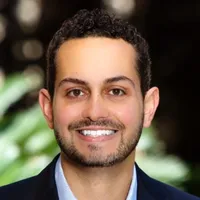
Stephanie Montanez
VP of Human Resources, Vagaro
Unlock hidden funds: Transform your workforce with state and federal training grants.
Episode 271 · July 10, 2025 · 7:54
Unlock hidden funds: Transform your workforce with state and federal training grants.
Key moments
In Stephanie's words
“Every single employer in the state of California can apply to utilize these training funds for training purposes to train and upskill their staff.”
“But the benefit and beauty of that is we were able to teach them the way we wanted it done without any preconceived ideas of how medical billing should be done.”
“If you don't have a proper process or you don't bill accurately, the state will take the money back from you. And then you can get banned from any future types of training grants.”
Transcript
Read the transcript1,286 words
HostWelcome to the Built by People podcast, where we share the stories and insights of the world's top HR leaders. Join us as we dive deep into the minds of HR executives, uncovering their strategies, challenges, and triumphs in shaping today's workforce. I'm excited to welcome Stephanie to the Built by People podcast. Stephanie, thank you so much for joining us today. And as a starting question, I always love to ask if you could share a little bit more about your career journey.
GuestSo, well, I started my HR career. It was a very interesting story. I had an ops manager that actually was able to see my potential. And then he allowed me to grow into the career that I have today. I will always be thankful to Lester Sabo for believing in me. From there, I moved on to Qualix, which was a wholly owned subsidiary of Kodak. At Qualix, I learned the value of HR and partnerships with government agencies and obtaining money from them to support the companies that I've worked for. At Qualix, I was able to write 25 on-the-job training grants, which brought in over $30,000 for that organization. And also, I ended up being selected as Employee of the Year for San Joaquin County at that time.
HostStephanie, California's ETP training grants helped you secure $1.7 million for your company. Can you walk us through what these grants are, how you discovered them, and why they represented such a significant opportunity for your organization?
GuestYes, absolutely. In the state of California, all employers pay into a training tax fund. Many employers are not aware what this tax is for. They just see it, they pay it, but they don't really know how to tap into it. So every single employer in the state of California can apply to utilize these training funds for training purposes to train and upskill their staff. However, the government's a little bit fickle and sometimes they just want to fund certain industries. Or struggling industries or high unemployment areas. In order to obtain a training grant, you have to complete an application. You have a formalized training plan. You have to be in an industry that they are funding. If you are experiencing high out-of-state competition, that is another aspect that you would be able to get a training grant from. And if your company is located in a high unemployment area, there's a lot of complexities to get a training grant, but if you're able to obtain one, it can help supplement your current training programs and to upskill your current and future employees.
HostStephanie, you talked in the past about converting retail and fast food workers into medical billing professionals. What specific challenges did you face in implementing this training program, and how did the state funding make this transformation possible?
GuestSo while working at Vituity, I was able to write 5 different training grants, and that totaled $1.7 million. So each grant is a 2-year grant. You can do 18 months of training, and then there is a 6-month retention at the end of every grant. So we had a formalized 3-week classroom training program, which enabled us to bring in workers that had limited skills. We had some that were straight out of high school. We had some college students, fast food workers, retail workers that knew nothing about medical billing. But based upon our training programs, we were able to actually come in and teach them a career. We provided internal promotional opportunities for them as well. So they might have started their career as a billing specialist and then eventually became managers overseeing 50+ employees. There were obviously some challenges because when you have somebody that does not have a lot of skills, you have to actually teach them them everything. But the benefit and beauty of that is we were able to teach them the way we wanted it done without any preconceived ideas of how medical billing should be done.
HostStephanie, what was your process for writing and securing these training grants? And could you share the specific steps that you took, including any obstacles you encountered and how you overcame them?
GuestYeah, so writing the training grants, the biggest piece is gathering all of the data that they want. You have to have very specific training plans and it has to be in the state of California's, the way they want it. So for instance, you have commercial skills and everyone's, what is a commercial skill? A commercial skill is basically training medical billers that you're teaching them a commercial skill. So you have to learn the terminology, you have to learn the way they want it. Again, everything is very specific. It's like filling out your DMV form. You have to do it and everybody hates it, but you get your license or you get your vehicle. So it always makes it wonderful for you. I think one of the other largest challenges is a lot of people don't know that you have to go and stand in front of an 8-member panel. It— when I had done those grants, it was at the state capitol and there's hundreds of people in the room and you have to go and stand up in front of 100 people and tell this 8 member panel board exactly what you want your funding for, how you plan on using it, what benefit it will be to the California workforce. And then I think the other biggest challenge was properly documenting and billing the state of California. If you don't have a proper process or you don't bill accurately, the state will take the money back from you. And then you can get banned from any future types of training grants.
HostStephanie, for HR leaders in other states looking to secure similar funding, what common pitfalls should they avoid when pursuing training grants?
GuestSo fortunately, California is not the only state that provides training grants to employers. Other states including Texas, New York, Massachusetts, Georgia, Illinois, Pennsylvania, North Carolina, Ohio, and Florida all offer training grants as well. So your state may or may not offer them. But if they do not offer them, there's also other on-the-job training programs that are subsidized from the federal government under the Workforce Innovation and Opportunity Act. It's called WIA. Most unemployment development departments or local labor agencies actually run those programs, and those ones are typically targeted for employers that have done mass layoffs. So you have mass layoffs and then they might have worked at that company for a long period of time, need additional skills. So the state or federal government would fund an on-the-job training just for an individual person, not for an entire org. So it would be an individual contract per employee. And a lot of times you can get up to $3,000 per employee, and it's retraining people that have been laid off in the past.
HostStephanie, what parting advice would you like to share with our community?
GuestSo the advice that I'd like to share is to give our listeners really a culture of training and development for your employees. If you're developing and training your staff, they will likely want to stay with you. You're going to build a career path for them. You can also look for those state or federally funded programs to help offset your training costs. But when you invest in your employees, you're investing in your company's future and in your employees' future.
HostStephanie, thank you so much for joining us today on the Built by People podcast.
GuestThank you so much. I appreciate the time.
More conversations like this