Episode 270 · July 9, 2025 · 14:06
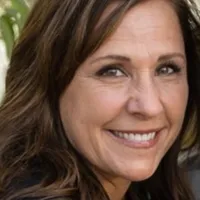
Susan Hailey
CHRO at Enable, Enable
The uncomfortable truth about scaling: your leadership needs an upgrade.
Episode 270 · July 9, 2025 · 14:06
The uncomfortable truth about scaling: your leadership needs an upgrade.
Key moments
In Susan's words
“About halfway through my career, decided I was a lot more interested in the people side of business.”
“If anyone grounds them in the facts, look at what's happening, look at the numbers... I think the other thing you can look at is the sentiment, the sentiment of the employees.”
“The mistake was promoting this person from the inside and not necessarily doing the harder thing, which would be to go— and more expensive, frankly, to go do a search.”
Transcript
Read the transcript2,364 words
HostWelcome to the Built by People podcast, where we share the stories and insights of the world's top HR leaders. Join us as we dive deep into the minds of HR executives, uncovering their strategies, challenges, and triumphs in shaping today's workforce. I'm excited to welcome Susan to the Built by People podcast. Susan, thank you so much for joining us today. And as a starting question, I always love to ask if you could share a little bit more about your career journey.
GuestSure. I have been in the technology industry for most of my career. I started actually at IBM in marketing and sales, and then About halfway through my career, decided I was a lot more interested in the people side of business. And so I moved into HR recruiting and executive search and executive talent. And that has always been in the context of technology companies. So that is probably the best summary. I would say though that having worked at IBM way back in the day, it was a really great lesson in leadership and management. Because IBM had many years by the time I got there to get a lot of things right. I learned a lot just by being part of that culture.
HostSusan, when we last talked, you mentioned upgrading the leadership team capabilities and how crucial that was when transitioning from $250 million to $500 million in revenue. Could you walk us through the specific leadership gaps you identified and how you determined what new capabilities were needed? For that next stage of growth?
GuestYeah, great question. And really was in partnership with my leader at the time, who was the head of HR. I had come in as the VP of talent acquisition and talent management. It was clear the company at the time— this was a company based in New York that had huge aspirations and had done incredibly well with the original leadership team, including the co-founders. But I'd gotten to a point where things were slowing. It was pretty clear we needed to make some changes. And in that particular instance, we started really looking at the capabilities of all of the leaders reporting into the co-founders. Realized that probably the first area to get our head around was probably in the sales area, the revenue area. Did a fair amount of work to identify a new candidate, actually, It was really interesting. I was the one kind of in the middle of those conversations. I was more in the second string, but it was really hard for the co-founders because the head of sales is really their best friend and had done an incredible job of getting the company off the ground. But as the company looked ahead and wanted to be even bigger, it just required a different set of sales motions. I think in the end, the reason we were able to make the change and bring in someone who had been at that scale and could introduce processes, maybe even attract some talent that just was more comfortable at that level of sales, mostly because they had the experience and had done it before. And from there we went through the rest of the business, finance and professional services. Even on the technology side, we didn't exactly remove the head of technology, but we added in a CTO function. That was really focused on the process side that had also gotten a little bit unwieldy just as the company had grown quickly. So in that instance, it was fairly systematic. We went through the highest pain point and then, you know, as that got settled, we went to the next one and the next one. And then it really set the company up for the doubling in growth that they experienced.
HostSusan, building on that experience, how did you approach the delicate conversations with the CEO and board about leadership changes, and what strategies did you use to gain buy-in for those significant transitions?
GuestAt least that didn't really happen in that particular example. That's probably more relevant to what I'm currently working on. The conversations definitely are delicate, but I think if anyone grounds them in the facts, look at what's happening, look at the numbers, look at Quarter-over-quarter growth. Is it proceeding in a— the pace you want it to, at the growth level you expect, or is it declining, or is it just stable? If your plan is you want to double in growth, then a stabilizing or declining growth rate is not getting you there. I think the other thing you can look at is the sentiment, the sentiment of the employees. How are they feeling about that particular leader? And doing regular surveys is just a great hygiene practice for every company. And then also, how are they interacting with the rest of the executive team? And is there friction that you can identify that is very specific? So for me, those conversations are best had with facts. They are delicate, but they also sometimes need to be a little bit blunt. We all have blind spots, and no one knows really all the relationships that the CEO has had with various executives and certainly the appreciation that a CEO would have for someone who really has gotten them to the next level but is struggling with, with a future level that needs to be achieved. So it's a combination of facts, putting it bluntly. Ultimately, it's not my decision. It's going to be the CEO's decision, but also painting a picture of what the future can look like with the right leader. I think also reassuring this person or the CEO in this case, that things will be better. And that having had the experience myself of things changing for the better in a very short period of time, it can be reassuring to make some of these hard decisions that one must make if they are in that situation where they want to grow their business and do something different than what they've been doing in the past.
HostCan you share a specific example of a leadership transition that didn't go as planned, the challenges you faced and how you course-corrected?
GuestYeah, I was part of one of these. This was about 10 years ago now. For a variety of reasons, we had exited a marketing leader in this case, and there was a decision made to promote somebody from inside into that role. There were a lot of things pressing. That needed attention turned out to not be the right leader for this group at that time. Within a relatively short period of time, using some facts that we could gather in terms of performance, we initiated an executive search to go outside the company. And it was a long one. This was a long one. The mistake was promoting this person from the inside and not necessarily doing the harder thing, which would be to go— and more expensive, frankly, to go do a search. But we got it right. After the person exited, we promoted someone, and then the person we brought in was a great example of an overnight change. As soon as this person came in, the team settled down, the friction between other teams almost evaporated, and just the contribution of this particular individual was just extraordinary for what the company needed at that time. But to me, the best part was to see the team settle down within such a short period of time and thank us. They don't normally thank HR for many things, but they did thank us for the work we did to identify the leader and bring that leader in successfully.
HostSusan, in your current role, you described seeing an immediate transformation after getting the right leadership team in place. Could you share specific examples of how team dynamics and business outcomes improved and what metrics or indicators showed you that the changes were successful?
GuestYeah, it sounds a little overstated because we're still in the middle of everything right now. So I don't think we've seen everything that we would hope for. But yeah, we've made some changes last year. This is really current times. We're meeting regularly as a team and doing some team building exercises, which I really recommend when you have a new team. Comes together. I just think that, to me, again, it's the friction between departments. That's what seems to have really just calmed down and the ease with which we can work with each other. And we're all at— we're moving towards a team that has experience in this size of an entity and with the aspirations that we have as a company. So there's almost a shorthand of ways of communicating that helps us go faster, which is always really good. But also there's the trust too that we're all still building the trust with each other as any new team would. That is really important because we haven't all worked together for many years and we're relying on each other to get things done, maybe some hard things done. We're only as good as our word. We're only as good as doing what we said we were gonna do, keeping to our commitments to each other. So those are the things we're in the process of building. We have co-founders that are in place and doing the work that they invented, the idea of what we are all doing. We are working with them, but they're also learning every day because they've taken this from nothing to a thriving several-hundred-people entity. So part of it is also building our confidence with that team, our founder team, be doing the right things for the company. And it's interesting 'cause you balance out too where people's personal goals are for their careers and trying to get it right when you bring in a new leader that they're gonna be able to learn something, but at the same time contribute something based on the experience that they have. And then just keeping the energy really high about all of the different challenges that are going to be ahead of us. Because I can't think of any organization that doesn't have challenges. And my hope is that we bring people together that know these challenges or are really committed to solving these challenges. Ideally, they know, but if they don't know all the pieces, that's okay too. We can all rely on each other for the pieces we don't know. And then also just put it on the table when none of us know the answer and say, okay, that means we need a XYZ of ABC because none of us know that particular function as well as we now know that we need to understand it. And then, then we go out and we find that person. And so, yeah, so I think right now we're in the, we're right in the forming stages. They say there are 3 stages of teams: forming, storming, and norming. And we're in the forming and storming stages and in all good ways, frankly. And I just think, again, trust Trust is really important in terms of the team dynamic. So making sure that, again, not only do we have the trust of each other, but we have the trust of our founders. I think the other thing is figuring out how to get leverage from each other, not just from our teams. Obviously, as leaders, we have to get leverage from our teams. That's the whole kind of reason you have a team. Where we can get leverage from each other, and it may not always be, especially at a smaller company, it may not be so well articulated with like Everything is always done this way. Sometimes we have to flex a little bit. My team looks after payroll. In most of the companies I've worked for, finance looks after payroll. Just so happens we happen to have a really good capability in that function in the HR department. So the flex or the leverage is the whole company is getting leverage from my team. It doesn't need to move. There would be no reason to move it in this moment. Who knows though, like if we were to become— in the future, we may have to look at that. And so just also being flexible and having a growth mindset about where functions should lie if something changes.
HostSusan, what parting advice would you like to share with our community?
GuestBuilding and strengthening teams is some of the best work you can ever do. It can be challenging while you're going through it. You may not have all the right players. You may not have enough players, you may have too many players. So there's a lot to sort through to get yourself to the team that's going to take you to the next level. Using a fact-based approach to how each of the functions are performing and how that particular leader is performing is your best strategy. Not being afraid of a hard conversation, not worrying about whether you will find the right person. That's one thing about coming at this from a recruiter, you will always find the right person. There will always be the right person. So not getting worried you won't find someone. And then once you bring them on as part of the team, really thinking about that team dynamic to get it to a place that you're finishing each other's sentences, you're offering up resources ahead of someone even knowing they need them, short-circuiting issues that might come up. Planning enough ahead that you can raise issues, work on it, and then the bigger thing that could have happened if you hadn't raised it gets addressed. So I'd say that's a lot of advice, but they are all the things I think about every day.
HostSusan, thank you so much for joining us today on the Built by People podcast. It was a pleasure to have you involved.
More conversations like this