Episode 10 · November 14, 2024 · 15:57
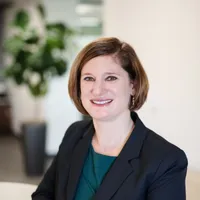
Shannon Teixeira
People Solutions Leader, Waste Management
Unlocking HR's True Potential: AI Automates Low Value, Empowers Human Strategy
Episode 10 · November 14, 2024 · 15:57
Unlocking HR's True Potential: AI Automates Low Value, Empowers Human Strategy
Key moments
In Shannon's words
“our role as leaders is to really look at and support the people that are in our care.”
“we're just at the cusp of what is possible around adopting AI as part of our ecosystem, the way, you know, the way that we work and looking at it from a blended workforce.”
“My approach to change is really a fit for purpose, not necessarily a one-size-fits-all, you know, You know, a lot of times we can transact our approach to change. And really, I like to curate the approach, really like to personalize it and look at a relational capacity to change...”
Transcript
Read the transcript2,227 words
HostWelcome to the Built by People podcast, where we share the stories and insights of the world's top HR leaders. Join us as we dive deep into the minds of HR executives, uncovering their strategies, challenges, and triumphs in shaping today's workforce. All right, I'd like to welcome Shannon Teixeira from Waste Management to the Built By People podcast. And Shannon, I'd love to start out by having you share with us some of the career moments and pivots that led you to where you are today?
GuestGreat. Thanks so much for having me on today, Dave. Gosh, you know, if you look at my career journey, you know, it is one that is what we call portfolio career, you know, definitely nontraditional and has kind of moved me between design where I started, which was interior design, into business operations. With a lean into marketing and from there over into human resources. And so the intersection that I play today really is bringing all of that, you know, experience with me to look at organizational design, organizational effectiveness, and how can we create workplaces for people to be and do their best work and create and deliver organizational value.
HostAnd is there one story that stands out from your career that highlights a meaningful lesson learned?
GuestGreat question, Dave. You know, I think about my leadership path and I became a leader of people very early in my career. Actually, I was 22 years old, you know, clear— clearly zero experience leading. And, you know, I had a really amazing, you know, support system them at the time. And one individual just reminded me that our role as leaders is to really look at and support the people that are in our care. And that really moved me into what is today sort of known as servant leadership, but really kind of helped me to understand this degree of change between transacting to get work done and my role in managing that versus focusing in on and supporting the people that, frankly, are in my care.
HostAnd Shannon, I want to pivot a little bit and focus on two topics today, one of which is AI and the other of which is creating an ecosystem of innovation within organizations. And I want to start with that former topic first. And I'm curious to get your perspective on how seeing AI shape the future of HR?
GuestIn so many ways, you know, I think we're just at the cusp of what is possible around adopting AI as part of our ecosystem, the way, you know, the way that we work and looking at it from a blended workforce. How will we partner with AI to, you know, help us to evolve into the places and spaces that, you know, work is going to take us, of which I think is a lot open for possibility at this point in time. And so, you know, from a practical standpoint, of course, really seeing HR adopt it from a workflow standpoint, where can we automate and look at, you know, reducing low-value work so that we can unlock folks to be doing more of that higher-touch, higher-value work across the organization.
HostAny particular examples or use cases on leveraging automation or AI to drive operational efficiency within your existing team?
GuestOh, certainly. You know, I think, you know, an easy place that, you know, is quickly adopted and we're seeing a lot of, you know, excellent return is in the talent acquisition process, you know. So again, really looking at the way in which we can reduce our, you know, our time to offer and improve that candidate experience. Also, though, improving hiring manager experience and then that onboarding experience all kind of along that continuum so that it can be very intentional, curated. You know, I think the other side of AI is that we can do a lot more customization. So really leaning into opportunities for intentional customization and thinking about that employee and candidate experience kind of again along the employee journey.
HostAre there any particular tools or softwares that you're currently using that you might recommend an HR professional to look into?
GuestSo independently, you know, I've definitely been experimenting with, with some different tool, you know, presentation AI, I think of course is awesome, you know, and thinking about even within Microsoft, you know, I really am enjoying seeing all of the different apps that are coming through the Microsoft 365 platform. Copilot, of course, you know, productivity tools like Otter, Asana, a project management tool, you know, has a lot of really great built-in AI work streams, you know, associated with of course, you know, ChatGPT and other platforms.
HostThere's certainly a little bit of resistance to change within every organization. Curious to get your thoughts on how you've been able to manage change and create higher levels of acceptance for tools like AI that can drive efficiency.
GuestGreat point. You know, I think just in the times that we're in, we've all been in the, you know, in this flow of constant change. And so I think when we are looking at change today, you know, in November of 2024, you know, first and foremost, we really have to understand, you know, where is fatigue? Setting in. I think, you know, just understanding, you know, sort of the human-centric fatigue related to this constant change. And once we understand, you know, where we're starting from, and I really love to do assessments in regards to change readiness. So, you know, again, understanding where we're starting from, and like I mentioned earlier, curating a very customized approach to change, to change adoption, and to identifying the roadmap to where we want to go and looking at that through the lens of the individual and/or the function, the group, the teams in which you're going to be, you know, in many ways co-supporting to move from current state to future state. And so, you know, my approach to change is really a fit for purpose, not necessarily a one-size-fits-all, you know, You know, a lot of times we can transact our approach to change. And really, I like to curate the approach, really like to personalize it and look at a relational capacity to change so that we're connecting into the centers of emotional response and allowing people to understand what might be, you know, holding them back if there is anything. And what do we need to do together to move us forward. And again, I think that is a bit more of a curated approach to change, but certainly helps us to understand and have those deeper conversations to even identify what might be holding me, where might I have an inhibitor, what part of me is resisting and why. And that allows us, I think, to do some deep, deep work and get us to move from current state to future state, in many cases, faster and scale as needed.
HostObviously, this topic of AI is related to innovation, and I'm curious to get your thoughts on some of the work that you're putting in to drive innovation within an organization. Obviously, it demands people to be curious and compassionate and creative. What are some of the practical measures that you're taking as a leader to really empower people to feel like they have the space to run and really drive change within an organization?
GuestThe, the role of AI, you know, and you use the word blended workforce, is, is pivotal in this space of time that we're in. And in part because in order to create more innovative outcomes, we need creative time. And time is the thing that, you know, most of us can say is very challenging, that we just don't have enough time to get everything done that we need to. So, you know, for me, that's the first starting block is to really look at and understand and assess time, time utilization, not necessarily even time management, you know, but just understanding where are we at from a productivity standpoint? What work am I doing that, you know, potentially could be automated? What work am I doing that, you know, frankly, I just don't need to be doing because there's not a clear alignment to a key result or a value? And assessing that for yourself, I think the second place to really take a look at, you know, is within the confines of meetings. You know, there's lots of work being done today, lots of AI tools, you know, helping us to support, you know, meetings. What meetings should I be in, and et cetera? And so I think again, just understanding these blocks of where am I spending my time? And as they talk to teams, you know, the next step is looking at energy. So if I can parlay and get some time back, now where am I spending and how am I utilizing my energy? So intellectual energy is that creative force that's required in order to start to create and ideate new ways of working, thinking, solutions, et cetera. And so, you know, we move from, you know, an assessment of time to an assessment of energy. And once we have that, we can start to create these new working models, ways of working, ways of exchanging, ways of relating, you know, reducing transacting, which I think is critical so that we can move into a space of activity and higher realms of connecting with each other to come up with ideas and solutions that we haven't yet considered. And in that space are different perspectives, which are absolutely required. But if we're so diminished because of, you know, lack of time and a lack of energy, that creative or that intellectual energy that we need, you know, it's just not there. And so, you know, a lot of the work that I lean into is really around organizational systems and structures and ways of working that all, again, help to support creating the needed space for our folks to, you know, have these engaging exchanges between each other so that we can move into deeper realms of innovation and then have the ability to scale. So, you know, I think it's one side to be creative and think of new ways of working and/or new solutions. But then, you know, we've got to be able to scale that. And then that's through experimentation and really agile, you know, work through HR.
HostI love this idea of leveraging AI and other tools to create space and energy for people to show up and do their best work and be able to focus on that creative work. It brings me to the topic of prioritization, right? Like there's a lot of reinvention that has to happen as organizations change. Both as a self and as a company. I'm curious how you guide people through that prioritization process so they're focusing on the right things at the right time.
GuestGreat question. Absolutely critical. And so two ways to do that. You know, one is really to understand what are the objectives that I have in front of me as far as the work that I'm doing and what are the key results that I'm looking at achieving? So I think just having very clear understanding to start there, because that really to me is the foundation. What are the objectives and what are the key results? And that allows me to have a better decision-making framework to trade off work that I may or may not need to do. And I think that gives people autonomy and more empowerment. The second is something that I utilize a bit, and that's around guiding principles. So identifying the principles in which we're going to use in order to help us to make decisions around what needs to get done and how we want to get that work done. Because again, I think without having clarity, we can just get into this funnel or tidal wave of work. And just things to do. And so again, I think between having the objectives and key result clarity and using a realm of guiding principles to help us have a decision-making framework, we at least can, you know, pause for a moment, think about, you know, the impact of making that particular decision and make the best choice that we can at the time.
HostShannon, any parting advice that you'd like to share with the HR community?
GuestI would advise to continue to think outside of the way that we've always done things. You know, I am a constant curator of what's possible, and I do believe that in this way of work and the future of work, that HR really, it does, and and will be at the center of driving innovation for organizations, continuing to think about what is possible and experimenting, going through co-creation, and really working very closely with the business leaders to generate organizational value while also improving the lives of people at work.
HostShannon, thank you so much for joining us on the Built by People podcast. It was great having you on.
GuestGrateful for you, Dave. Thank you so much.
More conversations like this