Episode 9 · November 13, 2024 · 15:49
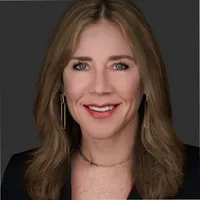
Lindsey Garito
AVP Total Rewards, Montefiore Health
Mastering Total Rewards: Strategic Personalization for Health, Wealth, Well-being
Episode 9 · November 13, 2024 · 15:49
Mastering Total Rewards: Strategic Personalization for Health, Wealth, Well-being
Key moments
In Lindsey's words
“I think total rewards is not just a trendy renaming of benefits and compensation, which you'll see sometimes out there.”
“What we do in Total Rewards really has such impact on people's lives. We're contributing to their health, their wealth, their well-being.”
“We really want to shift that terminology that we're using and really focus on health and wellbeing and how can we positively impact our people.”
Transcript
Read the transcript2,486 words
HostWelcome to the Built by People podcast, where we share the stories and insights of the world's top HR leaders. Join us as we dive deep into the minds of HR executives, uncovering their strategies, challenges, and triumphs in shaping today's workforce. I'd like to welcome Lindsay Garrido to the Built By People podcast. Lindsay, thanks so much for joining us. And, you know, as a starting question, I always love to ask you to tell the community a little bit more about your career journey.
GuestThank you so much for having me and looking forward to our conversation. So I am one of the people that found HR rather than HR finding me, and I started my corporate career early. I was in college for my undergraduate degree, and I took a part-time position working for a photo finishing company at their corporate office. So if you remember the days when we dropped off rolls of film to be developed, and then we went a few days later and picked up the envelope of pictures, I was working in their corporate office. They had locations all across the country, and that was a really great opportunity for me to experience human resources. I was primarily focused on supporting payroll, but I got to experience human resources and then was able to change my major just in time, and I majored in HR management. I stayed at that organization after I graduated, and I worked there for a few years. And then I went on to a healthcare organization that provided home care services, and that was really the start of ultimately spending most of my career in the healthcare industry. And that organization was a great role because it was just myself and the director of human resources. So I got to experience the full employee lifecycle from start to finish, really got exposed to a lot and learn all aspects of human resources. I did everything from recruitment to onboarding, new hire orientation, I managed leaves, benefits administration, upgraded our HR system. So, I really got to do a lot. And after about 5 years there, I had a passion for talent acquisition and recruitment. And that's what I love about human resources is that you can pivot in your career and you can go into something and specialize in a certain area if you're feeling particularly passionate about something. Or you can be more of a generalist and oversee more areas of human resources. So I went on to another healthcare organization where I would ultimately spend the next 10 years, and I was able to go into talent acquisition there. This organization was outpatient healthcare, so primary specialty in ambulatory care, and I did talent acquisition. That was the point in my career where I was able to start growing and become a people leader. Oversee a team. And then our organization went through an exciting transformational journey and decision, and that was to completely upgrade and change our ERP system. And this wasn't just going to be an HR system implementation, it was finance and procurement as well. So this was really a business transformation in terms of how we were going to be working and really ultimately led us, the people team, the HR team, on a big journey towards upgrading our systems. We did go with Workday. That was the system that we were implementing, and that really changed how we were doing HR, both as a team, how we were supporting employees and managers. And then that was also when I built total rewards from the ground up, and I was able to implement that strategy at that organization. So I always look back at this time in my career. That was my favorite time in my career. I loved what I was doing. We had such a great team. We were able to be agile and innovate and really leverage our technology to support what the business needed, whether that was dashboards and workflows for us during the COVID pandemic or creating a total rewards strategy, really trying to redefine how we approach benefits, compensation, supporting our employees, attracting them, retaining them, engaging them, growing them. I think Growing is such a key element of that phrase that we often use. And so we really did a lot in that time. We also revamped our performance management processes. So we really did a lot. And then from there, I took a brief pivot into hospitality, and I was head of HR for a large private country club here in the area. And then now I'm working for a prominent academic health system here in New York, Montefiore. And so Today I spend my time again focused on total rewards, and we too are going through an exciting transformation as an organization and largely built on transforming to our next-gen HR strategy. And that trickles all the way down, of course, to total rewards as well.
HostExcellent. Lindsay, could you walk us through your approach to total rewards and how you use it as a key lever for attracting, retaining, and engaging employees?
GuestAbsolutely. I think total rewards is not just a trendy renaming of benefits and compensation, which you'll see sometimes out there. I think organizations that are really leveraging the potential of total rewards strategy know that it's a strategy that incorporates unique value proposition, communication, and really integrates the elements of total rewards that you have at your organization together synergistically. That's typically benefits, compensation, wellness, rewards, performance, career mobility and career development potentially. So every organization might define their total rewards strategy differently, but it really should be this strategic portfolio that the organization is delivering to, again, attract, retain, and grow their people. It's really identifying and sharing that value proposition beyond just the base salary. What is the organization offering that is going to improve the lives of the people that are working for it. And I really feel so strongly that Total Rewards changes lives. We're not just administering programs and benefit plans. What we do in Total Rewards really has such impact on people's lives. We're contributing to their health, their wealth, their well-being. Total Rewards provides people with growth in their compensation and the ability to eventually save money, whether that's for retirement or for important life events. We provide them with benefits that maybe allow them to start a family or access critical mental health treatment that they might need. Bonus payments allow them to reinvest in themselves or grow their family or buy a home. So there really is just so much potential in total reward. And where I think when an organization really starts to think about that more strategically and holistically, there really is so much potential.
HostI think a lot about the concept of personalization at scale, right? Every employee has unique needs. How do you ensure that each element of your total rewards strategy, whether that be related to pay, benefits, wellness initiatives, aligns with the unique needs of your employees and also reflects the organization's values.
GuestAbsolutely. It's so important because especially the larger the organization, the larger the workforce, and the more important it is to really understand your workforce, the demographics. What does that look like? What are the generations in your workforce? What are some of the gender breakdowns? And really think about that. In prior organizations, that really became very prominent because healthcare organizations typically are, and it's been my experience, largely female. And are we meeting the needs of that population? And that really drove a lot of our decision-making in terms of looking at our benefits and our programs and making sure that we were offering the right program. And I think for us today, it's also how we're leveraging technology and communications. That's a big focus for us to make sure that We have those capabilities in place to better differentiate our offerings to our very dispersed and unique workforce and making sure that there's something there for everyone. And that when you go to our benefits website, when you look at our programs, you see something for yourself, you see something that's meaningful to you and impacts your life positively. Financially, for example, it's very common, typically the focus to be on saving for retirement. But the reality is that some people can't save for retirement. They have other financial needs in their life, whether it's paying off debt or saving for their child's education that might impact their financial plans at the moment. So we really try to make sure that we have something out there that is supporting everyone across that full spectrum.
HostOne of the things that I think you're doing that's innovative is around healthcare. You know, obviously, Many organizations see healthcare as a significant cost. Healthcare for employees represents a significant cost, but you're using it as an advantage. Can you speak a little bit more around the healthcare plans that you have available to employees?
GuestSure. One of the great things about being a healthcare organization, and this has been my experience with the last 3 organizations that I've worked for actually, is that we Number one, are self-insured, so we are able to really dig into our claims data and see what is happening in our members and our population. Are people getting that primary care visit? Are they going to the dentist? Are they getting their preventative screenings? And with our current focus to really integrate health and wellbeing together, not just make it administering benefit plans, We really want to shift that terminology that we're using and really focus on health and wellbeing and how can we positively impact our people. How can we make sure that they are getting that time so that they can take care of themselves? In healthcare, they're typically caring for everyone else. They're caring for the patients, they're caring for the community, and their own needs tend to take the backseat. So we really want to make sure that as we're moving forward, our strategy is very much focused on making sure that we can close gaps in care, that we can provide our people with the resources that they need, the education, the support, and see in our data where there's room to impact, and then also incorporate that into our wellbeing programs and strategy. Also, as a healthcare organization, we're able to create our first tier in our health plans of our domestic network, which is basically going to our own doctors and facilities at a much reduced cost and having those capabilities to go within our own healthcare organization for your care and also for your family. So that's always been a really strong differentiator that we have as a healthcare organization, but also the ability to really contribute something meaningful.
HostWhat are some of the metrics that you're relying on to assess the effectiveness of your total rewards strategy?
GuestIt's definitely some of the outcomes that we want to focus on. So in recently looking at our health plan data, for example, less than 60% are getting in for a primary care visit. We want to increase those numbers. We want to drive those numbers up because that ultimately means that we're positively impacting our employees and their health. We also look at engagement, especially as we roll out new programs. Such as our wellbeing platform and program, we wanna make sure that we are seeing employees engaging and also where they're engaging, what topics are of interest to them, especially with programs like the EAP. We all know and have them, but there's so much potential with our EAP programs and the benefits that are offered and really wanting to make sure that employees understand what's available to them, that they're engaging with it. So looking at that utilization really helps drive the strategy. Okay, where do we need to focus more? Effort on, where do we need to communicate more on, or perhaps do we need to revisit this benefit? Is it the right benefit for us? Do we have the right carrier? And if employees really aren't using it, maybe explore why that is.
HostIs there a particular story or experience that stands out to you as a major lesson learned through your career?
GuestDefinitely not working in a silo and It's very easy to do that in HR, no matter what team you're on, especially in total rewards. It's very easy to just do what you need to do in terms of each of these areas, but it's really been a lesson learned that it's so important, number one, to involve your business leaders, involve your managers, really understand the needs of the people. And a lot of that comes from talking to those managers or being on the ground and being present, talking to people. You can't always do a survey and you might not always get the most reliable feedback from those surveys. So one of the best ways to really understand what's important to people is through those conversations. And especially in a larger organization, a lot of times the leaders are going to really have a pulse on what's important to their people and their teams, and that can help drive our strategy. And then as well, when we're rolling out programs and new initiatives, it's so important to make sure, again, that the business is informed, that they know what we're doing and why, what's the purpose and the strategy behind it, having their support so that they can be change champions and ambassadors to help drive the messaging. So really having that presence and collaboration with the business and not just doing things as a team and rolling it out has really been one of the lessons learned for me.
HostAny parting advice that you'd like to share with the community, Lindsay?
GuestStay agile, stay focused on improving and innovating, especially in total rewards. It's always changing. There's always new benefits. I'm continuously amazed at different companies on the market and what they're offering. There really are so many capabilities that are out there, and it's really important to just, you know, you might be doing some really great things, but there's still always room to improve and there's still always room to innovate. We have so much going on in the world, in HR, with AI. So there's a lot of importance, I think, on staying flexible and just making sure that you're keeping a pulse on what's trending both in the market, but also in your organization as well, and what's important to the people.
HostLindsay, thank you so much for joining us on the Built by People podcast. It was a pleasure.
GuestThank you so much. I really appreciate you having me.
More conversations like this