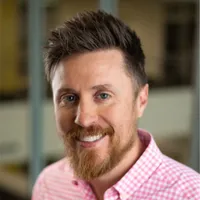
Sadia Ayaz
CHRO at Fort Bend Women's Center
Fort Bend Women's Center
Stop Fixing Employees: Unlock Their Evolving Potential, Fuel Growth
Thesis
“Organizations must shift their perspective from viewing employees as fixed assets or problems to solve, to stewarding them as evolving potentials to unlock, driving growth and retention through human-centric and context-aware strategies.”
What you'll take away
- 01Implement a 'no-BS' talent acquisition function by focusing on speed of engagement, clear signals, compelling organizational story, and strong stakeholder engagement.
- 02Address technological advancements by retraining sourcers into 'talent engagement specialists,' leveraging tools for efficiency while rehumanizing candidate connections.
- 03Transform reactive talent management into a proactive 'bench strength blueprint' by identifying and developing the evolving potential of employees, not just planning for replacements.
- 04Adapt talent strategies to diverse organizational cultures and regional challenges by understanding the unique 'problem statement' and focusing on translation, not replication.
- 05Adopt a paradigm shift in HR: stop viewing people as problems to solve and instead steward them as potentials to unlock, aligning talent strategies with the organization's unique 'truth'.


What most organizations get wrong
- Challenges the fear-driven approach to reactive talent management and succession planning, arguing that people are not fixed assets and fears of insecurity shouldn't hinder growth.
- Rejects traditional succession planning that focuses on finding a replacement for a role, advocating instead for flipping the narrative to explore what else an individual can do and what their future could hold within the organization.
- Contradicts the idea that talent follows a template, emphasizing that it follows the 'truth' of an organization's culture and problems, requiring bravery to build tailored solutions.
In Sadia's words
“The beauty of a playbook, David, is that it's not just concepts. It is step by step, tells you exactly how to follow a protocol to build a no-BS function that would lead with great success.”
This quote highlights the practical, actionable nature of her book and approach to building effective talent functions.
“I converted all of the sourcers into what I then called the talent engagement specialists. So now, because the tool is sourcing, I don't need you to source so much anymore, but I do need you to engage with them on a very personal level and keep them warm and get them excited.”
This provides a concrete example of how she successfully retrained and rehumanized roles in response to automation.
“We have to understand that people are not fixed assets. They really are this evolving potential.”
This succinctly captures her core philosophy regarding human capital and proactive talent development.
“It is not about replication. It's about translation.”
This concise statement articulates her strategic approach to adapting HR solutions across different organizational contexts.
“We need to stop looking at people as problems to solve. We need to look at people really as, or really steward them as potentials to unlock. Talent does not ever follow a template. I always say this, it follows the truth, right?”
This is her parting advice, encapsulating her human-centered and adaptable worldview for HR leaders.
The problems this episode addresses
- Talent acquisition departments often engage in high activity (many requisitions) but lack strategic focus, leading to a measurement of effort rather than outcome.
- Organizations struggle with retraining their workforce to adapt to evolving job roles and the rise of technology like machine learning and AI, which can automate traditional HR tasks (e.g., sourcing).
- Reactive talent management systems are prevalent, often driven by fear of change or fear of turnover, hindering proactive succession planning and individual development.
- A common challenge is the failure to adapt talent strategies to specific organizational cultures or regional contexts, leading to ineffective 'replication' instead of thoughtful 'translation'.
- The tendency within organizations to view employees as 'problems to solve' rather than recognizing and cultivating their 'evolving potential'.
In this episode
Built by People podcast features insights from world's top HR leaders
Built by People
I started my career in HR, and here I am many years later
How to Start Your Career
Your book, Talent Mavericks, focuses on actionable steps for building effective talent functions
Talent Mavericks: A No-
Every organization needs to focus on retraining its workforce, Sadia says
The Need for Retraining in Talent
Fort Bend transformed a reactive talent function into a proactive one
The transition from a reactive talent management function
How do you adapt talent strategies to fit different organizational cultures or regional challenges
Talent Strategy: Adaptation to Regional Challenges
Sadia, what parting advice would you like to share with our community
A Day in the Life of Sadia
Topics covered
Organizations and entities mentioned
Full transcript
Expand transcript (0 words)
Transcript is not available yet.