Episode 245 · June 18, 2025 · 12:54
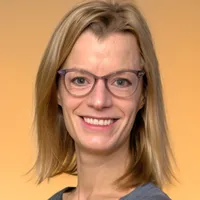
Candice Chafey
Chief People Officer, Zeta Global
Your HR team isn't support, it's a strategic accelerator for trust and growth.
Episode 245 · June 18, 2025 · 12:54
Your HR team isn't support, it's a strategic accelerator for trust and growth.
Key moments
In Candice's words
“So it's not just running HR as a function, but designing it as a business accelerator.”
“Most of the people, as the saying goes, people don't leave jobs, they leave managers.”
“But it did teach me a lot about how culture requires the shift, not only necessarily at the grassroots, but the executive buy-in.”
Transcript
Read the transcript2,116 words
HostWelcome to the Built by People podcast, where we share the stories and insights of the world's top HR leaders. Join us as we dive deep into the minds of HR executives, uncovering their strategies, challenges, and triumphs in shaping today's workforce. I'm excited to welcome Candice to the Built by People podcast. Candice, thank you so much for joining us today. And as a starting question, I always love to ask if you could share a little bit more about your career journey.
GuestThank you for having me here. I appreciate the time. So, my path into HR leadership was anything but linear, and that's what I like to talk about. Especially most people probably don't have necessarily— they know what they necessarily know what they want as soon as they leave school. I started out with a biology major planning to go to med school until I realized late in my senior year that I didn't want to spend more time in school. And to avoid genetics, I switched my majors, graduated, was bartending through college, and obviously still continue to bartend with confusion, but then had a quick stint in retail. Followed by financial services to help pay off student loans. So that's when I first discovered the world of L&D, early career programming, benefits, and started to get to really understand and curious about how organizations really work. More of a pivotal moment came when I started to work under the office of the CFO. I got more exposure to business operations, talent, and strategic decision-making, giving me more clarity. Then leaning into my friend network, saw— asking them what they thought as my strengths, where do I naturally align to, my affinities. And that led me to pursue a master's in organizational psychology based on their feedback and a lot of conversations and self-reflection, as well as a certification in conflict mediation and negotiation. So my passion became clear, really understanding building organizations for success, right? Bringing both the business side as well as understanding how teams work, individuals work, groups work together. So it's not just running HR as a function, but designing it as a business accelerator. So I've learned a ton from business leaders, especially how to frame and solve problems simply, how to navigate complexity, as well as personality dynamics. So in addition, I've also added on executive coaching to also help with that personality style, right? Understanding people's style, helping them work through their own obstacles. And I think with that, along with added with my background, I think that has brought through a lot of strengths to help sew together that path. And so at the end of the day, no matter what I've done, I made sure that everything that I looked forward and every organization that I've turned to, the path that I was making made sense to me, that I was learning, stretching, contributing. And whenever that stopped, that learning stopped or that challenge stopped, I would move on to something that would challenge me in new ways. Whether that's a new industry, a new challenge, a new problem to solve. That's always what I looked for.
HostCandice, could you tell us about a time when you faced a major obstacle in employee engagement? How did you address it and what were the outcomes?
GuestOne of the obstacles I faced in employee engagement was supporting a division with unusually high voluntary attrition in my earlier career. At first glance, the exit surveys pointed to usual suspects like better pay, new opportunities, things that you would normally see in exit surveys. But there has to be more beyond that. That's what people usually turn to when they leave companies. Most of the people, as the saying goes, people don't leave jobs, they leave managers. So really trying to flip it and really run stay interviews to get more honest pretense view of what's driving people to leave. Some of the themes became clear between communication gaps, lack of transparency, low motivation, all pointing to really one thing. And at that time, and in that organization, was really trust in leadership. And when there's a disconnect between what is being said and what's being experienced, that trust erodes. And when that happens, the engagement starts to disappear. So no matter what you're paying people, and no matter how you're promoting them, it doesn't— that doesn't necessarily— that's not what keeps people in seat. What keeps people in seat is that leadership. So people stop sharing ideas, they stop asking questions, and they just stop showing up. And so when I dug deeper, it turns out that actually the managers that were promoted were based on tenure or for their individual contributions, not their leadership capability. So they were great at work but hadn't been supported on how to lead people. And at this time, it wasn't just a local issue. It was more systemic and reflective of the broader industry norm at the time. So I designed a management program from ground up. We created small cohorts of leaders, met weekly to explore new leadership philosophies and practical skills, used application, fieldwork, reflection to understand what great management looked like. So this approach was definitely grounded in a lot of the organizational psychology work that I was doing at the time during school. And it had a measurable impact on the team dynamics and retention overall in terms of the team and group. But that said, one of my earlier leadership lessons came from realizing the limits of change when it's not supported from the top. And so the division head wasn't aligned, and at that limited scale, our— it would— it limited our scale in terms of our overall impact. But it did teach me a lot about how culture requires the shift, not only necessarily at the grassroots, but the executive buy-in. So that's definitely something that I took forward in other experiences. So at that level, it definitely made the impact, but at the broader level, we had bigger issues.
HostCandice, can you share a specific example of a strategic development initiative you led that had a significant impact on your team's performance or the organization's success?
GuestSure. Similarly, I think in this case, better buy-in. So, as you move on in your career, you learn more about how to get things done and solve problems. So, I'll dig into one of the more— one of probably the most impactful initiatives that I led. This was during a time I was the head of tech talent in another company. This company had a very incredibly rigorous performance management process, probably the most in-depth I've ever seen. And it put a huge emphasis on manager role in evaluating growing talent. There are multiple tools designed by the founder to capture feedback from different angles. The founder was very much all about management, making sure to hold them accountable. And these tools were essentially trying to triangulate performance using a lot of independent data points. The intention was great, but it was really tough for new managers to navigate, especially coming from different backgrounds, fintech, financial services, high tech, you name it. I found myself spending so much time helping managers with the data, what it meant, how to apply it, but it often left them feeling overwhelmed, like they were doing it all wrong. I also started to feel like the bad guy pointing it out, pointing out the mismatches between what the data said and how they saw their teams. So I stepped back and pitched something different, um, building an internal platform that pulled all the performance data into one place. One clean, consistent view that actually supported better decision-making. Now, I wasn't the founder. Everything came from the founder at the time in terms of ideas of technology, nor a tech lead. Obviously, I'm not a programmer, so I didn't have a ton of central support, but at the same time, I had the backing of my own leadership team. So I ran with it. I hired some external developers, partnered internally to help manage the project, pull in stakeholders, and we built it. And the end result was a game changer. Managers finally had a full picture combining all the 360 feedback, the reviews, and manager input all in one place. It made the progress so much clearer, more actionable, and eventually other departments started to adopt it. And it really helped shift the culture around performance conversations and manager development.
HostCandice, how did you successfully implement a cultural change in your organization And what were some of the key challenges and successes you encountered along the way?
GuestSo this is a big topic, and I'm sure most of the people in my position and throughout even the organization think about every day, and also we work on every day. And culture change is very much in motion for us right now, and we're still think— in the thick of it. So it's a journey. It's not just one single event. I often describe it as a drumbeat that over time becomes a symphony. Especially when all the people are aligned, which is a beautiful thing. Our challenge here was shifting from what is to what should be in ways that stick, especially in a company with workforce growth through acquisitions, where we wanna honor microcultures essentially for bonding and retention, but at the same time, we have to make sure that it aligns to the actual full, the company culture. So when I started, I took the time to listen, study the vision, dug into engagement surveys, conducted interviews across levels, geographies, and even with certain geographies, they have their own cultures in terms of the countries that also need to fit within it. So it helped surface alignment. So what you wanna find is naturally where things naturally align and what you have a leg up on. Where are the inconsistencies and the real employee value proposition? Let it shine through. And create from there. So from there, we formed a small leadership culture committee to co-create something that's meaningful, not just values, but virtues. So we call them virtues here with supporting principles to help people live them daily. So we focused on language that's simple, actionable, inspiring, not just another poster, not just another PowerPoint that people just try to talk about at town halls. So we, with the support of our CEO and president, through storytelling, we've embedded the virtues across onboarding, reviews, rewards. One of our most unique efforts is through our virtues coach Zeke. We created a 12-part employee-voiced internal training series designed to bring our culture to life. It became the foundation and hopefully will become the foundation for our chatbot to help managers navigate more of their challenges through our virtues. But it's also in our recognition systems. We've added it to our intranet so people can do shoutouts, and it's gained real momentum. And the belief is that we're going strong. So again, that challenge still becomes how people are operating within their own teams and groups and ensuring that there's alignment. And we're going to also do that in Boost Hiring and more management tools.
HostCandice, what parting advice would you like to share with our community?
GuestI think at the end of the day, I think lead with business influencing human insight. Like, we started off the conversation in terms of how I even got here. Really, to grow in HR and build practices, I think it's super important to understand the business, how it makes money, where it's headed, what challenges it faces every day, not even necessarily in the future, near term, far term. And then connect that to understanding what people need to be successful. And building credibility is to speak the language, not only in both strategy, but also empathy. Being in people's shoes, right? That's all— I mean, going back to conflict negotiation is really understanding, being in somebody else's shoes, understanding their position, and using data to tell stories, create solutions to scale. And designing with both people and performance in mind. I think we're not just caretakers of the culture, but we're shapers of business outcomes if done right. I think at the end of the day, it's about listening, seeing what they don't see, and building what they don't know they need.
HostCandice, thank you so much for joining us today on the Built by People podcast. It was a pleasure to have you involved.
GuestThank you. Thank you for having me once again. I appreciate the time.
More conversations like this