Episode 246 · June 19, 2025 · 10:45
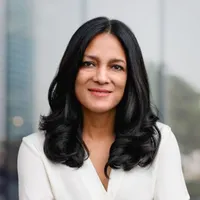
Sadia Ayaz
CHRO at Fort Bend Women's Center, Fort Bend Women's Center
Stop Fixing Employees: Unlock Their Evolving Potential, Fuel Growth
Episode 246 · June 19, 2025 · 10:45
Stop Fixing Employees: Unlock Their Evolving Potential, Fuel Growth
Key moments
In Sadia's words
“The beauty of a playbook, David, is that it's not just concepts. It is step by step, tells you exactly how to follow a protocol to build a no-BS function that would lead with great success.”
“I converted all of the sourcers into what I then called the talent engagement specialists. So now, because the tool is sourcing, I don't need you to source so much anymore, but I do need you to engage with them on a very personal level and keep them warm and get them excited.”
“We have to understand that people are not fixed assets. They really are this evolving potential.”
Transcript
Read the transcript1,697 words
HostWelcome to the Built by People podcast, where we share the stories and insights of the world's top HR leaders. Join us as we dive deep into the minds of HR executives, uncovering their strategies, challenges, and triumphs in shaping today's workforce. I'm excited to welcome Saadia to the Built by People podcast. Saadia, thank you so much for joining us today. And as a starting question, I always love to ask if you could share a little bit more about your career journey.
GuestHi, I'm glad to be here. What an honor. I have been in HR through and through, so I started my career in HR, and here I am many years later. I'm not going to say how many because I don't like to age me, but— and I love it. It's been, although an organic growth, I think right now these days we think more about succession and a more sort of constructed approach to careers. That's not how it was when I started, but it has been a great journey. I've had the wonderful fortune of working with tech giants like Amazon and Logitech and Zappos to giants in the field-based organizations like ConocoPhillips, Waste Management, Veolia. And here I am for the first time ever working with a nonprofit and loving it so much. It's a mission-driven organization, and I cannot tell you how meaningful it is to come to work every day loving what I'm doing.
HostSadia, your book, Talent Mavericks, focuses on actionable steps for building effective talent functions. Could you share a specific challenge you faced in talent acquisition and how your playbook approach helped solve it?
GuestSure. The idea of talent— I'm not a writer by any stretch of anybody's imagination, but the idea of the book really came from the fact that these organizations that I was going and becoming a part of, always had the same problem, a lot of activity. So for instance, if it's a talent acquisition department, it has tons to do, lots of requisitions, but starving for strategy really. We're measuring the work that we're doing, really not focused on the outcome. And so the book that I've written is not written in a, well, these are nice buzzwords to know and have, but is really written to help people like me who are coming into talent and is really rooted in 4 major things. Speed, the speed with which we engage with our candidates. Then we talk about, and a lot of focus on signal. What are the signals that we're sending our people? How are we interviewing and how are we, what message are we sending them about the job? And then the third is the story. It's not just about the job itself, but what is the story of the organization that you're asking them to come and be a part of? You have to get get them excited. And then last and overlooked a lot of the times, but certainly not the least for me, is stakeholder engagement, meaning how are you involving hiring managers to be part of that process and take ownership of that process? So the entirety of that book, and the beauty of a playbook, David, is that it's not just concepts. It is step by step, tells you exactly how to follow a protocol to build a no-BS function that would lead with great success.
HostSadia, you've talked about retraining as a focus area in your career. Can you walk us through a case where you implemented a successful retraining initiative and what impact it had on an organization?
GuestSure. Retraining is just critical. Jobs are evolving and we know that. Technology is coming and taking over a lot of the things, and rightfully so. And so, yeah, retraining is the name of the game. You have to get your people ready for tomorrow. One example that I can give you is at Waste Management, for instance, when I walked in, obviously was the time 2017 to 2020 was the time that technology was being introduced. Machine learning and AI were the new words. Obviously, generative was not even there. So agentic and generative AI was not even on the radar. But still, there was a lot of things that could potentially be automated. And it's not just in talent. A lot of that was happening in And on the business side as well, we had our recycling facilities that were going completely automated. So now the question was, what do we do with the people who were essentially doing those roles? And in talent, what I decided was, I know the tools can source better than people just because they're faster, they are not biased, they don't take breaks. So let them do what they do 24/7, and I converted and retrained my people what I said, what I called, let's retrain to rehumanize. Give them and train them to do what I know machines can't do and what I know everybody wants, which is more of a personal human connection with the candidates. So how do I do that is I converted all of the sourcers into what I then called the talent engagement specialists. So now, because the tool is sourcing, I don't need you to source so much anymore, but I do need you to engage with them on a very personal level and keep them warm and get them excited. Again, all the same things— speed, signal, story, stakeholder engagement— and get them in the door. And what we saw is that our time to offer and our conversion rates drastically improved because now people were not just coming in cold. Hey, I came across your profile on Indeed. Would you like to be— now It was like, hey, I know you do this podcast and you do 50 in a week. And now it was more personal because now people were researching on the people. Their job is to engage with the individual. So I think that is one example and there are many others. However, I would say that retraining, every organization needs to be focused on that retraining right now.
HostMany HR professionals struggle with creating truly proactive talent management systems. Could you tell us about a time when you transformed a reactive talent function into a proactive one?
GuestYeah, I mean, see, reactive talent management systems, in my mind, they come from a place of fear, fear of change. We like the way things are, so we don't want to disturb it. They come from a fear of turnover. If I start to get somebody ready for succession for Sadia, then Sadia might get insecure. And I think that we have to understand that people are not fixed assets. They really are this evolving potential. So I always focus on really your bench strength blueprint. Do I have the visibility of the people who could potentially, you know, be evolved into something? Is it an agile process so that we're doing it enough? To do something about it, and then what value are we creating? It's really not about who can come and do this job because that's how talent succession planning works. Who can come and do this job when Sadia is done doing this job? But I think it should really— you flip the narrative and say, well, what else can Sadia do and what can her future be? Because you're looking at retention. You want to retain. You want to grow. You want to unlock potentials. That's what you need to be looking at. So, Every organization that I've been a part of at Veolia and at Waste Management, now here at Fort Bend, I look for that. I look at the people and I say, if we're going to have a humanized approach, then I'm going to look at those people and see what they can do. Of course, I'm going to have an organizational strategy and then marry them to see that, oh my God, your future could hold something that I could never have imagined given that you're in finance. I never thought you could be in grant writing, for instance. But if I pay that attention to both those components, I think something beautiful happens. That's what I believe in.
HostSo Dia, in your experience working across different cities and organizations, how have you adapted your talent strategies to fit different organizational cultures or regional challenges?
GuestYeah, that's a great question. I mean, every region, every country, every situation, every organization is different. What I have learned is that it's all about context. It really depends on— you have to understand the problem statement of the organization. That's what I have learned. It doesn't matter where it is or what they do. Understand the problem statement. It is not about replication. It's about translation. So I think that's what I focus on. I don't think I've ever gone into a startup and try to replicate what Amazon's doing because that does not translate like that. It translates to something different. So I think just keeping that difference in mind is helpful.
HostSadia, what parting advice would you like to share with our community?
GuestOoh, if there's one thing that maybe I could leave them with is that we need to stop looking at people as problems to solve. We need to look at people really as, or really steward them as potentials to unlock. Talent does not ever follow a template. I always say this, it follows the truth, right? So template is not going to work, but your organization's truth will work. So my advice would be to go find the organization's truth, know your people, know your culture, know your problems, and then be brave to go and build on it. I think that's the only thing, and I think it would be helpful and impactful for them.
HostSadia, thank you so much for joining us today on the Built By People podcast. It was a pleasure to have you involved.
GuestIt was a pleasure to have— to be in this conversation with you.
More conversations like this