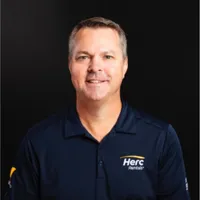
Mark Arell
VP, Talent and Organization
Herc Rentals
Stop Solving HR Problems: Start Solving Business Problems with Talent Data
Thesis
“HR's primary role is to act as a business partner, strategically aligning talent initiatives with core company goals and leveraging data to cultivate internal capabilities that directly drive and enable measurable business growth.”
What you'll take away
- 01HR must align its strategies directly with business objectives, translating talent initiatives into capabilities that solve pain points and contribute to growth, rather than creating separate HR agendas.
- 02Investing in early career talent development and fostering robust internal mobility programs (like Herc Rentals' Black and Gold Academy) is crucial for building bench strength, reducing reliance on external hires, and improving time to productivity and retention.
- 03Establish a talent analytics team to transform raw workforce data into actionable insights, shining a spotlight on critical issues (e.g., high turnover) and demonstrating HR's tangible impact on customer relationships and company growth.
- 04Cultivate a high-performance culture by equipping employees with the necessary tools, resources, and training, creating a healthy internal competitive environment where meritocracy can flourish and drive career progression.
- 05Instead of trying to make managers HR experts, HR should focus on understanding the day-to-day pain points of managers and bring its expertise and resources to bear on solving those specific business challenges.


What most organizations get wrong
- Don't try to make managers experts in HR or experts in talent or people and culture. I think instead, it's really about understanding the day in the life of a manager and what his and her pain points are and what they need to really advance their business objectives. And then figuring out how do you bring all the expertise and resources that HR has to bear on helping those managers solve those problems.
In Mark's words
“The Army is still to this day one of the most benchmarked training or learning organizations in the world. So I really learned a lot and got a strong foundation there.”
Highlights the guest's foundational training from a military background as a benchmark for learning organizations.
“Herc Rentals was 2 years post-spinoff from a parent company and a brand new publicly traded company on its own... Herc was really in the very beginning of coming into its own, and I really had to meet the company where they were at that point, and it was really a lot about triage. And getting started slowly.”
Illustrates the strategic approach to HR in a rapidly evolving post-spinoff environment, starting with fundamental needs.
“The ability to demonstrate HR's impact is key, and that's how you get believers in what you're doing and you get commitment to it.”
Emphasizes the critical importance of measurable results for HR credibility and securing buy-in from business leaders.
“You've gotta be a business person first and foremost, and an HR leader second.”
Defines the essential mindset for effective HR leadership, prioritizing deep business acumen over purely HR expertise.
“Creating a high-performance culture, one in which people are equipped with the tools, the resources, and the training they need to deliver high performance. I think you have to cultivate that culture first.”
Explains the foundational elements needed to establish a culture that supports high performance and meritocracy.
“Instead, it's really about understanding the day in the life of a manager and what his and her pain points are and what they need to really advance their business objectives. And then figuring out how do you bring all the expertise and resources that HR has to bear on helping those managers solve those problems.”
Offers a practical, manager-centric approach for HR to support operational leaders, focusing on their real business needs.
The problems this episode addresses
- High turnover among the sales force (approaching 50%), leading to inconsistent customer relationships and hindering business growth.
- A shortage of internally available talent for promotions, resulting in a high reliance on external hires who take longer to reach full productivity and exhibit lower retention rates.
- Difficulty in demonstrating HR's tangible impact on business growth, making it challenging to gain commitment and belief from senior leadership.
- Inefficient and unproductive external recruitment cycles (a 'hamster wheel of activity') due to a lack of internal talent pipelines.
- Managers feeling overwhelmed or misdirected when HR attempts to make them 'experts in HR,' detracting from their core business objectives.
In this episode
Built by People podcast features insights from world's top HR leaders
Built by People
I began my career in the United States Army after having grown up in military family
Top Executives: Career Journey
Mark Miller's approach to scaling for growth evolved during his 7 years at Hertz
Mark Hertz: Working on Scaling for Growth
People analytics can help companies drive change and demonstrate HR's impact on business growth
How People Analytics is Driving Change at Work
Mark, what strategies have you found most effective in building and maintaining a talent pipeline
Building a Talent Pipeline that Supports the Company's Growth
What role does meritocracy and excellence play in creating a high-performing company culture
Built by People: The Role of Meritocracy
Topics covered
Organizations and entities mentioned
Full transcript
Expand transcript (0 words)
Transcript is not available yet.