Episode 202 · May 19, 2025 · 11:19
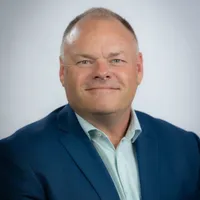
John Malanowski
Interim Chief Human Resources Officer, N/A (Interim)
HR's Financial Imperative: Proactive Talent Strategies Drive Business Growth
Episode 202 · May 19, 2025 · 11:19
HR's Financial Imperative: Proactive Talent Strategies Drive Business Growth
Key moments
In John's words
“I like to think of myself as an HR professional with a business operating background.”
“We had a huge gap in our workforce. We called it the bathtub, actually.”
“The insight was our innovation from filling that bathtub, to say it that way, comes from facts and data.”
Transcript
Read the transcript1,707 words
HostWelcome to the Built by People podcast, where we share the stories and insights of the world's top HR leaders. Join us as we dive deep into the minds of HR executives, uncovering their strategies, challenges, and triumphs in shaping today's workforce. I'm excited to welcome John to the Built by People podcast. John, thank you so much for joining us. And as a starting question, I always love to ask if you could share a little bit more about your career journey.
GuestSure. Thanks, Dave. It's a pleasure to be here and I appreciate the ask. You know, my career journey, I've been doing this a long time. Back when I first got into human resources, I really didn't know what that involved. And my career journey is taking me— I'm a corporate guy by trade, but I've tried to diversify my experience over the years. I've worked with— in financial services, Internet 1.0 days, I was the head of HR for a publicly traded tech company, and we had a hand in building the internet, which was interesting and a lot of fun. I've worked for global organizations. I worked in healthcare. The last several years I've been doing interim HR assignments or operating assignments. And the journey is how I crafted it and where it takes you. But I like to think of myself as an HR professional with a business operating background. And I hate to admit that I've got 40-plus years of doing what I do in the field.
HostThanks for that great introduction, John. Can you tell us about the workforce planning case study from your time at Raytheon? How did you approach understanding the business needs and what measurable impact did your solutions have?
GuestYeah, great question. The Raytheon thing came up, you know, which is now Raytheon Technologies. I spent 10 years at Raytheon several years ago, did a variety of roles, head of HR for a few of their businesses. But one of my roles was the head of talent acquisition for Raytheon Company globally. And, you know, we had realized pretty quickly, when you look at the demographics of the organization, we had a lot of people 1 to 7 years of experience, and there was a big gap in the workforce from 7 to 15 years of experience, and then 20 years plus had a lot of people. And back in the 1990s, the defense industry didn't hire a lot. So we had a huge gap in our workforce. We called it the bathtub, actually. So we had a lot of people up front. If you bar chart it, a lot of people at the end of their careers and nobody in the middle. And the reason we started looking at it is we realized that a lot of the staffing activity that we were involved in globally was just going and replacing people through attrition. Somehow we had to get ahead of filling the bathtub. And so we created leadership development programs. We hired a lot of kids out of school and accelerated 10 years' worth of learning into 2 years to start to fill that bathtub. We also started looking at companies for potential acquisitions just for talent alone. And so we did a lot of work on trying to fill the bathtub. We got 10,000 resumes a month. And realized that we had to accelerate the hiring for mid-career professionals. So we focused on that, still continued to emphasize the college hiring. The other interesting trick, probably not really a trick, but the 1 to 7-year attrition was about 100% in 7 years. So we couldn't get ahead of it. And the insight was our innovation from filling that bathtub, to say it that way, comes from facts and data. Take a look at the age and length of service profile of the organization. That was the first question I asked when I was the head of talent acquisition. What's the age and length of service profile of the company? And you graph that out and realize that at least we had an interesting scenario we had to address. So we got ahead of it. We had robust talent acquisition programs. We had robust management and leadership development programs. We were fortunate enough to acquire a couple different firms. I was on the M&A committee for Raytheon Company. So we added a real line of sight business activity to talent acquisition.
HostJohn, thanks for that great perspective that you shared. Could you next tell us about the apprenticeship program you built at Dartmouth-Hitchcock? Walk us through how you identified this unique solution and achieved that impressive 40% ROI.
GuestYeah, great. But the tail end of my career, I spent a little bit of time in healthcare and I was fortunate enough to be the head of HR for Dartmouth-Hitchcock Health in Lebanon, New Hampshire. And if you're familiar with New Hampshire, there's the talent is there's not really a plethora of talent in northern New Hampshire. So We had an issue with hiring medical assistants to support our clinics and support our physicians and our nurses in the hospitals. And it took about 2 months to hire one medical assistant back when we started this journey and realized pretty quickly that in order to enable the physicians and the nurses to work at the top of their license, we had to think differently about how we hire medical assistants. So we created a workforce development institute and actually created an apprentice program where we took people without any healthcare experience, but a lot of talent, pulled them in from the communities and created an accelerated 10 or 12 week, can't recall whether it was 10 or 12, but an accelerated program where people gave up their jobs to spend 5 days a week plus weekends on a medical assistant development track. We got grant money. We actually paid groceries. We paid for rent. We paid for some things that people really needed in order to graduate from our medical assistant program. So fast forward, I think Dartmouth-Hitchcock probably has graduated about 400 or 500 medical assistants over the years. At the time, we— what we said was we need to understand if the resources we're putting into this program are going to return our investment. So we asked the Aspen Institute and Carnegie Mellon to come in and do an ROI study, independent. The 40% ROI was something we established because by increasing medical assistants in our workforce and our first class, we graduated 30, and I think there have been graduating 30 or so students every 10 or 12 weeks for a while now. But we were able to put medical assistants into the clinics Increased patient flow, which increased revenue for Dartmouth-Hitchcock, enabled physicians and nurses to work at the top of their license. And the intake and all the medical assistant work that people had to do in the past were now taken over by the medical assistants that we trained and we hired and developed. And so obviously the more medical assistants you put into the system, the more they're going to do that work, which will enable you to increase volume of patients, increase patient flow, and see more people and take care of folks, which is what it was all about, is taking care of the patients up in the Upper Valley in northern New Hampshire and Vermont, serving the communities that we were unable to serve. The other interesting thing about it, the apprentice program was recognized by the Obama White House as one of the— I think it was an Upskilling America program, actually. So the Obama administration had an Upskilling America program that We were the only healthcare company and healthcare company institution in the U.S. that were recognized by the Obama administration at the time for this apprentice program work that we did. It's credit to the team at Dartmouth-Hitchcock to continue the work they're doing. Credit to the team we had in place. We had some very smart folks that put this program together and it's still alive and today, as far as I know.
HostJohn, can you share a specific example of how understanding how the company makes money changed your approach to an HR challenge and led to better business outcomes?
GuestYeah, it's the apprentice program, right? If I'm a nurse practitioner and I am spending my time doing intake work that a medical assistant could be doing, for patients, that's less time that I'm spending as a nurse practitioner or a physician on the work that I'm paid to do and I should be doing for our patients. And so we increased— it was probably $9,000 or $10,000 a month increase in revenue and billings in each clinic per medical assistant monthly, just because we had people to do the work, which we were able to see more patients. And that's the insight we learned. It makes sense. If I've got a mechanic on a car and the mechanic is spending time intaking people coming into the garage and filling out paperwork, you're not making money, at least as much money as you would have otherwise. The mechanic wasn't working on the car that he or she should be. And I'm a big one for following money. As an HR professional, you need to understand how your company makes money, how your organization makes money. And I always put a financial lens on the work that you do.
HostJohn, what parting advice would you like to share with our community?
GuestYeah, that's a good question. Don't be afraid to try new things and different things. Diversify your experience. How do you differentiate yourself from everybody else who's got the same resume, right? Join a company or an industry that you have passion for, because if you love the industry or you love what your organization does, you will be that much more effective as an HR professional.
HostJohn, thanks so much for joining us today on the Built By People podcast. It was a pleasure to have you involved.
GuestThank you, Dave. I appreciate it very much. Take care.
More conversations like this