Episode 53 · January 20, 2025 · 12:33
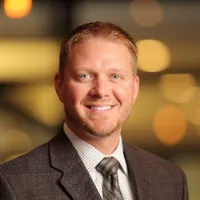
Jed Milstein
CHRO, Asbury Automotive Group
Unlocking Automotive Excellence: Employee Well-being as the Ultimate Differentiator.
Episode 53 · January 20, 2025 · 12:33
Unlocking Automotive Excellence: Employee Well-being as the Ultimate Differentiator.
Key moments
In Jed's words
“The only thing that differentiates one car dealership from another in our business is the level of service... What will get you connected and have you coming back to that dealership for service, future purchases, referring your friends is a level of service. So the guest experience is what we're focused on.”
“Communication is a theme that you'll hear a lot in our conversation, but really communicating consistently in a transparent manner, town halls with the CEO, executive team members, myself, being very open and soliciting input, feedback...”
“Some of the issues can be around systems, just purely systems, because when the business becomes of scale, you rely more and more on technology as well... And it's not often that all the systems are the same, that when the— with the acquired company, that they're just an easy move over to our platform. So that is a real challenge.”
Transcript
Read the transcript2,107 words
HostWelcome to the Built by People podcast, where we share the stories and insights of the world's top HR leaders. Join us as we dive deep into the minds of HR executives, uncovering their strategies, challenges, and triumphs in shaping today's workforce. I'm excited to welcome Jed to the Built by People podcast. Jed, thank you so much for joining us. And as a starting question, I always love to ask if you could share a little bit more about your career journey.
GuestSure. I appreciate that, Dave. I, you know, I'm trained as a lawyer. When I graduated from college, I went to law school and, you know, thought that I wanted to be a litigator. As I was moving through law school, did a couple of internships in the summers, left law school or graduated from law school and became a deputy attorney general in New Jersey, which gave me the opportunity to get courtroom experience very quickly. I think my third week on the job, I was up in front of an appellate panel of 3 judges. A neat experience for someone just fresh out of law school. I was put into the employment law group at the attorney general's office and formed the basis for my career, both in law, but really more recently in the last 25 years in human resources. I really enjoyed the issues of labor and employment work that I was doing, but really what I enjoyed was the front-of-the-seat consultative stuff. I didn't enjoy the litigation as much as I thought I would, but trying to help a client navigate, wanting to solve a real business issue, which many of which of course, involve people and how to navigate that in a compliant manner, a legal manner to get to the desired outcome. And that really is what kind of led me into human resources after working in a private law firm in Newark, after the attorney general's office, and then moved into a corporate legal environment and then HR.
HostJed, you have a lot of experience with M&A. How does HR ensure a seamless integration of employees and cultures during acquisitions? With their particular lens on the automotive industry?
GuestOkay. Well, you know, Dave, what we found to be the differentiator in HR, but really is our vision as a company. And this is important because it's all about people, of course. And the only thing that differentiates one car dealership from another in our business is the level of service. I mean, you can buy a Toyota, you name the model of the manufacturer from any dealership, but What will get you connected and have you coming back to that dealership for service, future purchases, referring your friends is a level of service. So the guest experience is what we're focused on. So in acquisitions, we look for companies that are like-minded, that believe in if you do the right thing by the team member, it starts internally with our team members, our employees. They, we will do the right thing by our customers. That's the service profit chain that was well-researched by 1990. I'm not telling anybody anything new here, but we really put that to work here. Try to be a little bit different in our industry and our business, but looking at acquisitions from a lens of, is this gonna be a group that's gonna fit with us from a value standpoint of treating the team member and the guest the right way to differentiate us? And part of the due diligence process in that for from a culture standpoint, HR owns in researching that. And when you find you have a really active and engaged owner-operator that's selling the group of dealerships, it makes quite a difference there. And when you think about those next steps and where is that acquisition from a benefit standpoint, pay plans, compensation, we want to make sure we're the least disruptive as possible for that acquisition and the team members coming in. And communication is a theme that you'll hear a lot in our conversation, but really communicating consistently in a transparent manner, town halls with the CEO, executive team members, myself, being very open and soliciting input, feedback on things we make sure we cover and do the right way for the team members as they're joining us, which really limits the disruption of turnover and those kinds of things. So The discovery the HR team does from culture, benefits, compensation, training available, et cetera, and what is needed from a people perspective is a huge contributor to the success of an acquisition.
HostJed, you've been on quite the growth journey where you are. What specific challenges arise when scaling from 6,500 to 15,000 employees and How does HR help address them?
GuestSome of the issues can be around systems, just purely systems, because when the business becomes of scale, you rely more and more on technology as well, whether it's in the dealership, the dealer management system, or from an HR standpoint, the HR information system. And it's not often that all the systems are the same, that when the— with the acquired company, that they're just an easy move over to our platform. So that is a real challenge. And, you know, the data integrity and just taking the time to make sure we get it right from the beginning is a differentiator for sure. And then taking those steps of understanding exactly what those team members have from the, I call the building blocks, compensation and benefits standpoint, culturally what they're used to. And also then for us as a public company, The acquisitions we've all done are of private organizations, and there's a next level of transparency reporting and those types of issues that is often new for a store accounting team at a private dealership, for example. So being able and active to do the training, showing people what's necessary and what we need to do to be successful in the public company environment is critical. And we spent a lot of time up front on the integration side to make sure we do that properly.
HostJeff, what role does HR play in maintaining operational efficiency and employee engagement in an automotive organization?
GuestSo being different and, and wanting to be a bit different, we talk about the guest experience and it's starting from within. We provide lots of avenues for team members to communicate with the executive team directly. Sometimes someone wants to do that in a confidential manner. We have a hotline for that. We have OctaTiles on our homepage when someone logs in that they can communicate directly with the executive team. We all publish, every member of the executive team here, we publish our cell phone numbers and contact numbers. And it is not unusual for me to walk into our CEO's office and he's on the phone with a technician in a service bay working on a car who's got a question or a concern or something he'd like to voice. Same thing for myself, our CFO, our head of operations, legal counsel. We try to create that connectivity that, you know, no question's too small or too large, and we're going to be as transparent as possible. Someone may not always like the answer to the question because we're going to be candid and we've got to maintain a standard as a public company, of course, of ethics and integrity. But we will always look forward to getting the feedback and being responsive to our team members. So that's a critical part. From the HR side, when you think about having a good process to recruit and onboard people, couldn't be more important. We do a very defined day one onboarding across our company. Now that onboarding is specific to the particular platform. It's important for someone to know why they are part of Asbury, but we maintain the local identity of the platform. For example, Dave, where you're sitting in Salt Lake City in the Mountain West states, Larry H. Miller. Mr. Miller was an icon in the Mountain West states, particularly Salt Lake. Great community person, cared a lot about growing and developing the communities around him. That name means a lot. And we wanted people to know the Larry Miller team when they joined us back at the end of 2021, why that acquisition took place, why we thought we were a good steward, and why we were chosen to get the opportunity to purchase the Larry Miller organization. Here in Atlanta, it's the Nally Group and so on all around the country. These names mean something, and it's what we spoke about up front, that like-minded owner that values a team member and values the guest experience to differentiate. So making sure that we have a good onboarding, people understand that history, Then great functional training. We call them swim lanes, whether you're a sales advisor, a service advisor, a cashier, an accountant, we have training and development that follows your hire when you start with the company. And we also provide and require one week's worth of guest experience training where we share best practices from companies that are really well known for their experience that they create that differentiates them in the markets. We have an online career path tool to keep people engaged and looking forward in their career. What are the things they need to do in their current role to be successful, to then move into that next role? We have an internal recruiting pipeline as well. So these are the things that HR has to be really, really good at. And we need to jump on things quickly when there are employee relations issues.
HostJed, how do you measure HR's impact on the success of acquisitions and overall growth for the company?
GuestSo when we are acquiring a company and we know, of course, we want to keep track of the amount of leaders that stay with the company. So the retention of leadership, and usually if the leaders are staying in our stable group, so will be the rest of the organization, the rest of the population. So one of the things we track very carefully is our retention of leadership, general managers in stores, service managers in stores, controllers, accounting leadership. Et cetera. So that's very important to us. And we look at the productivity per employee in these organizations as well. We retain everybody when we bring on a new acquisition, but what we want to do is give them the tools, you know, hopefully because we've developed them as a larger public entity that values these items, the training that they need to be successful in the role. So retention and productivity, if they're more productive, they're earning more money because 90% of the roles in the automotive retail space are commission-based. So we want to make sure people are very productive. We want to make sure we're giving people an opportunity, for example, to sell 15 cars a month or to talk to a dozen service customers a day if they're on the service drive, because if they're doing that, they're earning a good living and we are providing consistent experience for guests that are coming into the store. So those are the two that really stand out and, you know, that we think about among, you many other KPIs, but if we're doing those two well, it's usually a good leading indicator.
HostJed, any parting advice you'd like to share with our audience?
GuestWell, the theme that I brought up a couple times is just the communication piece that the transparency— to me, 95% of issues can be solved with good proactive communication, responsive communication, the what channels are open. And when someone pings you in one of those channels, being very responsive and answering the call. I know it sounds so simple and elementary, but I think many organizations miss the fact that that is something that if you focus on, it will make a huge difference. And that's what we do. We are in HR. We have internal clients here, and that response level cannot be any different from what we expect of people on the front lines serving our customers and our guests.
HostJed, thank you so much for joining us on the Built by People podcast. It was a pleasure having you involved.
GuestMy pleasure, Dave, and thank you for asking. I really— it was a pleasure to meet you and have the discussion.
More conversations like this