Episode 45 · January 14, 2025 · 13:13
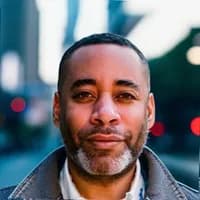
Charles Mangino
Director of Pay & Benefits, Vita Coco
Is Your HR Future-Proof? Balancing Automation with Empathy for Strategic Impact
Episode 45 · January 14, 2025 · 13:13
Is Your HR Future-Proof? Balancing Automation with Empathy for Strategic Impact
Key moments
In Charles's words
“We're in people roles and people in certain roles in different organizations, different fields of business, because you need to have that human touch. You need to have that emotional connection. You need to have that trust building within every level of an organization.”
“Where the automation really takes into effect, it helps you take out and remove those mundane pieces of doing business.”
“The biggest thing is, again, knowing what you know and leveraging support where you need to so that, again, you can align globally. You can have this fundamental idea of global alignment to be able to offer perks and benefits that make it enticing for individuals that may be applying globally to an organization, and then being able to comply locally with what you need to do for those nuanced items.”
Transcript
Read the transcript1,981 words
HostWelcome to the Built by People podcast, where we share the stories and insights of the world's top HR leaders. Join us as we dive deep into the minds of HR executives, uncovering their strategies, challenges, and triumphs in shaping today's workforce. I'm excited to welcome Charles to the Built By People podcast. Charles, thank you so much for joining us. And as a starting question, I always love to ask if you could share a little bit more about your career journey.
GuestAbsolutely. Well, thank you for having me first off. Excited to be here. Excited to talk a little bit more about HR and people and all that good stuff. But yeah, me, I've been across the finish line now a little over 21 years in the HR world. I like to tell my journey in two different, kind of two different worlds because I spent the first 8 to 9 years in retail HR, which is vastly different. Than kind of the portion that I'm in now, but started as an intern at a company called L Brands, which at the time was the parent owner of Victoria's Secret and Bath and Body Works, and kind of really worked my way through having the opportunity while I was still going to school, taking full-time credits. People thought I was a little crazy for doing that. And on my 2 days off, I was going to school or working full-time hours. So it was traveling between field, corporate, warehouse, You name it, I was putting my hands on it and having that opportunity to really grow and build through the ladder in the HR world. And then, you know, I turned around one day and I said, I'm, I'm really far away from why I got into the, the people field and working with people and being able to kind of be more on the ground, more stability in working, you know, in the corporate level and having clearer understanding and a clearer opportunity to share my idea, put them into motion, see them as the end result. And I made that switch about 11 years ago and have really been through a great career journey, have worked at places that are initial startups, private, public, different fields like tech, design, and had the opportunity again to really kind of grow with with each organization that I've been a part of. And here we are, you know, having to kind of have that well-rounded gamut of being in VP people roles, senior people roles, global HR roles, and now going a little bit more niche, more in the compensation and the benefits world.
HostCharles, I'm curious, how can HR balance automation and innovation and workloads while maintaining a personal touch? This is obviously a hot topic with the emergence of AI. And I'm curious what role these efficiencies play in strategic alignment with business goals.
GuestYou know, I know a couple of years ago when AI started to rear its head into every facet of organizations, the worry was AI and robots and automation is going to take over everything. And as we've progressed through understanding it clear, there's a balance that has to take an effect. We're in people roles and people in certain roles in different organizations, different fields of business, because you need to have that human touch. You need to have that emotional connection. You need to have that trust building within every level of an organization. Down to that part-time window washer. And where the automation really takes into effect, it helps you take out and remove those mundane pieces of doing business. You know, things like employee self-service and things like individuals having to enroll in benefits or having to make updates to their address. When I started in HR, it was very transactional. You were doing your paperwork, you were making the changes, you were doing all of the things. And as especially the people world and HR had progressed, we realized that the pieces that are taking away from us making those emotional connections and being able to have a seat at the table and understand what HR can really play a role as a true business partner rather than a transactional partner. There's a balance, and I think it changes at different times of the year. For example, open enrollment, you really want a system in place that can help with automation where you can, as the HR leader or the benefits leader, be there to answer questions, make the presentations, support the individuals in making their appropriate decisions. And then at other times of the year, automation may be less and you may be more hands-on in doing more than having others do. So I think there's a true balance. Do I think that AI is successful and do I think that technology is successful? Again, it's all in the systems. You can implement HRIS, payroll systems, benefits system, reward systems is a great example, but you can't rely on them fully because they're only as good as what you put into them and what individuals can trust into them to get out of them.
HostCharles, I want to dig deeper into your niche specialization of benefits and compensation. And my first question around that is, what strategies have been most effective in integrating wellness initiatives with meaningful perks that boost both engagement and loyalty?
GuestAbsolutely. I think the biggest thing, and I'll take an example from early on in my career, it was benefits was just benefits. It was medical, dental, vision. You all had maybe 1 or 2 options for employees, and that was it. And what we've seen in the realm of benefits itself is that it's not just that. It's truly about wellness. It's truly about understanding that costs year over year for both companies and employees increase. And what we've transitioned to is more of this strategy of wellness. So looking at things of how can we educate employees, how can companies be educated, how can companies work with their benefits partners, whether it's their benefits brokers, it's their financial brokers, any of those pieces to help kind of connect the different puzzle parts together. And when you're looking at your wellness strategy, It's not just year beginning and year end, it's year over year. You want to look at it as a long-term balance so that you're effectively planning for now, you're effectively planning for the near future, and then you're effectively planning for 5, 6, 7, 10 years down the road because it's going to be ever evolving and changing through the economy, through the government, through different offerings that are there. And then being able to create unique experiences for organizations, you know, looking at your different strategies and saying, okay, how can we communicate effectively? How can we educate effectively? How can we also take the feedback that we're getting within the organization and being able to adjust in the moment and then be able to plan again in that near and that far out future?
HostCharles, how do you manage the complexity of offering global and regionally nuanced benefits while ensuring compliance, scalability, and also a focus on financial wellness?
GuestAbsolutely. I think the goal is knowing what you know and then being able to reach out, leverage support from individuals. So for example, if it's an organization that's growing into a part of the world that they've never done business in, partner with individuals in that realm so that you understand what the compliance guidelines are. What the federal government requirements may be. I've learned a lot of that through hands-on experience working with global organizations. And what you don't want to have is implement benefits that match exactly what you have in the US, let's say, and that's not going to match what's needed or federally required in different parts of the world. So I think the biggest thing, again, knowing what you know and leveraging support where you need to so that, again, you can align globally. You can have this fundamental idea of global alignment to be able to offer perks and benefits that make it enticing for individuals that may be applying globally to an organization, and then being able to comply locally with what you need to do for those nuanced items.
HostCharles, how does HR evolve from an administrative function to a strategic partner And what processes and metrics help measure its impact on business outcomes?
GuestThe biggest thing is that idea of changing from reactive to proactive. That's ultimately where any HR leader, any leader, any person in an organization is going to have the biggest effect. It's realizing Let's think ahead, let's plan, let's be strategic so that we can be proactive instead of that being a constant reactive approach. And then measuring that by, you know, as much as you can, the data, anticipating talent needs, aligning initiatives or organizational initiatives, not just specific to HR, but HR again being that player in the field that really has their hands in all different parts of the organization, all different departments. And realizing that HR can be a seat at the table. They can influence the key business outcomes, you know, whether that's performance management, whether that's benefits management, payroll management, et cetera. But again, that biggest thing is, and I always practice this, is it always successful? We'll see as we kind of go through, but it's definitely being proactive over reactive.
HostCharles, what role does creativity, storytelling, and personalization play in designing benefits and policies that align with an organization's culture and resonates with employees?
GuestYou know, the biggest thing I think is tying the benefits as much as possible to the company's mission, the culture, their ESG and impact initiatives, because that's where you're going to create the most value. You're going to create that sense of alignment. And focus on belonging within an organization. And belonging is what are going to connect to employees one-on-one, create that emotional connection, build that trust with them. And crafting campaigns or narratives around new benefits can make that more engaging. For example, my company had our most recent open enrollment. We created a theme. We created a theme that tied with the brand image colors, the palm trees, all of these things that get people and get them excited about something that to others is benefits enrollment. It's okay, it's medical, dental, vision. But you create that excitement and you create that portal of knowledge for people and they're going to buy into it and they're going to feel connected to it and it's going to help your team. It's going to help the organization really move ahead in some things that in the past may just seem mundane and ordinary to others.
HostCharles, what parting advice would you like to share with our audience?
GuestYou know, I think the biggest thing for me is don't, don't settle for where you are in the HR world, where you are in your experience. For someone like me, I couldn't imagine the journey that I've taken without those ups and downs. And learnings through. And the biggest thing, especially for an HR leader in any level of an organization, is truly you learn sometimes on the fly. You learn, and it's okay to make mistakes, but you learn from those mistakes. And I think the biggest piece of advice that I've given individuals that I live by is don't beat yourself up about that. Learn from it, grow from it. Educate yourself on it, and you continue to move forward, and you're going to be as successful as you want to be.
HostCharles, thank you so much for joining us on the Built by People podcast.
GuestThank you so much, David.
More conversations like this