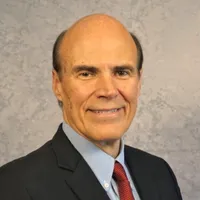
Bruce Nichols
Chief People Officer
HR Solutions
Beyond Buzzwords: HR Leadership's Blueprint for Business Impact and Human Connection
Thesis
“Effective HR leadership hinges on deep business understanding, a constant presence with the workforce, and the 'humble decisiveness' to prioritize human connection and fundamental principles, especially amidst technological advancements.”
What you'll take away
- 01Lead from the front: Be present with your people, understand their daily work, and actively participate to build connection and trust.
- 02Centralize for consistency: Implement centralized HR services (like employee relations or operations) to ensure expert advice, consistency, and free up HR business partners for strategic work.
- 03Master business fundamentals: HR leaders must understand key business metrics (EBITDA, CapEx, headcount, turnover) and merge them with HR data to be strategic partners.
- 04Prioritize the 'human' in HR: Despite technological advancements like AI, the core challenge for HR leaders is to maintain empathy, connection, and human-centric approaches.
- 05Embrace 'humble decisiveness': Humbly listen to diverse perspectives, make decisive choices, and then fully own the consequences, learning from both successes and failures.


What most organizations get wrong
- Challenges the uncritical adoption of AI in HR, stating it's a 'cop-out' to assume technology alone will make things better without focusing on fundamentals and human aspects.
- Made the unpopular decision to hire a 'wildly unpopular' operations-focused individual for an HR team, prioritizing operational efficiency for long-term service delivery over immediate team comfort.
In Bruce's words
“I loved the fact that as I was sitting in the room, I'm seeing all these things happen and people running around with their hair on fire and realizing, you know, this isn't the end of the world. This is not life and death stuff. Like, we can make, make it better.”
Illustrates his early realization about the impact HR can have in stabilizing chaotic situations.
“So that was my, like, I can't escape. I guess this is what I'm doing.”
A humble and humorous reflection on how he unexpectedly landed in HR and found his calling.
“Is this what I signed up for? I don't have this background or experience, so I have to actually figure this out or bring people around that help me figure this out.”
Describes a pivotal career moment requiring self-belief and adaptability in a high-stakes CHRO role.
“And I think, I think a lot of it, just having that intestinal fortitude and courage to say the world's not going to end. We'll figure it out.”
Highlights the essential characteristic of resilience and confidence needed to make tough, personal career decisions.
“And especially now with the AI revolution, I think we have to be focused on keeping the H, that human in HR, and keeping the human aspect in the businesses that we support.”
A concise statement on his core philosophy regarding technology's role in HR and the enduring importance of human connection.
“But the ability to humbly understand the business around you, understand the room is smarter than the individual sometimes... And then make a decision, be decisive, and then accept the consequences of that decision.”
Defines his 'humble decisiveness' principle, emphasizing collective intelligence and accountability in leadership.
The problems this episode addresses
- Leaders lacking adequate training on how to manage and discipline employees effectively.
- Employees experiencing low engagement and morale, leading to negative ENPS scores (e.g., -50 to -100).
- HR functions becoming reactive and administrative, rather than strategic partners to the business.
- Small to mid-market companies struggling to establish fundamental and scalable HR operations.
- The risk of losing the human element in HR due to over-reliance on technology and neglecting foundational practices.
In this episode
Built by People podcast features insights from world's top HR leaders
Built by People
Bruce Nichols is the HR manager for Home Depot in New England
Bruce Nichols on His Path to the HR Job
Tell me about a moment in your career where everything maybe was on the line
Pushing the Career Forward
Looking back, what's been the most meaningful change you've made at Citizens Bank
WSJD Live: The Center for Employee Relations
How did you bring people along or how did you get buy-in
In the Elevator With an unpopular Decision
Leadership is about having a connection to the people you work with
Five Rules for Leading With a Human Touch
What do HR leaders need to prepare for in the next 5 years
The Big Shift in HR in the Next 5 Years
I use humble decisiveness to describe how I approach my career
Humbly Decisiveness
Bruce Miller joined us today on the Built By People Podcast
Bruce Springsteen on Built By People
Topics covered
Organizations and entities mentioned
Full transcript
Expand transcript (0 words)
Transcript is not available yet.