Episode 254 · June 25, 2025 · 16:42
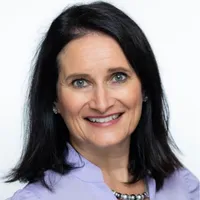
Amanda Sedars
Chief Human Resources & Risk Officer, Mindr
HR's Secret Weapon in Fast-Paced Private Equity: Law, Logic & Human Connection
Episode 254 · June 25, 2025 · 16:42
HR's Secret Weapon in Fast-Paced Private Equity: Law, Logic & Human Connection
Key moments
In Amanda's words
“I had always thought of myself as an attorney, and it wasn't even so much that other people couldn't see me differently. It was more like, how do I really hone in on what gets me up in the morning? Why did I go to school to be an attorney in the first place? And how is that transferable across careers?”
“We don't have— time is something that, that is a luxury we don't have in private equity.”
“Number one was a common LMS that allowed for live side-by-side training... to approximate that live in-person training experience.”
Transcript
Read the transcript3,026 words
HostWelcome to the Built by People podcast, where we share the stories and insights of the world's top HR leaders. Join us as we dive deep into the minds of HR executives, uncovering their strategies, challenges, and triumphs in shaping today's workforce. I'm excited to welcome Amanda to the Built by People podcast. Amanda, thank you so much for joining us today. And as a starting question, I always have to ask if you could share a little bit more about your career journey.
GuestSure. So I went to law school. I've always been interested in helping people, so I had the mindset of becoming a prosecutor and I went to law school in Chicago. I actually interned at the Cook County State's Attorney's Office for the last 2 years of law school, and that was going to be my career path. However, law school loans beckoned and the prosecutor's salary doesn't quite cover that. I took a different path. I actually went into private practice and returned to my home state of Iowa where I did a little bit of everything. I've done criminal court-appointed defense work, family law, insurance defense, employment law, and that was really my first touchpoint with HR, if you will. Having been an employment law attorney in private practice, and then at some point just didn't fall in love with the billable hour and really wanted to get back to helping people. I was doing a lot of work, for example, representing insurance companies, and I just didn't feel like I was saving the world. It wasn't in alignment with the path that I had originally pursued in going to law school. So I started to think about how I could use my law degree in a different way. And I actually had applied to be general counsel for an organization that was a nonprofit that served special needs healthcare, children with special needs and healthcare. And I went back to them and I just said, hey, I know that ship has sailed and I've been out in private practice for a while, but I'm still interested in using my law degree to serve the public in a different way. And so if you have anything that would align with kind of my journey or leverage my law degree, I'd love to talk about it. And it actually ended up. Running their pediatric home care division. They were looking for an attorney to come run it because it's an extremely highly regulated part of healthcare. And so I went and did that for a while, and then within that same organization transitioned into human resources and have been on that path ever since. I went to work after that for a large nonprofit health system in the Midwest and was actually on a path to pursue becoming a CEO of a rural affiliate hospital when I decided that just didn't that didn't quite resonate. I kind of got that itch again. It just didn't quite feel right to me. And I got a call from a recruiter I'd known for a decade who said, hey, I have this company, they're right in your backyard. I know that serving is really important to you. This company, the company that I work for now, Minder, was actually just known as Intoxalock back then. They've been around about 25 years, and their whole mission was helping people live and drive responsibly. They were the largest provider of ignition interlock devices to individuals with alcohol related offenses in the United States at that time. It was 2017. I said no twice. And then she said, but their CEO is female. And I thought that was a dirty play because then I wanted to at least meet her for coffee. And now the rest is sort of history. So I've been, the company's evolved many times over the last 8 years. Intoxalock, still our flagship brand, but now we have other brands such as Breathe Easy Insurance, which provides us our 22. We also have a THC breath detection business and then a personal breathalyzer business. Called Keeper, and we are known, but to the public, as Minder. And so what I really love about that is, as I'm now the chief human resources officer, I also handle anything employment law related. I get to work for a business that's doing something good for the public in the private equity space. So I know we're gonna talk a little bit about how that's different as well, but it has just been this really nice marriage of doing well and doing good and leveraging what I went to school for and what my passions are in terms of being able to give back to the community, but also keep up that law degree as well.
HostAmanda, you transitioned from being an attorney to working in HR. Can you share a specific challenge you faced during that transition and how you navigated it?
GuestI think that transitioning from being an attorney to working in HR, I'll be totally honest with you, Dave, I feel like it was a little bit of an identity crisis. I had always thought of myself as an attorney, and it wasn't even so much that other people couldn't see me differently. It was more like, how do I really hone in on what gets me up in the morning? Why did I go to school to be an attorney in the first place? And how is that transferable across careers? And so I actually went out and looked at some social groups on social media, on blogs, just looking for other people who had done what I thought I wanted to do, which was essentially not be a lawyer anymore. My law license is still active, just not engaged in the, in private practice any longer. And so what could that be? And could I see myself in another role and that fit with that identity for me? So I think that was really challenging for me. And the other thing I did to try and reconcile that and make peace with that was do a lot of informational interviewing. So I looked for people that I reached out to my network and I was looking for people who had their JD who weren't practicing in a traditional sense, but had found meaning and purpose in another career. And then I just asked them for coffee or 30 minutes on the phone just to get a sense of how did they navigate it, how did they see their way through that, and then how did they translate that into something that was really meaningful. And that was really helpful. And we're talking, we're here talking about built by people, but I really think Even my journey has been built by so many other people that I feel lucky to be able to do that for other people in my capacity now as CHRO.
HostAmanda, working in HR within private equity seems to have unique expectations. Could you walk us through a situation that highlights how HR in private equity differs from traditional corporate environments you've been in?
GuestSure. So, I mentioned I went from the private practice of law to nonprofit healthcare for, and that lasted about 6, 6 years, 7 years. And then I came into private equity and I really didn't, I really didn't even know what that meant when I took this job. And I think that the biggest thing that we tell people even now is the pacing expectation and the fact that we work on cycles. So you go to work for a company and depending on the size of the company, you could be running a status quo HR team, which is just basically like little improvements, little tweaks over time. Just sailing the ship. And then there are instances where maybe you have a big initiative, but it might take 12, 18, 24 months to turn that ship, to get everybody on board, to get it implemented, to get it really truly embedded. And we don't have— time is something that, that is a luxury we don't have in private equity. So when you are acquired by a private equity firm, you are typically working on an expectation of a 3 to 5 year hold, which means whatever goals you set, you want to try to accomplish them within 3 to 5 years. So your pacing is always just moving much faster than in a, in a typical corporate environment. And I think sometimes that pacing can be very challenging for folks. We also tend to do, if you're in private equity, high growth, you're doing a lot of acquisitions or mergers. So assimilating new cultures. A lot of times we buy companies that were just started by a solo entrepreneur. They don't have a lot of processes or best practices, and so you're really for the first time giving them their first HR. And so helping all those people acclimate to what does it mean to be part of a corporate team, a corporate environment that is more established. So I think really it's that pacing and it's performance over all else, right? And it's not that culture doesn't matter. It does. We are very in tune with the idea that culture drives that performance, but it's almost on steroids. So like a lot of the conversations we have about, for example, values or mission, are every single day because we're using that to drive, to fuel that performance, that anticipated return within that short hold window. And then when you sell, if you sell to another private equity investor, for example, then you just start the cycle all over again. You could of course be picked up by a strategic, in which case maybe you'll go into a more typical corporate environment following that hold period, but you don't really know until the end. And so we're always working on Are our goals set up in such a way that we can realize the return or the return on the investment in that goal within the whole period? And if not, what's the story we can tell about the buildup of that value to the next investor when we're sitting across the table contemplating a sale?
HostAmanda, you've mentioned in the past transitioning your workforce to be 80% remote across 50 states and Puerto Rico. Can you tell me about a specific strategy that proved effective during that transformation? Sure.
GuestYeah, when I started here, we were about 97% in-person in central Iowa. We had about 250 employees. We have a really big call center presence, so inside sales and then also customer service, and we are in Des Moines, Iowa. So we quickly realized that to cover all time zones and then also just to meet the demand of the business, which was rapidly growing, we were going to need to branch out from being all in-person. So before COVID hit, we actually were about 45% remote already. And the way that we had started to scale that was a couple of things. Number one was a common LMS that allowed for live side-by-side training. So we use Litmos and it allowed our sales trainers to be able to role play and provide real-time feedback to sales agents who were nesting. And in that way, provide that to us to approximate that live in-person training experience. And we do something very similar for our customer service representatives. As well. So that was really critical, making sure that they could still get the same value out of the training that we offered them so that we could provide the best possible employee experience, but also the best possible customer experience. So we leveraged that heavily. We also put in place a requirement that every leader hold something that we call an Intune session. It was a play on our flagship brand name, Intune for Intoxalock. Leaders would hold an Intune session no less frequently than once every 2 weeks. And we gave them just a very simple format. What's working well? What isn't working so well? What's one thing you would change if you could? A couple of other guiding questions that would allow them to really figure out what is— how is their work environment going and how can I help facilitate their best possible work? And so we made that a requirement for all of our employees and leaders, and it really allowed them to make sure that they were getting that dedicated time with their leaders and we were always face to face. Another thing that's super important to all of us here at Mindr is camera on all the time. Everyone's got an off day. You might have a day where you feel a little under the weather and that's okay. But if I have my camera off today, someone undoubtedly would send me a text and say, hey, are you feeling okay today? I noticed your camera's off. It's really just important for us to humanize the work. And so not only are we dealing with people in a very precarious situation in their lives as our customers, But we build a rapport with them and that's how they learn to trust us as a business. It's how we gain their buy-in there and we gain our credibility. And so we take that into our work as well. And so everyone's got their camera on. I can see their face. I'm not hiding behind email or, or a gray screen. Everyone knows who I am. And in that way I'm more human to all of them, even though I haven't maybe ever met any of them in person. And that has really helped facilitate. That culture, that value, that values-driven behavior that we're looking for, not just in how we work with our customers, but in how we work with each other. And it has allowed us to have world-class engagement on our annual engagement surveys. And then also our retention just keeps going up and up in terms of our retained employees, which we're really proud of.
HostAmanda, how has your legal background and skills specifically helped you navigate complex HR situations in the private equity space?
GuestYeah, I think that— I think the trick about a legal background is not so much that you know everything about the law, right? It's going to med school. All doctors aren't the same, but more that it allows you to ask really good questions about what you're hearing or the facts that are in front of you. I think that it allows me to ask about the unintended consequences. It allows me to bring other folks in. When I can see that an issue is going to impact multiple service lines, when I can see that an issue might not be permissible under the way that our structure is set up, it allows me to do a lot of those things. So I think it's really about just the critical thinking and the willingness to ask some of those really difficult questions and insist that we, we do our due diligence. It is helpful in that we do business in 50 states, DC, and Puerto Rico, and there are no shortage of state or jurisdictionally specific rules and laws. And so being in tune with that, you don't have to memorize all of it, but you do have to be very astutely aware that there are differences for jurisdictions in where we, where we have talent, where we're looking to attract talent, where we're looking to create a new a new facility for folks or a new cohort of employees. There's just a lot of complex rules to navigate and to be aware of that, that you've constantly gotta keep your eye on. I like to, I like to say my HR team, there's about, I have about 15 right now across the entire United States, and we are doing continuing education every week. There's just, there it's, there's no way around it. Like it, there's just so many moving pieces in the HR landscape. And being able to be aware of those things and to impart that to folks around you is really critical to what we do.
HostAmanda, what parting advice would you like to share with our community?
GuestSo a lot of people that I work with wouldn't tell you that I'm an introvert, but I actually am. And I think that is important information because I think that this podcast is really about how do we build, better workplaces for people and what's the future of HR and how does that impact people's lives. But I will tell you that I wouldn't be here if it wasn't for the network of people that I have encountered, that I've worked with, that have believed in me and that have been willing to take my call. And so while I might not be the person throwing a reception or a party or the one who gets excited about company happy hour, I will tell you that maintaining those relationships and making sure that people feel your presence and know that you're as invested in them as you may need them to be in you at some point has built my career. And so as much as, as much as possible, I like to think about my job as how do I help people do their very best work and what role can I play in that? And to all the introverts out there, to all the HR leaders out there, I think remembering that we need people as much as they need us in terms of building a good culture and a good workplace. I think that's a really, it's a really good angle to view how we do our jobs every day.
HostAmanda, thank you so much for joining us today on the Built by People podcast. Pleasure to have you involved.
GuestYes, thanks so much.
More conversations like this