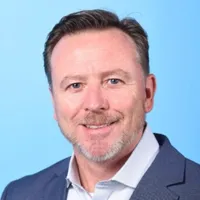
Episode 61 · January 24, 2025 · 10:00
Will Powley
Head of Human Resources, Grabber Construction Products
Corporate Learning Reinvented: Integrate Values for Real Impact
Episode 61 · January 24, 2025 · 10:00
Corporate Learning Reinvented: Integrate Values for Real Impact
Key moments
In Will's words
“The design that I've preferred is to actually identify key executive leaders, key leaders who are leading the organization to also become faculty within the corporate university and to build that stronger tie between their organizational team members.”
“It also built a stronger bond and relationship between senior leaders, broke down barriers, broke down the silos between having conversation with senior executives and made it more comfortable and vulnerable and, and opened up vulnerabilities that would never have been surfaced before.”
“If you can link the training you do to the organization's strategic priorities and mission, it'll just magnify the effectiveness of that corporate university.”
Transcript
Read the transcript1,337 words
HostWelcome to the Built by People podcast, where we share the stories and insights of the world's top HR leaders. Join us as we dive deep into the minds of HR executives, uncovering their strategies, challenges, and triumphs in shaping today's workforce. I'm excited to welcome Will to the Built by People podcast. Will, thank you so much for joining us. And as a starting question, I always love to ask if you could share a little bit more about your career journey.
GuestYeah, it's a, it's great to be with you. I would say that my career journey has been one that's been dynamic and changing. I started out my career at GE and worked at GE for nearly 20 years in a variety of different positions. I started out in communications. I then did some HR business partner positions with GE in different divisions. And then I did a Six Sigma for HR black belt position, which was a process leadership role within a division of GE and mentoring, coaching, and doing a lot of focus there. And then I did union relations and then I left HR in GE and I went and did a consultative role with GE Healthcare, which was part of a mini Accenture or Deloitte type company within GE. That did engagements with healthcare organizations, hospitals, and healthcare systems around the United States and even Canada. And so there I spent a lot of my time working with hospital healthcare executives on developing leadership programs, teaching all different levels of leaders on how to do some of the GE methods of leadership in terms of succession planning and talent review, corporate university leadership curriculum and leadership development.
HostWill, I want— oh, keep going, Will.
GuestYeah. Following my career at GE, I spent time at several startup companies, did my own consulting, worked at several different healthcare organizations, and now currently I'm the head of HR for Grabber Construction Products, which is a distribution and manufacturing company. That's a global company. And you may see Grabber at Home Depot or Lowe's in the aisles to get your screws for fastening drywall.
HostThanks so much, Will. What are the core goals of creating a corporate university, and how do you ensure that these align with the company's mission and future needs?
GuestYeah, thanks. So I've done development work with organizations around developing a corporate university in-house with about 3 different organizations. And in all of these cases, we start with the mission the vision, the values. And the goal there is to build competencies, build working, build relationships across multiple entities, multiple organizations, and bring people closer together through corporate learning. And that essentially is kind of the key goal, but also to build and sustain an in-house development program for purposes of recruiting, retention, development, and retaining talent.
HostHow do you identify and prepare internal leaders to become effective faculty members who can train and inspire others in an organization?
GuestYeah, you know, there's a couple different choices when you're developing a corporate university. You can outsource all your teaching to outside teachers or lecturers or professors. Consultants. The design that I've preferred is to actually identify key executive leaders, key leaders who are leading the organization to also become faculty within the corporate university and to build that stronger tie between their organizational team members. And so we'll identify faculty from the executive teams, from the leadership teams of the different organizations. Help them define what they want to teach, what their expertise is, their subject matter expertise. And then I usually take them through a little bit of a faculty teaching, you know, how to be a good facilitator of learning. And many times we'll do a dry run, we'll do some facilitation training and really build that core competency within our internal faculty.
HostWill, what types of programs or curriculum do you prioritize to develop future leaders, and how do you measure the impact of these initiatives?
GuestYeah, it's part of what I call a 5 Ds approach to corporate learning. The first D is diagnose, second is design, third is develop, fourth is deploy or deliver, and then the fifth D is debrief. Following that methodology that I've come up with over the time I've worked in designing corporate universities, that's a great method. A lot of focus on what the needs are of the organization at the time. And typically what we'll do is build a foundational set of offerings that are what I would call foundational to the entire organization for all employees. And then we'll build on that. In terms of competencies and skills around people leaders, around different segments of the organization. And in terms of healthcare, we might branch off and have a separate curriculum for physicians. And then hospital administration leaders, we might have a separate curriculum for those leaders of leadership— levels of leadership. But typically, we've designed kind of a base foundation focusing on new leaders, And then we'll do emerging, progressing, advanced, and executive as kind of 4 different levels of leadership that we'll focus on for competency building and development.
HostHow do you balance teaching operational skills with promoting strategic thinking and leadership qualities within a corporate university?
GuestYeah, one thing I really love doing is developing what I call business simulations. Business case studies that really blend experiential learning with the practical and the theoretical and the strategic. One example is a recent company I worked with, we created a business simulation that mimicked a health system of multiple hospitals. Attendees came in, they were given a new role, a new title. They were, you know, a new title that they could play in this simulation. We might have had an IT director who became the board member with the C-suite in, as part of this simulation, just to put themselves in other people's shoes, get different perspectives and different learning approaches. And that, I think, really helps build strategic and tactical skills.
HostWill, can you share examples of successful outcomes from having internal faculty lead training programs within an organization?
GuestI worked with Ochsner Health System down in New Orleans for a number of years, and we built out and started a leadership institute, corporate university from the ground up. And part of that was developing internal executive team to be faculty members. And every one of them developed a core skill in teaching, facilitating. It also built a stronger bond and relationship between senior leaders, broke down barriers, broke down the silos between having conversation with senior executives and made it more comfortable and vulnerable and, and opened up vulnerabilities that would never have been surfaced before. So I also worked previously in Boston, Massachusetts with Tufts Medicine in building a leadership institute and corporate university there. Similar approaches where senior executives, physician leaders taught in this university and was able to connect stronger and build stronger bonds of trust and relationships of trust with other levels and other functions and other levels of leadership. So pretty exciting to see that occur in ways that would never have occurred if you didn't have this corporate university kind of program and structure.
HostWill, what parting advice would you like to share with our community?
GuestI think we talk a lot about development. Oftentimes we'll send people away for a particular class to go to, and that's great. I think the key thing that we found in having in-house learning programs at whatever scale was it really does need to connect to the organization's mission, vision, and values and tie into specific projects or initiatives that the company is, is organizing. If you can link the training you do to the organization's strategic priorities and mission, it'll just magnify the effectiveness of that corporate university.
HostWill, thank you so much for joining us on the Built By People podcast. It was a pleasure to have you involved.
GuestYeah, thank you. It's been a pleasure.
HostThank you.
More conversations like this