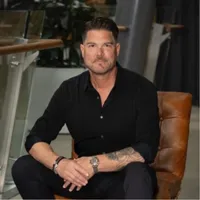
Sam Simmons
Chief People and Internal Operations Officer
LPGA
Your Talent Playbook is Obsolete: Data & Trust Build Tomorrow's Workforce.
Thesis
“In an era of evolving employee influence and increasing global chaos, organizations must prioritize deep business understanding, data-driven people strategies, and authentic, trust-based relationships to effectively attract, engage, and retain talent while achieving business objectives.”
What you'll take away
- 01Effective change management demands a sustained, repetitive communication campaign, acknowledging that there's no 'one and done' approach to embedding change.
- 02Organizations must expand their value proposition beyond compensation to include career development, work-life integration, and a compelling culture to attract and retain talent in today's dynamic labor market.
- 03HR professionals should leverage people analytics and survey data to construct a credible narrative for business leaders, demonstrating how retention and engagement directly impact organizational goal attainment.
- 04To effectively partner with business leaders, HR must deeply understand the company's core business drivers ('flywheel') and stay updated on business priorities, not just people-related issues.
- 05Building sustainable workplace relationships requires trust, transparency, and consistent follow-through, coupled with a genuine interest in colleagues as individuals, not just their work.


What most organizations get wrong
- Simmons implies a contrarian view on common leadership oversight: that leaders 'easily forget' the centrality of people to achieving organizational goals, even amidst technological advancements like AI.
- She pushes back on the idea that workplace relationships are passively built, especially post-COVID, emphasizing the deliberate effort needed for 'rapport building' and 'soft skills' that are often overlooked.
In Sam's words
“So a good change management process requires a communications campaign, plain and simple. It's gotta be steady, it's gotta be repetitive, but it, that's what you have to do in order to ensure it sinks in over time. There's no one and done.”
This quote highlights the critical, often underestimated, role of consistent communication in successful organizational change.
“It's not just about pay, it's about career development, the work-life integration the candidate is striving for. It's about the culture. You have to have really good quality, thoughtful answers to these questions and continue to step up your game year over year while ensuring that your leaders remember that culture is and always has been a team sport...”
Simmons outlines the multifaceted expectations of modern employees, shifting the focus beyond salary to holistic employee value proposition.
“Using data, there's so much data available to us. So you use it as a way to tell a story, whether that's overall people analytics, survey data, what you have available to you when you're doing workforce planning. You have to show leaders how retention and engagement impact the organization's ability to achieve its goals.”
This emphasizes the strategic importance of data in HR to connect people metrics directly to business outcomes and gain leadership buy-in.
“You've gotta know the business. You have to learn what drives your company's flywheel deeply. So when you connect with business leaders, it's not just an opportunity to learn more about the people priorities and how people are doing. That's an opportunity to get business updates too...”
Simmons stresses the necessity for HR to be deeply immersed in overall business strategy to effectively partner with and influence leaders.
“The best and most sustainable workplace relationships are built on trust, transparency, and follow-through always. A genuine interest in the person, in their teams, in their business. When it comes down to it, those soft skills everyone's talking about, like, that's really the make or break, right?”
This quote distills the foundational elements of strong workplace relationships and elevates the value of interpersonal skills.
“As the world gets inevitably more and more chaotic, your people will search for stability and more clarity at work, which isn't something we can ever guarantee, but it is definitely a reality of the year that is happening before our eyes. So let's do what we do best and find ways to solve for the business and for our people at the same time, while always ensuring we take extra, extra care of ourselves.”
Simmons concludes with timely advice on HR's role in providing stability amidst chaos, balancing business needs with employee well-being.
The problems this episode addresses
- Organizations oversimplify communication during change management, leading to failed adoption due to lack of repetition and strategic embedding.
- Companies struggle to articulate a comprehensive value proposition beyond just pay, failing to meet candidate expectations for career development, work-life integration, and culture.
- Leaders often overlook or 'forget' the critical link between engaged, retained employees and the organization's ability to achieve its strategic goals, even with AI advancements.
- HR professionals can struggle to proactively partner with business leaders without a deep, current understanding of the company's core business priorities and 'flywheel'.
- The shift to remote/hybrid work has eroded natural 'rapport building,' leading to less resilient workplace relationships that lack 'ride or die' trust when crises arise.
- Employees are increasingly seeking stability and clarity at work amidst global chaos, a challenge for HR to guarantee but must address.
In this episode
Built by People podcast features insights from world's top HR leaders
Built by People
Dave Schultz went to college for broadcast journalism and then switched to recruiting
How to Get Out of Your Career Trap
A good change management process requires a communications campaign, plain and simple
The Biggest Myths About Change Management
Many organizations now think about the lifestyle element of their value proposition with prospective hires
The Evolving Employee-Strategy
HR professionals can help businesses adapt to new reality where employees have more influence
Employee Engagement in an Age of AI
Sam, what frameworks or approaches have been most successful in building sustainable workplace relationships
Sam Horner on Building Sustainable Workplace Relationships
Topics covered
Organizations and entities mentioned
Full transcript
Expand transcript (0 words)
Transcript is not available yet.