Episode 143 · March 28, 2025 · 19:18
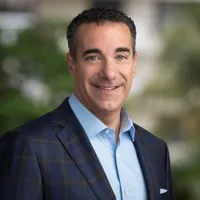
Martha Ruiz
Global Head of People, Thoughtworks
TRANSFORM EPISODE: Martha Ruiz, Global Head of People at Thoughtworks
Episode 143 · March 28, 2025 · 19:18
TRANSFORM EPISODE: Martha Ruiz, Global Head of People at Thoughtworks
Key moments
In Martha's words
“I do consider myself a non-traditional HR leader, even though most of my career has been in HR, I do consider myself a non-traditional leader. I've always been more of a business person first that happens to focus on the people side, the organizational side of the business agenda.”
“Transformation though, is it's a large-scale refresh, right? It's really reimagining how your company and your business operates. It could mean a total reinvention of your business model, your operating model, your go-to-market strategies.”
“It's not about the technicality of the change in the operating model. It's not about any of that. It's really about How do you win the organization's hearts?”
Transcript
Read the transcript3,275 words
HostWelcome to the Built by People podcast, where we share the stories and insights of the world's top HR leaders. Join us as we dive deep into the minds of HR executives, uncovering their strategies, challenges, and triumphs in shaping today's workforce. I'm excited to welcome Martha to the Built by People podcast. Martha, thank you so much for joining us. And as a starting question, I always love to ask if you could share a little bit more about your career journey.
GuestAbsolutely, Dave. Thank you so much for the opportunity to share some of my learnings and to spend some time with your audience. A little bit about my journey. I grew up in Mexico. I went to a large public university. I studied international relations. It sounded very interesting at the time, like I would get to travel. My first experience though was as a research associate, and at the time I had a mentor. She was researching international trade and how it impacts labor costs and productivity. So really the economics of labor arbitrage, so to speak. She looked at it from a social justice perspective, which was very unique. She was very passionate about it. And for me, growing up, I really remember my dad. He had to endure his workplace really for decades, what felt like decades to me. He had a terrible working environment. He was very toxic. It was a very rigid environment, very hierarchical. So there was a passion point for me in thinking about how can I be part of helping improve working conditions for people. Working conditions are such an important aspect of who we are, how we develop, how we thrive. So I really wanted to go into this field. I got a chance, I got a scholarship, got a chance to go to the London School of Economics. I studied Industrial Relations and Personal Management. So I'd use the P word that now I, when I hear it, I cringe, but I never looked back. I've been fortunate to have had great mentors along the way. I had a mentor in particular who has now passed, but who believed in me. He gave me a chance, gave me challenges, and under him I grew from a director to vice president to senior vice president. I had a chance to work in many different industries in media and financial services, more recently in tech. I do consider myself a non-traditional HR leader, even though most of my career has been in HR, I do consider myself a non-traditional leader. I've always been more of a business person first that happens to focus on the people side, the organizational side of the business agenda. So that's a little bit about my background, Dave.
HostMartha, throughout your experiences at companies like Nielsen and Thoughtworks, what have been the key elements that make enterprise transformation successful?
GuestSure. So, maybe the first thing that I would like to highlight is the difference between what I think of as change and transformation. A lot of HR teams are really good at change management, right? And change usually refers to a number of limited scope modifications. It could be a change in a process, in a program, or a part of the company. The way I think of transformation though, is it's a large-scale refresh, right? It's really reimagining how your company and your business operates. It could mean a total reinvention of your business model, your operating model, your go-to-market strategies. And it could be for a number of reasons. It could be a business turnaround. It could be that there's a well-established business that is really being disrupted by technology. And who isn't these days, right? Every industry is really being disrupted by technology. Could be that there are significant industry trends that are exerting a lot of pressure on revenue and profit margins, and the company really needs to imagine how it operates. And that means culture. It may mean leadership and people. It may mean their organizational structure for sure. So I would say to your question about the key elements for a transformation to succeed, there's— but I think the starting point, and to me it's a non-starter, and if you don't have this, it's going to be very difficult. And a lot of companies do get it right, but some companies struggle through this, is you really need that leadership alignment, buy-in on the vision for the transformation. It all starts with a very small group. It's the C-suite, it's the CEO and his or her direct reports. And then of course that cascades through multiple layers of the company and multiple vehicles. But I can't tell you how many times I've worked with those senior leaders and some of them have a clear vision for transformation, but they don't bring others along, including their immediate team. And others have a sense that they have to change or the company has to transform, but there's lack of clarity as to what that means. So that's one of the key elements I would say first and foremost. Then the second that I'd mention is the ability to convey that vision to the rest of the organization and bring others along. Buy-in is everything. It's not about the technicality of the change in the operating model. It's not about any of that. It's really about How do you win the organization's hearts? And that all goes through quick wins and messaging. There's a number of ways, but, um, that would be the second key element, I would say.
HostMartha, how do you see HR's dual role as both a change agent and a change target during major organizational transformations?
GuestYeah, that's a very good question because I definitely, of course, I'm a big believer that we have a major role during company transformations. But to be clear, it's not HR's mission, right? This is a joint undertaking with other leaders. We, I would say, are definitely in the bus, very close to the driver, but we're not the driver, right? This is rather an area where the people function, the HR function becomes a clear business enabler. And this is really at a time where it matters the most and where the HR function is, I would say, uniquely positioned to deliver that kind of transformation. We may be, for instance, very well positioned as trusted advisors. We may be well positioned as leader accelerators. We bring expertise and process around leadership assessment, development, and effectiveness. Also, HR teams normally have the right pulse on how to best message things within an organization so that they can really land. In the best possible way. So there's a lot of things that make you a change agent, right? I would say a couple of things that come with that, and probably think about, I think about the people function at two different levels as a change agent. The first level is that significant responsibility that head of people, a chief people officer will carry, which is to help establish structure and process around identifying and bringing visibility if there are cracks in that alignment. If there are cracks in that C-suite, CEO and direct reports, senior leadership team alignment, that is something that it's our role, it's incumbent on us to raise, to articulate, and then to work through, right? So leading that conversation is critical. Also, if there are any leadership behaviors that may be not conducive to the team effort that is required for this transformation. So the first level, the second level, of course, is there are many areas that fall squarely on us, more from a functional perspective, could be your organizational redesign. What are the outcomes that you want to achieve? And then from that, the roles and skills that you need. It could be all the work around communicating within your culture, right? What resonates to your employee population, ensuring that the incentives are aligned. So I guess from this perspective, we operate not only as subject matter experts in our own area, but there's like a meta function. For the people team. And that meta function is really to be the steward of the transformation efforts. And in that way, we are definitely change agents. And at the same time, we have to put our own masks. We are targets of change because usually there is a big transformation. And these days with all the technology that is out there, I'm going to have a chance to go in a couple of weeks to a conference and the number of new technologies, vendors, and solutions that are out there. Are really transformative in our space. So I would say understanding that any transformation change is going to have an impact on our own teams and ourselves, right? And just having the compassion as leaders and the empathy to work with our organizations through that change. And it's like, I'm used to sometimes, and I think there's organizations that are the shoemaker's children where they put all the solutions for their businesses, but then it's, and you've seen it, probably many leaders here have shared the same thing. The last 3 or 4 years have been really tough on the people function ever since COVID So just understanding that the changes really impact how we operate as a people function, having a plan for that, calling out competencies for success, supporting your team and their development. All these things are important as a change target of the transformation.
HostMartha, can you share a specific example of how you've helped translate changes in business operating models and revenue streams into effective HR models?
GuestYeah, absolutely. And I can think of a couple of examples. That's really, by the way, also a very good question. I think, uh, that to me is the signature of being a strategic partner. I would say that very recently at Thoughtworks, for instance, where for the longest time we really operated as a collection of country practices. Each country had a leadership team, a head of professional services, a head of finance, head of legal, head of operations. And in that way, it was almost self-contained to a point. We undertook this massive transformation to our operating model, and it resulted in us creating new global organizational structures so that we go to market with the same capabilities regardless of where you are. If you are in North America, Asia Pacific, if you're in Europe, the quality of your interaction with us shouldn't change. We created a global professional services delivery center. We have global service lines. We have a globalized approach to how we go to market. And a key aspect alongside of that, of our HR transformation, was to establish high-level partnerships. So, to have a really senior, seasoned HR professional that acts as a talent strategist and partner to every global leader. So, this is a person that is not operational in nature, but they're thinking about trends in the market. They're thinking about the what skills that we need to build, buy, or borrow. They're thinking about how do we— are we in the right markets, taking a look at data and insights from the industry out there, and are really guiding and working with their leaders side by side so that the company can be successful as it attracts and retains talent.
HostMartha, what are the biggest challenges HR leaders face when driving enterprise-wide transformation? And how can they overcome them?
GuestYes, thank you, Dave. This is absolutely another good question, and there are many challenges, of course, that are faced. And I would say many of those challenges are external to the HR team, right? It could be the financial environment of the company or the industry. It could be the tech trends in the sector. It could be so many things, but maybe I think it's probably gonna be a better use of our time and your listeners' time to talk about the challenges that we're able to overcome and influence. So, I would say that it starts with that strong foundation of having this meta function for the role as a leadership advisor and a steward of the transformation that I spoke about. This really calls on some of the unique strengths and differentiators of strategic HR teams. So, the ability to own the business partner seat, I would say, is like the first basic challenge. And I know, I'm very well aware, this has been talked about for decades. I think Dave Ulrich first spoke about this decades ago, but I sometimes I'm really surprised at how often we take that seat as a given when in many companies it's not. I will say when I sometimes I'm out there and as I network and talk with colleagues in the field, a lot of them are going through their own journey of becoming that business partner. So I will say if you're in that journey, don't despair. With any given company, one person, one leadership team can make a huge difference in that evolution for the people team. Um, but I'll say seat at the table really allows you to start at the starting point, right? To be in the conversations at the beginning of a transformation when it really matters, when we're talking about configuration of teams, when you're talking about the timeline for the transformation, the effectiveness of having the right people in the right roles. I also want to take a moment to talk about maybe some of the challenges that are internal to the team that we can work on a little bit separate from having that seat at the table, which again, like I said, to me is a very strong foundation, but challenges internal to the HR team that I can think of is maybe the way I would encapsulate them are just, we need to be user-friendly. The people team needs to be user-friendly in every organization. And that may mean very different things depending on the size of the organization, the industry. And what does it mean? There are 2 or 3 things that I would probably highlight in this idea of being user-friendly. First is the operating pace. Maybe thinking in terms of months, semesters, or even years is too long for the needs of the business. During a transformation, the pace accelerates and the people team needs to be responsive. Another challenge that is internal to us that we totally control is maybe too much structure. Sometimes we approach things in a waterfall way versus agile, and agile HR has been talked about again for decades, but it really means that you don't need to have everything 100% ready before you launch it. You have to work with user cases and with your organization and your business leaders as you are shaping some of the way the talent solutions are gonna sustain. That bigger company transformation so that it's an iterative approach. That's really the signature of agile HR, right? Is how do you iterate on the talent solutions with the clients? And then the last thing that I'll say is probably one of those challenges is we hold dear these traditional HR practices. There's a lot of process orientation, and the reality is ranging from goal setting to performance reviews to check-in processes, we need to get rid of that rigidity and recognize that a lot of times The market is moving faster. The trends are moving faster. Good example, AI skills, AI roles, job architectures. They need to quickly adapt. We need the leaders to be agile and flexible when addressing hiring and compensation packages. And that's usually a point of friction, right? That has been my experience over the last several years as companies try to bring talent from the market outside is always moving faster. And sometimes it's been hard for the HR teams inside to adjust as fast to that new reality. So I would say all these kinds of things are examples of areas where we need to accelerate the pace, be more agile, and then it's okay to not follow traditional designs and to go out there and see. There's a lot of interesting work out there in terms of how different companies are evolving their practices.
HostMartha, as companies continue to evolve, how can HR leaders stay ahead of transformation needs while maintaining employee centricity?
GuestYes, I think it, that's, that's so key, right? Because a lot of transformation efforts fail. I think there was an article from McKinsey a few years back that quoted this figure, and sometimes I'm surprised that it's not a little higher. So employee centricity is a must. If you don't have your employees' support and engagement, then you can't really deliver to your clients or deliver on your mission and purpose. So I would say the most important thing, um, how can you stay ahead of transformation? I would say outward orientation. So bringing that outside-in perspective continuously, scanning the market, being active in different groups and forums. How is your industry specifically being disrupted? How are the revenue models maybe shifting? How is the technology disrupting the business models? For instance, right now there are so many applications of generative AI, but also other type of AI. Agentic AI is the latest trend. What does that mean not only for your people function? Yes, that's important, but what does that mean for your business, right? For how you structure maybe your contracting practices. How does your company structure their, their revenue, right? And how is the new technology going to disrupt that? So I think staying ahead, being— there's so much information and good insights and good reflection out there that that outward orientation to me is, uh, is probably the biggest differentiator.
HostMartha, what parting advice would you like to share with our community?
GuestThis— I love this question because We could talk about transformation all day long, and definitely it's a topic that I'm passionate about, but when it comes to advice, definitely humble about this, but I will say that something I try to live by is the HR space is challenging, and it has been challenging, and it's been more challenging, I would say, over the last 8 years, for sure. We may feel like it's not being fully appreciated by the companies or the folks that we work with, because until you've been in an HR role, You don't understand in how many different directions you are pulled in any given day. I would say put your mask first, ensure the development of your team, take care of yourselves as leaders. That means give yourself time to reflect, to ruthlessly prioritize, and to make sure that your team, in the multitude of priorities that any given team can have during a transformation, where you have to run your business as usual processes, and then you have to support other efforts and initiatives that just have a different pace and outsized impact on the business, in prioritizing ruthlessly is very important. And it's a way of putting your mask on first. There's many other ways, so whatever works for you and your organization.
HostMartha, thank you so much for joining us on the Built by People podcast. It was a pleasure to have you involved.
GuestThank you so much, Dave, and I really appreciate it. I'm a big fan of the podcast, so thank you for this opportunity.
More conversations like this