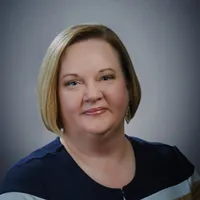
Episode 131 · March 24, 2025 · 17:51
Jill Larsen
Chief People Officer, Synopsys Inc
TRANSFORM EPISODE: Jill Larsen, Chief People Officer at Synopsys Inc
Episode 131 · March 24, 2025 · 17:51
TRANSFORM EPISODE: Jill Larsen, Chief People Officer at Synopsys Inc
Key moments
In Jill's words
“I think the biggest thing is that a lot of times there's a lot of emotion tied to these successions... I think that people feel uncertainty. And so I think one of the best ways you can handle it is to be incredibly respectful about how you do it.”
“We decided to actually incorporate some of the themes and the values of the company we are acquiring potentially... so that those employees can see themselves in our company and see their fingerprints on it.”
“I think one of the things that's really important with AI is actually knowing what it is. And what I find a lot of times is that people seem to be afraid of what they don't know.”
Transcript
Read the transcript3,381 words
HostWelcome to the Built by People podcast, where we share the stories and insights of the world's top HR leaders. Join us as we dive deep into the minds of HR executives, uncovering their strategies, challenges, and triumphs in shaping today's workforce. I'm excited to welcome Jill to the Built By People podcast. Jill, thank you so much for joining us. And as a starting question, I always love to ask if you could share a little bit more about your career journey.
GuestSure. No, that's great. Thanks so much for having me. So I actually started my career in TA and I thought I wanted to be a journalist and ended up becoming a recruiter working in a headhunting firm in an agency. And then my career has really gone back and forth between a lot of startups where I was the only person in those companies. So I had to fake it till you make it or learn as you go. And then moved into much larger companies and then moved into chief people officer roles. So I've had a number of public company chief people officer roles. At Metadata, at PTC, and now currently at Synopsys. And then I had very large HR roles at EMC, at SunGard, and then also at Cisco. I've been in a number of different COEs, which I think brings unique perspective to being a CHRO. I also sit on and have sat on a couple of public boards as well, and so can bring perspective as well.
HostJoe, you've been through a lot of CEO transitions in your career. What have been the key lessons that you've learned about successfully navigating leadership change?
GuestSure. So I've been through a couple of founder/co-founder successions and then a pretty large succession at the CEO level at Cisco. And so I think the biggest thing is that a lot of times there's a lot of emotion tied to these successions. In 3 of the cases, including at Synopsys, it was a founder-led company and it's always challenging. It's always personal for people. I think that people feel uncertainty. And so I think one of the best ways you can handle it is to be incredibly respectful about how you do it. We did a really great job, I think, in a number of them. More recently with the Synopsys one, where Art DeJuice, who is currently our executive chair, but was the founder of Synopsys, and Sassine Ghazi, who's our current CEO, really spent some time. We did some videos together. They, they did some all-hands together so that it was a very nice, thoughtful transition, including with our investor community. And by the time it actually happens, like we announced it maybe 6 months before it was going to happen, and then it was very thoughtful transition. And so I think from an employee perspective, it's just ensuring that people understand not everything's going to change and you reinforce the parts of your culture or your values or those sort of things that are core and what the similarities are between the two. Obviously, there are going to be some differences, and I can tell you, you could see night and day between Art and Saseed. But I think at the same time, what's important, the core values, the culture, like giving people some things during times of change, they need some stability. They need to know what they can rely on. So just making sure you remind people of those things, like it's this team and this is what's important to us, and these are the things we're focused on, and just reminding people of those things.
HostJill, Synopsys is currently undertaking one of the largest tech acquisitions ever. How do you approach transforming HR strategy when dealing with such a significant merger? Especially considering the cultural implications?
GuestYeah, it's interesting. I am lucky in the fact that the company I came from is in the same space as the company I'm acquiring, uh, reacquiring potentially. And so I think that's interesting because I understand, I'm just a little bit lucky 'cause I understand their space and I understand it's a very engineering-centric culture. And so for us, we're incredibly focused on innovation. We have a lot of joint projects that we're doing with this company. And so for us, it's again about focusing on what are the similarities. And so we actually did a lot of work with our engagement surveys. We used a tool called Nader. We've used a bunch of things to actually look at the two cultures, understand the values. And we actually just did a refresh of our values at Synopsys, 40-year-old company, new CEO, founder going to exec chair. And we decided to actually incorporate some of the themes and the values of the company we are acquiring potentially. And so for us, we thought that was a really nice way. They had some great focus areas on things like generosity, agility. How did we incorporate that language so that ultimately, as the two companies come together to be an over $10 billion revenue company, $100 billion market cap, that those employees can see themselves in our company and see their fingerprints on it. I think the other thing that's challenging is we're going through a massive HR transformation. I came into a company that had the same CHRO for a long time. We have needed to upgrade everything from policies, processes, org design, op model, technology, innovation, data analytics. For me, it's where am I willing to move fast and are there places where I should probably be more pragmatic? For example, we're rolling out a new performance management tool. Tool at Synopsys, which is really streamlined and agile and easier and leverages some AI. The big conversation right now is, do we bring this acquisition into the new tool? Do we adopt their tool for now? And so those are the kind of conversations. So thinking about what's the least disruptive, what makes the most sense for their culture, and also making sure those employees don't lose the performance as they go through an acquisition. And things like that are things that we consider of Maybe it's not all or nothing and there's a phased approach and just thinking through that. And then I think when I think about their leadership teams and some of the areas that are critical, it's really thinking through the experience. What's important to them? How do we make sure we capture that? How do we overcommunicate? You can never communicate enough when you're doing acquisitions. I've done a number of them in my career and I've been on both sides, which I think is always helpful. So when you've been acquired, you can also understand what it was you didn't, you had trouble with or didn't work. And so make sure you think about those things in the design. So I think we're doing a really great job bringing that perspective to this acquisition.
HostJill, previously we had touched on transitioning from traditional HR support functions to more strategic roles. How do you see AI and technology reshaping the future of HR? And what should HR leaders focus on to stay ahead?
GuestYeah, so I think one of the things that's really important with AI is actually knowing what it is. And what I find a lot of times is that people seem to be afraid of what they don't know. If you're going to be successful in this world that's innovating so fast, you have to be an agile, curious learner. I would say that's the first thing is we just assume everyone in HR knows what AI is. We actually have done a bunch of sessions with our teams on how to leverage ChatGPT, what is agentic, how do we think about those things, and then what does it mean in what we're building so that they can understand where are the places where we would start leveraging these types of tools. So for example, some of the things that we, we've either implemented or are looking at right now, we've rolled out ServiceNow and they have a number of AI capabilities. One of the things that happens when you come into a 40-year-old company that is global, so we have 20, over 20,000 employees, we have 300+ offices around the globe, is that a lot of these policies and things haven't been looked at in a long time. So you have to use knowledge articles and data so the chatbots can work and people, they can find the information. And so there's a lot of foundational work that has to be done. And so I think sometimes HR leaders get excited about the possibility of it, but don't actually realize the large language model, it all depends on the data. So you have to understand what your data is first, like where is your data? Can you unlock it? Is it reliable? Where are the places you could leap forward faster? And then where are the places that you need to spend more time? I think the other thing is that AI is expensive. It requires a lot of compute. Like there's a lot of, so you just have to understand some of those implications as much as we all want to adopt it. You just also have to understand that if you don't have some of the infrastructure to do it, you just have to make trade-offs. So it's really some of it's a budget thing, which nobody ever talks about, but the reality is that There's resource constraints, there's compute constraints, there's all these things that are, if you've tried to roll out any of the ChatGPT tools internally, they can be expensive in and of themselves. You have them outside your corporate environment, but you have to think about some of those things. I think for us, some of the places we're doing it is in TA. I think there's a lot of screening tools and things that make it easier to be able to have more qualified candidates, smaller slates, so it becomes a better experience for our leaders. We're also looking at it in performance, performance reviews. A lot of the HRISs, they're just very data intensive, writing intensive. It's really about the conversation in the flow of work. So how can you capture information from Jira and Teams and all these tools that you're using, these collaboration tools, to be able to actually create a better experience so that employees know how they're doing and managers can quickly have those conversations and they're not 20 hours of writing performance reviews for a team of 10 or whatever. So those are the things we're looking at is can you use AI in places that it creates a better experience and it makes the moments that matter really impactful for employees and leaders. And we look at that, that where the low-hanging fruit, what's the longer tail on some of this around things like skills or workforce planning or things like that's going to take a little bit longer to be able to get all those tools for me to have a data model that I can actually use where AI would be impactful.
HostJoe, you have a lot of experience in business transformation. What are the critical elements of successfully modernizing established organizations while also preserving their core strengths?
GuestYes, I think the first thing to do is it's easy to diagnose things really quickly. I think you have to understand how the companies work. And so when you go in, I know it sounds really trite, but you really do have to listen. So what is the experience? Experience people are having, whether with the technology, with your processes. What are the workarounds they have created? I learn a lot when I learn, oh, we have these separate spreadsheets so that I can handle comp planning and that sort of thing. Okay, why do you have that? And what are we not doing in the tools or in the processes that you then have to have all these extra things? And I work in engineering culture, so engineers always love to over-engineer things. And, but if you understand those things, it helps you with adoption too. So taking that outside-in perspective, what are the business strategies you're trying to drive? What outcomes are you trying to drive with your talent strategy? And then ultimately, what's the low-hanging fruit? Because you can have a lot of quick wins in the transformation, and then some of the other elements that are going to take longer. I highly recommend you take like a product approach. So we take a very persona-driven product management approach to what we deliver in the people organization. So that means having all of our stakeholders from our key engineering groups, go-to-market, et cetera, be part of the decision points on the tools. What are the processes? What problems are we trying to solve? It also helps with adoption. So if you can get some of your biggest critics to be part of the work at the front end of the transformation, it actually helps you accelerate once you do the rollout, because change management is obviously one of the biggest implications. And I always say there's never enough HR teams for all the change. Like at this point, you've got to get more people to feel like their fingers were on it, and that way they know what it is and it's less adoption with the change management element of it. So every company's a little bit different, but I think it's really understanding what are the biggest things that could help them leap forward. And then some of the more controversial things are things you really want to build relationships on. Have some ambassadors and champions, you know, maybe it's more time before you start rolling some of those things out.
HostJoe, you've taken companies through IPOs and also have served on public boards. How has that experience shaped your perspective on building HR strategies that align with business outcomes?
GuestI think the great thing about being on public boards or going through an IPO or being on private boards as well is that you're really an operator. At the table. So you're not a CHRO or a CFO, or, I mean, though maybe that's the skill that puts you on audit, or I happen to chair two comp committees, but I think at the same time, you're also very relevant to the strategy conversations, to the investor conversations. For me, what's been amazing about that is that as an operator, I take that lens and then that's a lens I can bring back into my business. When you think about the the people function, I'm in the people function for a 20,000-person, $6 billion company. You know, that investment is billions of dollars in people. It's one of the largest P&Ls. And so I think about myself as a P&L owner. Like, why— I have the largest P&L. I'm responsible for the impact of that, as are my leaders. And so when you take that lens and then you actually understand all the fiscal elements and those sort of things, value creation, operating margin, all these elements, it then allows you to speak in a language that takes the HR title off of it. And I don't think there's anything wrong with the HR title. Obviously it's amazing, but I also think depending on who your stakeholder is, they may have perceptions on a CHRO or CFO. And if you come at it in a different way and speak in a language they understand, I just find that credibility goes up and you can get to the outcome faster. So I find for me, it's made me much more data-driven. It helps me understand the lens of investors, like when I'm putting things out externally, when I'm thinking about crisis management, any of those things, I can take that perspective of sitting on a board. I'm also an investor, and I have minority investments in a number of things. And so if you think about that as a shareholder and investor, and then you go to your company and most employees in public companies at least, or anyone who has equity, is a shareholder. And so when you think about it from that perspective, you have a different lens in how you look at the things that we do. And then there's certain things where you're like, we shouldn't be doing that. How do we influence better outcomes? That's not efficient, or that's not gonna move us forward. And instead of just observing those things, you feel like you actually wanna be a champion of evolving some of those things. And so to me, I think it's just made me a much better executive and operator. And I, I think it brings a different perspective also with the board. I spend a lot of time with the board of our company and you're trying to influence different things and they're talking to me about this acquisition and things like that. So how do I make sure I'm reiterating the right thing so that they hear the full story and they can connect the dots? And so I think that I have that perspective too. And so I've really loved the board work. I always encourage, if you have a chance to take some company through an IPO, you learn a whole lot about a little bit of everything, but especially around design. I think for me, that's been one of the most amazing things is compensation design. I don't find that a lot of CHROs are really well versed in how compensation works. And I think it's a great skill to have because it's obviously one of the most impactful drivers, and it's also a huge focus area, stock-based expense, especially in public companies. It's a big focus area for investors. If you don't understand it, it makes it really difficult to drive a strategy around it.
HostJill, what parting advice would you like to provide to our community?
GuestI think the biggest thing for me is really embrace the disruption. I talked about being a curious learner before. I think there's a lot of noise around our function. I think like any function, it's going to evolve. The entry points are going to change. You're not going to come in as a benefits administrator or coordinator because I think a lot of that is already getting automated or will. But be part of the drive of what the next evolution of the people function is going to be. And then I think the other thing too is like really prioritize yourself because we are going through so many things. If you're in the States right now, there's a lot of things going on under the new administration. You got to put your oxygen mask on first because everyone is looking to you to lead and role model. And so you just got to remember that too, if you're in a leadership role in HR, is that we have to make sure that we get the best out of people. And so making sure that you put yourself first and you think through, can we really tackle all of these things right now? I'm going to prioritize these 3 or 4 things. A lot of times we just take on too much and then, and then you do little bits of all of it, but you never really accomplish the right thing. And I think right now with everything going on, it would be easy for that to happen. And so I would just say, make sure you prioritize and remember your role as a role model during times of great disruption where all the answers are not known. I think hopefully that's helpful to people.
HostJill, thanks so much for joining us on the Built by People podcast. It was a pleasure to have you involved.
GuestOh, thank you so much. Thanks for having me.
More conversations like this