Episode 170 · April 24, 2025 · 14:13
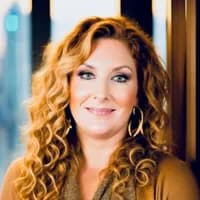
Heather Dunn
Chief People Officer, Brex
TRANSFORM EPISODE: Heather Dunn, Chief People Officer at Brex
Episode 170 · April 24, 2025 · 14:13
TRANSFORM EPISODE: Heather Dunn, Chief People Officer at Brex
Key moments
In Heather's words
“Someone asked me one day if I wanted to work in personnel. I was working in a claims department and they said,, you know, do you wanna get outta here? And I said, yes, I don't know what personnel is, but sure.”
“return to office. And I started laughing because I thought, wait, no, this is not quick and this is probably not a win for most folks.”
“we expect our leaders, so myself included, to be able to really set a strategy, and to be able to do the work of somebody on their team at the same time.”
Transcript
Read the transcript2,598 words
HostI'm excited to welcome Heather to the Built by People podcast. Heather, thank you so much for joining us. And as a starting question, I always love to ask if you could share a little bit more about your career journey.
GuestOf course, and really excited to be here. Thank you for having me. I won't bore you with the whole long story, but what I'll say is I ended up in the HR function, then personnel, at the age of 16. Someone asked me one day if I wanted to work in personnel. I was working in a claims department and they said,, you know, do you wanna get outta here? And I said, yes, I don't know what personnel is, but sure. And so, was really an early launchpad for me in terms of being able to do a series of internships during both of my undergrad and grad programs, and then really landed at Microsoft in a time where, talk about the best learning ground I could have. And so, did a series of roles in compensation, recruiting, and business partnering, and then wanted to dabble in startup land. And so, I joined Dropbox in 2015 as their first tech HR business partner and ended up going through the IPO and leading the business partner team as I finished my time there and decided that was also a great launchpad into the head of people space. And given I had loved startups, what better than to go and do that scale as a head of people? And so, I worked in an insurtech startup called Newfront. I was the chief people officer at a recruiting startup called Gem. And then here I am at Brex. I guess it's been over a year at this point, which has been an incredible journey and just really grateful for the opportunity to lead the function there.
HostHeather, I want to talk about navigating RTO and culture at Brex. How do you balance the push for return-to-office mandates with the flexibility employees crave while also ensuring Brex's culture remains a driving force in the process?
GuestKnowing who's probably listening to this, I always tell folks the week before I joined Brooks, my CEO sat me down and we laugh about this now, and he said, Heather, I figured out your quick win. I was like, what, what is it? And he said, return to office. And I started laughing because I thought, wait, no, this is not quick and this is probably not a win for most folks. And so I bring that up because it was such a journey for us going from a totally remote-first company to bringing the company, quite frankly, along the journey as to why we were making the change, being incredibly transparent about what we knew about the change and what we didn't. So we're currently at 2 days with the basis of connection. So our team is still very distributed, and while collaboration is certainly an aspect of it, that connection is really an important part of the reason we did this. And so we've built all of our programs, all of our processes around RTO and all of our communication, quite frankly, around how we're going to better connect together. And some of the things that we're still doing to help maintain that flexibility, one is to have only 2 days a week. I think that has been a very big differentiator for us. We still have a lot of flexibility built into the programs. We ended up giving 6 months notice before we went into it. We have flexibility that you don't need to be here 8 to 5. It's just manage your life as it relates to the requirements of the business. Talk to your manager, work from anywhere 4 weeks a year. So to have that flexibility of still being able to travel and work where folks feel fit. And really important to me was our parent community, especially our new parent community. And so we actually extended that 4 weeks from anywhere to 8 weeks work from anywhere that they could tack on to the end of their leave to just encourage more flexibility, especially as there's so many appointments and unknowns and sleep schedules changing that we wanted to be really accommodating to. Still a lot more to learn, but really emphasizing some of those areas I think has helped the transition be a lot smoother and feel less stringent in terms of the requirement itself.
HostHeather, I want to talk about leaders in Brex 3.0. What's your secret sauce for cultivating managers who can seamlessly switch between big picture strategy and hands-on execution to keep performance soaring at Brex?
GuestYeah, so when I first joined Brex, we had just switched into this what we called Brex 3.0, which is this new version of how we were going to operate. And one of those concepts was, one, we are actually eliminating a whole layer of management, which clearly was a difficult call. But what we were noticing is that we just had a lot of org leaders and not folks that were actually inspiring others that were working for them that could actually speak to the work that their team was doing, that folks that couldn't actually sit down next to an employee and be able to roll up their sleeves. And so, we started with this concept called operate at all levels, and this is a concept we hold all of our leaders to, which is essentially we expect our leaders, so myself included, to be able to really set a strategy, and to be able to do the work of somebody on their team at the same time. And so what that looks like in practice, just as an example, so even in our interview process, we've updated how we interview leaders. I needed to go and show that I could source. How can I be a people leader, which also was funny coming from Gem, which is a sourcing tool. It was playing to my strengths for sure. How can I set a strategy without understanding the day-to-day of the team? In addition to that, we actually took some bets on folks. I remember joining and our new CTO was somebody that was just a line manager, maybe 6 months prior to that. But what he showed was that he could really inspire a very large group of people and that he was still in the weeds enough that people really respected him as a leader. And so, we've made a number of changes in how we both evaluate leaders, either at the front end of the process or while they're here. And then actually how it comes into practice, you can see it day to day as you look at each team because Pedro himself, our CEO, also operates this way. He expects his leadership team to. And so some of that trickle-down effect in terms of the behavior change has been really powerful to see, and I think has been an incredible trust-gaining exercise for many of— many folks within the organization. In a time of a lot of change, that they're actually seeing their leaders there with them going through that change together.
HostHeather, let's talk about selecting and retaining top talent. Can you walk us through how Brex is refining its system to spot high potential employees early and keep them engaged for the long haul?
GuestYeah, great question. So one of our big bets for the people team last year was starting the top talent program. And this is, of course, a V1, and we have a lot of work to do still in iterating on the plan. But essentially, what my philosophy is, while I would love everyone to stay and that folks want to be at Brex long-term, as a people leader, I really need to focus on a much smaller population in terms of thinking about their growth, retention, incentives, et cetera. And so, we went through and identified what we considered 5% of the organization that was top talent, and those were divided into two categories. The first was high potential, so folks that we saw that were going to be in leadership roles over the next 5 years, as best as we could tell, with a set of objective criteria. And then the other category was critical talent. So who are the folks that are single points of failure, have a lot of credibility and trust that we would frankly just be screwed if they left overnight. And so what we've done over the course of the last year is to come up with a menu of options for leaders to choose from for that top talent community, whether that's coaches that they're having for hypos, to equity grants that are highly retentive based on the timeline and the value of them, to dinners with the leadership team and with Pedro, to, hey, we're actually going to identify a project. Who should we put on this? Let's go to the top talent list and take a look at those high potentials. And so, there's just been a huge shout out to the Brex People team who have been working on this because our retention rate of that cohort of folks has been far better than our overall attrition rate. And our engagement scores are showing big differences in terms of their both engagement, you know, excitement about their career growth, their compensation in a way that I'm feeling very fortunate that it seems like some of those things we've been building have been actually paying off. In the numbers.
HostHeather, I wanna talk about onboarding as a new chief people officer or senior HR leader. For a new chief people officer stepping into the role, what's your 30, 60, 90-day playbook? Key people to meet, priorities to set, and milestones to hit.
GuestYeah, so having done this 3 times now, I feel like there's always a little bit of an iteration that happens on each of the 30, 60, 90s. But the first thing I'll say, especially in a startup, whether it's sub-100 people or at 1,100 people of Brex's size, do not wait for someone to hand you this. I would come in with an opinion that you're actually going to work with your CEO or whoever you're reporting to on. And so, the key components, which by the way, feel free to reach out on LinkedIn. I'm super happy to share the template of what I used at Brex, but that first month I always spend just with the people team. And a set of as much as I can get to top talent as possible. And I probably talked to, let's call it, 200 people in my first month at Brex, just hearing themes, what's top of mind, what should I be paying attention to? And you're frankly building trust and relationships every time you're having those conversations that are going to better contribute to your success longer term. That sort of second, I'm going to oversimplify for sake of time. So that's the first month. The second month, I really start focusing on the priorities of the business. So, if I'm talking to 200 people in terms of internally to the business, the second month is very focused on thinking externally. And so, talking to our customers, actually sitting with a CSM or an SDR and listening to calls, meeting customers through those sort of engagements or prospects. And so to me, if you're not able to speak to the business and you can't speak to our customers, you're also going to be a quick fail in this role. And so spending really dedicated time getting hands-on there has always been very important to me. And then I think the third is really around setting the vision and strategy for the year ahead. And in a startup environment, everyone would love 6 months to do that. I hope you can make it to 90 days before you're asked for a strategy. Most of the time that's coming around 60. But to me, it's really at Brex as an example, we needed a lot more clarity on the 2 to 3 things that we were really going to go drive forward for the business instead of the sort of whack-a-mole everywhere, no direction, just we just are order takers, quite frankly. And so working both with the people team and getting all of the data that I got there with employees and looking at data that I'm receiving from surveys, And then also talking to the executive team and understanding what our business needs are for the coming year. That business strategy then becomes a little ribbon on top of the gift, that 90 days.
HostHeather, I want to talk about reverse interviewing for fit. When you're sizing up an organization as a potential employer, what are some of the killer questions you're asking to figure out if it's a right match for your values and goals?
GuestYeah, and again, having gone through Probably been about 40 founder interviews over the last 5 or 6 years. I've learned a lot and know that you'll get better and better about this as you go on in your career. There were many things that I wish I knew the first time I had gone out versus the third. I actually intentionally ask CEOs some very difficult questions at the end. I sort of save this once I feel that I might be the right fit, of course. What this ends up looking is me going through a series of scenarios, whether they're things I've been through in previous companies. Or things I foresee coming, maybe based on the environment, and getting very deep on what their perspective might be. I think there is nothing worse than to walk in as a chief people officer, senior HR leader, to have a values misalignment with your CEO. If there is a CEO that says no to that, to me, that's almost a flag in itself. To me, there's actually mutual benefit in us exploring some really difficult conversations before we even start working together. So that we can make sure that values alignment exists. So I would say definitely ask for that reverse interview, ask the tough scenario-based questions to the CEO. And then I have typically asked to join a leadership team meeting so that I can see and witness the dynamic of the team and to attend an all-hands as well, or to at least get a recording of the most recent one so that I'm able to actually see and feel maybe what people are selling is the case. Versus what's actually happening in reality.
HostHeather, what parting advice would you like to share with our community?
GuestI always say, you've got this. This is a really tough role, function, time to be in people. And so, as much as you can continue to build your community and the people around you, it's the best advice I've gotten. It's the only thing that probably keeps me sane, and I'm happy to be a part of your network if you're out there struggling to find folks that could— you could lean on as well.
HostHeather, thanks so much for joining us on the Built by People podcast. It was a pleasure to have you involved.
GuestThank you so much. Appreciate the time.
More conversations like this