Episode 24 · December 19, 2024 · 17:38
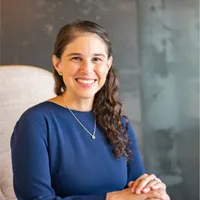
Sakita Douglas
Interim Chief People Officer, Harris County
Public Sector HR: How AI & Data Are Transforming Government Talent
Episode 24 · December 19, 2024 · 17:38
Public Sector HR: How AI & Data Are Transforming Government Talent
Key moments
In Sakita's words
“Well, at Harris County, I have 6 bosses. I have 5 members of commissioners court and the county administrator who I report to on a day-to-day basis. And so I think that's probably the greatest difference...”
“Currently, we have 5 generations in our workforce, and our workforce is very quickly becoming majority Gen Z. And of the 5 generations, their priorities are very different.”
“We're, we're looking, we're using AI tools in talent acquisition, identifying algorithms to be able to effectively vet and identify candidates better. That's just one area.”
Transcript
Read the transcript2,691 words
HostWelcome to the Built by People podcast, where we share the stories and insights of the world's top HR leaders. Join us as we dive deep into the minds of HR executives, uncovering their strategies, challenges, and triumphs in shaping today's workforce. I'm excited to welcome Sikita Douglas to the Built By People podcast. Sikita, thank you so much for joining us. The first question I always love to start with is tell me a little bit more about your career journey.
GuestFirst, Dave, thank you for having me. I'm excited to be here with you this morning. I am, I am in my, on this HR journey, nearing almost 30 years in human resources. And candidly, I fell into HR accidentally during my junior year in college. What began as an internship has evolved into this nearly 30-year career in human resources. I have loved every moment. I can honestly say that I'm still having a blast all of these years later and, and enjoying the work that I've done, especially over the course of the last approximately 19 or 20 years in large-scale HR transformations.
HostThat's great. And I know you started your career in the private sector. You made a transition into the public sector. Can you talk about that transition? And what was it— what was that like for you? And what are the major differences you've had to grapple with to be effective in that transition?
GuestThat is— that's a great question. I, prior to— just for some context, I was selected as the inaugural chief HR executive for Harris County in 2021. I made an initial commitment of 2 years and fulfilled that commitment. And then I was tapped to return, asked to return in an interim capacity last year. And so I've returned for a season, for a year, to help move this work forward and also identify my successor in the, in the process as well. I have— I'd never worked in the public sector or in government before. It was never candidly even on my radar. I received a call. Again, I've been in the work of leading large-scale HR transformations now for a number of years. And I received a call that Harris County, which I grew up in Harris County, I currently live in Harris County, that Harris County had decided to add a chief HR executive for the first time in the nearly 200-year history of the organization. And after saying no for almost a year, I finally said yes. And so here I am.
HostThat's great. And what has that transition been like for you? Can you pinpoint any major challenges or opportunities that really come to mind for you?
GuestYeah, I think there are a couple of things. I think one, first and foremost, in the private sector, at least for the work that I lead, I typically have, you know, one boss or one, you know, typically it's the CEO. And certainly I'm a member of an executive leadership team who I work in partnership with. Well, at Harris County, I have 6 bosses. I have 5 members of commissioners court and the county administrator who I report to on a day-to-day basis. And so I think that's probably the greatest difference, which is there are a lot of folks that I am accountable for and work with on a daily basis. And very often their priorities aren't always aligned. And so part of a big piece of what I'm doing is working with our key stakeholders to gain alignment, especially around all things human resources. The other challenge— I shouldn't say a challenge, or I think the other nuance, put it candidly, is that Harris County is a large organization. It is nearly 20,000 employees, 90 departments, and each of those departments have an executive leader. So imagine being in an organization where you have 90 CEOs, right? And, and And managing that from a holistic HR and talent perspective can be really, really challenging.
HostSo with an organization your size, you obviously have a very diverse workforce making up multiple generations. How do you build a culture and support system that is both relevant and meaningful for everyone involved?
GuestYou know, that, that is a phenomenal question. And, you know, your timing is so appropriate. We had a meeting earlier this week around this topic, so Currently, we have 5 generations in our workforce, and our workforce is very quickly becoming majority Gen Z. And of the 5 generations, their priorities are very different. What are important to our younger Gen Z and, and millennial employees in some ways are very different than Gen X and our remaining boomers. And so we are hyperaware of the need to create a degree of alignment across generations to ensure we're meeting the needs of all of our employees. I think our benefits is a great example, which is as we're looking at and identifying ways to modernize our benefits to meet the needs of some of our younger employees, where for our boomers and our Gen X who are closer to retirement or preparing for retirement, what's important to them is very different than someone who is on the early— in the earlier stages of their career, and maybe they haven't had a family yet. And so IVF is important to them. Coverage for GLP-1 is important to them. Pet insurance, as an example, has come up. Right. And so we're, we're making some very deliberate efforts to identify ways to modernize our benefits, to resonate with our employees. That's one area. I think the additional challenge is Harris County has had a legacy decentralized model from an HR perspective. In addition to that, that's exacerbated by the just for the diversity of roles. I always joke and say, unless you're looking for oil or you're trying to land on the moon, the job is here at Harris County. Everything from physicians to veterinarians to employees who manage our roads and bridges and flood mitigation. It is such a diverse population of both careers and opportunities. And so one of the opportunities that we're looking at as we look across our generations is How do we create multiple career paths, right, for our employees? Because you could truly have multiple careers in this organization and never have to leave. And that's some of the feedback that we've received from employees through direct conversations, surveys, as well as focus groups is, you know, how do I, how do I do more than what I'm doing just in this moment? And if I happen to start my career in human resources, but I'm passionate about epidemiology, you know, and would like to eventually end up in public health, how do we intentionally and deliberately create those paths that make it not only easy for employees to navigate, but that we're also setting them up for success as we think about internal mobility more broadly?
HostYou've done a lot of HR transformation work in your career. Curious if you could talk about your approach HR transformation?
GuestWow. So I, you know, clearly, clearly I have a love for the chaos, right? The transformative nature of transforming any organization requires a degree of organized chaos, if you will. And Harris County is no exception. You know, our challenge at Harris County, the immediate challenge really Candidly, is a modernization effort. I would say that the outcome will feel transformative, but candidly, the work that I, along with my leadership team, are leading is really more modernization effort. And so what we're looking at is identifying the right end-to-end technology suite that will assist us in, one, modernizing our business processes. We're looking comprehensively across human resources at service delivery. Kind of the legacy model that I walked into at Harris County had been these small teams who provided support in very specific linear areas. But as the world has evolved and as the workforce continues to evolve, it requires a more thoughtful and deliberate and intentional strategic approach for an organization of this size. So part of what we're doing is expanding our breadth and really taking a step backwards to thoughtfully design human resources as a driver of business outcomes, prioritizing mitigating risk, and at the same time, pulling together a very comprehensive, holistic talent strategy across this really diverse organization. And one of the ways we're doing it is, from a technology perspective, is we're really leveraging AI in a way to help us move from reactive to predictive decision-making. And we're, we're looking, we're using AI tools in talent acquisition, identifying algorithms to be able to effectively vet and identify candidates better. That's just one area. We're focused on building out our workforce analytics in general. I think we're doing a good job today. There's definitely an opportunity to elevate it and broaden that. So that we are truly making workforce decisions not only just, you know, at a localized area, but from a localized perspective, but also across the county. We're attaching ourselves and getting really focused on trends and pain points. And, you know, one of the examples that I'll use is one of our greatest challenges at Harris County from a recruitment and retention perspective are auto mechanics. There is such a demand for auto mechanics. And so as we are both simultaneously looking at our recruitment strategy, we also need to be thinking about how do we develop our next generation of mechanics. We're also moving from gas vehicles to EV, and so how do we evolve and develop our internal talent in this area to be able to accommodate that? And so it's not just a linear single approach, but leveraging both technology and integrating technology in our decision-making and our data, but also how we're operationalizing so many of these significant endeavors.
HostMy next question is related to the topic of modernization, and it's, what does it look like to catch up organizationally from a cultural, technical, and people perspective?
GuestGreat question. For, for our organization, for Harris County at this time, it is putting into place a future-ready, end-to-end comprehensive human capital module system that is intuitive and agile with AI helping to improve both candidate experience as well as end user and hiring manager experience as well. That is a, that is a top, it is, it is one of our biggest projects with under the HR transformation umbrella. In addition to that, ways of working from an HR perspective, as we think about some of the routine aspects of human resources, whether it's hiring or performance improvement, onboarding, really identifying ways to leverage technology intentionally and deliberately, and at the same time improve experiences to support data that— to continue to support making decisions using thoughtful data. The other, the other I think the other thing that's happening as well that we're, we're working on building out is thinking about our talent strategy beyond when there's a vacancy, right? So sometimes the need is this position open, or we're having difficulty filling these types of roles and just focusing on that, but really having truly creating a, a holistic perspective and identifying the skills that we need for the future. Looking at skills-based hiring, for example, is, would be one category. Prioritizing retention. Again, some of the legacy benefits of working at Harris County is there have been historically employees who have spent the majority of their careers here. And so for a very long time, you have employees who worked here for 20, 30, sometimes 40 years. Our newer generations don't want to work anywhere necessarily for that long. And so they want to know, hey, how do I, how do I move in my career? And so that doesn't mean that we won't create intentional efforts for retention, But we also recognize that we may be moving from an environment where the legacy model at Harris County was an employee whose tenure on average was 18 years. That may be changing now to 10 years or 7 years and being really thoughtful around how we'll manage that from a, from a broader holistic kind of enterprise level, if you will.
HostHow do you ensure hiring the talent the organization needs while also balancing the desires of employees?
GuestSo, I think every HR organization is doing that. So, let me just say this. I don't think that's unique simply to Harris County. I think that's the challenge that as HR professionals, we all have. It is the talent marketplace is evolving. What is important to employees at their various junctures, where in terms of where they are in their career, are really important. And we have to listen to them, right? Because if we don't listen to them, then they will go and work somewhere else. And so I think the first thing that we're doing is creating feedback mechanisms to ensure that our employees and candidates, even those who didn't get hired, to give feedback on what their experiences are and what's important to them. That's the first thing is intentional, deliberate, continual feedback mechanisms for employees and candidates. And then secondly, we are partnering that with what's happening in departments, especially around trends. Again, there are some areas in our organization, I use mechanics in one area, we also have a very large law enforcement community. And so these are areas where, you know, the way that you recruit and hire is a little bit different than you would for someone that's, in human resources or in finance. And so making sure that we are evolving our business processes and our sourcing strategies to identify them. We're also recognizing the trends in, hey, this person is coming into this, let's just say, mid-tier role. The data is telling us that they will be in this role somewhere between 3 to 5 years. What should we be thinking about now in order to transition and grow them and groom them for what is next within our organization? Because the one thing we do have in Harris County is lots of opportunities. And so we want to do— we want to proactively address retention on the front end and begin preparing and developing employees for what's to come. And we have a couple of areas where we're piloting that within the county. Analyst is one of those areas where we recognize there's a deficit and we really need to build some robust talent pipelines. And that's one area where we're really intentionally creating internal pipelines so that in 3 years, there's somewhere for that person to go within the organization rather than leaving to go elsewhere.
HostSikita, any parting advice you'd like to share with our community?
GuestA couple things. I think one is being— the journey of HR transformation is ongoing. It is a multi-year endeavor, and I'm really proud of the strides that we've made, both in my first season here, my inaugural season,, and, and we're making some phenomenal progress, uh, in upon our return. I also really have to acknowledge not only my leadership team, but also our Commissioner's Court and the County Administrator who are partners in this work for us. And, and because if, if your stakeholders don't believe it's important, I don't care where you work, right? It's not happening. And so I really have to acknowledge them. As we look ahead, the future really is about continuing to innovate and whether it is deepening our use of AI and broadening our technology to meet the the current and future needs of our workforce, refining our talent strategy. We're also going to continue to leverage emerging technologies to help mitigate risk in the areas within human resources as well. So I would say transformation is ongoing. It is the ongoing evolution of what better looks like, at least for Harris County in this
Hostseason. Saketa, thank you so much for joining us on the Built by People podcast. It was a pleasure having you on.
GuestThank you so much, Dave.
More conversations like this