Episode 40 · January 9, 2025 · 13:04
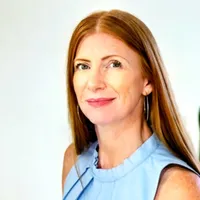
Paige Lisk
Chief People Officer, Kyruus Health
Opportunity, not aptitude, unlocks talent: A CPO's guide to impact
Episode 40 · January 9, 2025 · 13:04
Opportunity, not aptitude, unlocks talent: A CPO's guide to impact
Key moments
In Paige's words
“Aptitude is equally dispersed, but I don't think opportunity is, right?”
“By the time they had been in a tech field for 5 years, they were making $95,000 a year. This is life-changing for that human, their family, and even the community around them.”
“The best way to support their advancement is to make sure that they see themselves in roles that they are aspiring to move into, right?”
Transcript
Read the transcript2,363 words
HostWelcome to the Built by People podcast, where we share the stories and insights of the world's top HR leaders. Join us as we dive deep into the minds of HR executives, uncovering their strategies, challenges, and triumphs in shaping today's workforce. I'm excited to welcome Paige to the Built by People podcast. Paige, thank you so much for joining us. And as a starting question, I always love to ask if you could tell us a little bit more about your career journey.
GuestSure, Dave, thanks so much for having me on Built by People. So my journey is sort of a winding path. I actually started off my career as an opera singer. That's what I was trained to do and then moved from there. And it's a long story into tech. And I was a sort of tech leader and built a niche space on trade floors, sort of trade floor CIO type. That was not the title, but that sort of lets you understand what I was doing. And then about 15 years ago, made an unplanned move into the people space or human resources. I was asked to go over to help our human resources organization with a big transformation project, and it kind of stuck. And boom, here I am 15 years later, and I've been a chief people officer now. This is my 5th time. It's been a great career. I feel blessed, and I'm looking forward to what comes next.
HostPaige, I wanna talk about the topic of, of talent development. How do you expand talent development to include individuals from non-traditional backgrounds, and what advantages have you seen from this approach?
GuestYeah, I, I love this question and I love this topic. I could probably spend all day, so I'll try to be brief, Dave. So, uh, I have specifically worked at a company that helped people transition from non-traditional backgrounds. So what does that mean, right? Well, Let me start by saying that I absolutely believe that aptitude, right? Aptitude is equally dispersed, but I don't think opportunity is, right? Not all of us are blessed to be able to go to college for pricing reasons, or, you know, one of 100 reasons. But that doesn't mean people don't have the aptitude to move into things like tech or marketing or data or analytics. But you have to figure out how to get them the skills that they need. So I think one of the ways that you do that, one of the ways that I've been a part of doing that is to create sort of aptitude tests for people, let themselves select and say, hey, I really enjoy technology. I don't know what it would be like to have a career there. Or I really enjoy marketing, but how can I find my way into corporate America in these roles? And so, you know, if we can assess people's aptitude towards things like math, for example, in technology or problem solving in technology, we can then, you know, sort of give them the training that they need and then help them move into corporate America. So a company that I worked with some time ago, Catalyte, did this. They do do this. And so how does this help both parties, right? Well, it helps corporate America find people, find talent in places that they hadn't thought to look before. It increases their talent pool. That's so important nowadays that the baby boomers really are finally retiring. Right? AI's coming in, so you need people with different skills in different places. You don't really have time for people to graduate from college and take 4 years to get those new skills. And the way it helps the individual who's making that life change, I mean, I could, you know, when we, when people came into our program, they were making on average $27,000 a year, Dave. By the time they had been in a tech field for 5 years, they were making $95,000 a year. This is life-changing for that human, their family, and even the community around them. There are so many other stories. I was not very brief in this, as I said I would, but there are, you know, I could, I, if people are interested, they can find me on LinkedIn. I'd be happy to talk to people in companies about how they can find talent in maybe unassuming places.
HostWhat are some of the effective strategies that, um, you use to support and promote women's advancement in corporate spaces from the entry level to the boardroom?
GuestYeah, both women and people of color, the best way to support their advancement is to make sure that they see themselves in roles that they are aspiring to move into, right? And so that takes active and creative processes and practices to ensure that we're opening up opportunities again, right? We know that aptitude is equally dispersed. We have to make sure that the opportunity is there for women to be promoted, for people of color to be promoted. Specifically to women, um, especially in the tech world, this is a problem that we've been trying to solve for years, right? So there are things like Women in Technology at Kairos Health, uh, where I'm the Chief People Officer right now. We have a very engaged Women in Technology group where, you know, for an hour a month, we get together, discuss topics, have speakers. Our senior women in technology are the ones who run this for us.. And that's a way to show other women, hey, you've got, you know, your tribe here. You've got a posse here that you can come talk to if things are, if you have questions. There are also great organizations like Chief. You may have heard of Chief, where they're helping people who are sort of early and mid-career, uh, get coaching and build relationships with women who have already reached higher levels of their career, because women really need other women to help advocate for them. You know, I don't think women have always been really good at that, to be frank. When there's only 3 of you in the room, it becomes a little territorial, which has always seemed sort of odd to me. But the more women get in the room and have a seat at the table, which is only going to be done by other women who are already there, the easier that gets for all women. So again, great topics that you're choosing, both of which I'm passionate about.
HostNow, how do you create an inclusive environment in meetings, uh, to ensure that all voices, especially women's, are heard and valued?
GuestYeah, that— this is huge right now, especially with a lot of remote work and hybrid work. And, you know, people who are like me, you know, I don't know, maybe I've been called a Chatty Cathy before, you know, tend to sort of dominate that space, right? Tend to soak up all of the air in the room. I think, A, people in those meetings have to understand that everyone does have a voice and that it's okay to have a moment of silence to allow others who maybe want to just jump in naturally to feel comfortable to be able to speak. So one thing is just to create working norms, right, in a culture that allows for breathing room in a meeting so that people are comfortable joining in. Another way to do that proactively, especially if you're the one that's facilitating the meeting, is to sort of take note of maybe who hasn't spoken and, you know, carve out some space for them. Hey Dave, I'd love to hear your thoughts on this topic. And then let Dave sort of lead in, for example. So lots of practical tips and tricks that you can do, but it has to be something that you're leading with consciously.
HostIn what ways has emotional intelligence influenced your management style? And how do you, uh, encourage EQ development among other leaders within the organization?
GuestGreat question. So if you were to ask me, if anybody were to ask me today, what are the two skills that you think are the most important in corporate America? All other things being equal, I would tell you EQ, emotional quotient, emotional intelligence, and influencing. These are the two skills that I believe are the ones that you really need to be able to navigate your career, your company, your industry. So when it comes to EQ, I think I sort of, because I, I came from a non-traditional background, I was an opera singer turned technologist, right? I didn't have any credibility in the field. I sort of had to lead with emotional intelligence because I didn't have the same IP, if you will. I hadn't gone to engineering school or I hadn't gone to networking school. So I sort of had to fake it till I make it, if you, or fake it till I made it. And the way I did that was through using sort of common sense and emotional intelligence and building relationships. So while that may have sort of come naturally to me, it doesn't to a lot of leaders. But in a remote world, right? Just like making space is so important, especially post-pandemic, leadership is completely different than it was, you know, in 2019. People have brought their full selves to the office, which I think is a great way to do it. But when you have team members who are bringing their full selves to work, that's the way you're gonna have them the most engaged. But as leaders, you have to be able to lean in and understand, how do I lead a person? And if you don't have some EQ to go along with that IQ, you're never gonna figure out how to lead a team of very different individuals and rally them around one goal, right, to move them forward. So I think EQ is Highly important. Now, okay, so if I'm not a person that just normally has a lot of emotional intelligence, what can I do? You can learn this, right? There are classes, there are coaches. You can find a safe space at your own workplace or in your own friend network and say, hey, what is this EQ thing? You know, can you help me? I don't really understand how I'm supposed to lead differently, right? Again, I'll put myself out there. Find me on LinkedIn. I'd be happy to have a conversation with somebody about what does that really mean. But absolutely important for all humans in my mind, but especially for people in leadership today.
HostPaige, how do you balance the technical skills and soft skills needed for effective leadership in an organization?
GuestYou know, I think you just heard me say, right, that, that influencing skills and emotional intelligence are the most important. Both of those are, in theory, soft skills, right? So generally, I find that people come to work with the technical skills that they need. Everywhere, they don't have all of the skills, but generally, they have figured out somewhere along the way that if I wanna be a product manager, here are the technical skills that I need. And so really, I think it's more difficult to teach people the soft skills, right? How do I balance that? It's not enough anymore to be the best engineer, to write the best code of anybody. Now you have to be able to write the best code, You have to be able to collaborate with your product partner. You have to be able to talk to customers. The majority of that is soft skills, right? So again, these are skills that can be learned. Lean on your peers, look for a coach, look for a mentor. There are classes out there. Even LinkedIn has sort of quick, just-in-time classes on some of these kind of skills. And I think the balance is, if it's not 50/50, I would say 60/40. To be successful in an organization today, it's 60% soft skills, 40% technical skills. The minimum bar these days really is, do you have the technical skills to get hired? So, in my experience with Catalina, I talked to you about that company, we were easily able to find people with the ability to come in and learn the technical skills for how to write code and go be an engineer in corporate America. The more difficult part of that, and where the company had to lean in, was around those soft skills and the life skills that maybe some of our engineers had not had just naturally, so that they could be successful in the jobs that they had landed. It's far harder to build them, but you can build them. You can build soft skills.
HostPaige, any parting advice you'd like to share with our audience?
GuestYou know, find your passion. The world that we live in today moves fast. You know, people change jobs. I think the last The last thing I've read is that people change jobs 5 or 6 times now in a career. That's very different, right, than when I started out. So get comfortable with change, learn how to embrace change or find coping skills if you don't have those. Change is the only thing that's constant in our world and in corporate America today. Try to find something that, you know, I don't think it's realistic to say you're going to be happy every day at work. It is called work for a reason, but try to find something that you're passionate about, the mission, your skills, your team. Because that goes a really long way as we're all working towards whatever your specific corporate and personal goals are.
HostPaige, thank you so much for joining us on the Built by People podcast. It was a pleasure having you involved.
GuestDave, thank you for having me. This has been great fun.
More conversations like this