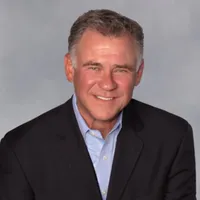
Michael Sloan
VP of Human Resources & CHRO
CommonSpirit Health
The New Leadership Equation: Intangible Qualities Trump Traditional Skills
Thesis
“True leadership and organizational success are not solely driven by traditional qualifications like education and experience, but by cultivating 'intangible qualities' such as adaptability, a willingness to learn, and the ability to foster collaboration and improve those around them.”
What you'll take away
- 01Prioritize intangible qualities like a willingness to learn, adaptability, listening, and collaboration over traditional resume metrics when identifying leadership potential.
- 02Leaders and organizations are obligated to actively provide growth opportunities and mentorship, not just hire employees to perform an immediate job function.
- 03Develop talent by understanding individual aspirations, offering support, and preparing the workforce for future challenges, such as AI, through continuous upskilling.
- 04Foster a team-oriented culture where individuals contribute to making those around them better and collective achievements are recognized over individual accolades.
- 05Organizations must remain agile and empower employees to drive forward-thinking initiatives, adapting to changing industry landscapes to avoid obsolescence.


What most organizations get wrong
- Michael Sloan challenges the conventional wisdom that overemphasizes traditional metrics (education, experience, pedigree) for leadership, asserting that intangible qualities are more critical for high performance.
- He pushes back on the idea of simply hiring people to 'do the job,' advocating instead for a proactive organizational commitment to employee growth and development, which often gets overlooked for short-term bottom-line focus.
In Michael's words
“Well, yeah, mine hasn't necessarily been the straight and narrow, if you will. It's been ups and downs, not really the old way or the usual way, I would say, through HR journey.”
This quote demonstrates a non-traditional career path, reinforcing his later points about looking beyond typical resumes and valuing diverse experiences.
“And the thing that really drove me was I was seeing more and more of what really made people tick, what made people really operate at high level and to hit their ceiling. And it necessarily wasn't always the most educated or most experienced.”
This quote articulates the core inspiration behind his focus on intangible qualities over traditional qualifications for identifying true talent.
“We have artificial intelligence coming into being. That's gonna take a lot of upskilling. I myself have been a novice of sorts... but reading up on it, looking at what the future holds, looking at what's coming down the pipeline to better upskill and to better prepare myself with that so I can adapt to it, pivot if needed, accept it, reject it to some degree, I think is gonna be imperative for anyone with that type of fit and skillset because that can be taught, but the ability to have the acumen, adapt, and learn is gonna be key.”
This highlights the critical need for adaptability and continuous learning, especially for HR professionals, in navigating the rapid advancements of technology like AI.
“IQ is not enough anymore. It's the ability to bring people out, be in unison, working together.”
This concise statement summarizes his central argument, emphasizing collaborative intelligence and emotional intelligence over solely cognitive abilities for modern leadership.
The problems this episode addresses
- Organizations struggle to identify true leadership potential because they often get 'lost in the fold looking at bottom line' and rely too heavily on traditional metrics on resumes.
- Companies face challenges retaining top talent when they fail to provide adequate growth opportunities, open dialogue, and mentorship, viewing employees merely as resources for immediate job completion.
- HR professionals and organizations are at risk of obsolescence if they don't prepare their workforce for future technological shifts (e.g., AI) through upskilling and fostering adaptability.
- Organizations can become stagnant and fail to adapt to changing industry landscapes (like Kodak) if leadership cannot identify emerging trends and persuade the organization to pivot effectively.
In this episode
Covering monthly expenses is the number one concern for employees in 2024
Built by People
You started in government service as a prosecutor, then went into human resources
Career Journey: Human Resources Professional
Unlocking Talent explores what makes great teams great beyond traditional metrics
What Makes Great Teams: Intangible Qualities
Michael Sloan says succession planning should consider technical skills and cultural fit
Michael Sloan on Succession Planning
Michael says focusing on intangible qualities has positively impacted team culture and performance
Intangible Valuable Skills
HR professionals should pay more attention to mentoring and developing young talent
Talent Development: The Focus
How can organizations better identify and nurture leadership potential beyond the traditional resume
How can organizations better identify and nurture leadership potential beyond the traditional four
Michael: Everyone deserves a shot, but you can't just take advice at face value
Michael Drucker on Giving People a Shot
Topics covered
Organizations and entities mentioned
Full transcript
Expand transcript (0 words)
Transcript is not available yet.