Episode 231 · June 8, 2025 · 13:33
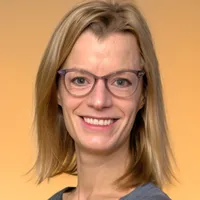
Melanie Steinbach
Chief People Officer and Chief Business Officer, MasterClass
Beyond HR: Why Your People Leader Needs to Be a Business Co-Pilot
Episode 231 · June 8, 2025 · 13:33
Beyond HR: Why Your People Leader Needs to Be a Business Co-Pilot
Key moments
In Melanie's words
“the job of the chief people officer in any consumer business is to make the inside match the outside.”
“you have to speak the language of the business, not just the language of HR.”
“The only way a pilot can fly a plane is if they understand exactly how a plane flies. And so if we as HR leaders aren't deeply understanding how our businesses make money and differentiate, we're not going to be able to add more value.”
Transcript
Read the transcript1,962 words
HostWelcome to the Built by People podcast, where we share the stories and insights of the world's top HR leaders. Join us as we dive deep into the minds of HR executives, uncovering their strategies, challenges, and triumphs in shaping today's workforce. All right, I'm excited to welcome the wonderful guest, Ms. Melanie. And just as a note, Dave DeAngelo is out today. He is in Costa Rica. So this is a new little exciting episode that we're going to film today. My name's Tanner and I work in the backend with Dave, but today we're putting me out there. So. Luckily, the guests are the stars of the show, so you don't have to worry about me very much. But I'm really excited to have this journey with Melanie. And as a starting question, we always love to ask if you could tell us a little bit about yourself and your career journey.
GuestGreat. It's actually so fitting, Tanner, that I get to be here on your premier podcast on built by people, because that's really a lot of what my career has been about, which is unlocking human potential. The first 15 years of my career were not spent in HR. I was HR adjacent in executive search, and then one of my clients recruited me over to be their CHRO. And I have had the privilege to serve as CHRO 4 times, the first 2 times in legacy companies in manufacturing, the McDonald's, where I was the Chief Talent Officer and briefly the Chief People Officer of the US. And then the last 5 years have been in consumer tech, and I'm currently the Chief People Officer and Chief Business Officer of MasterClass, where our whole mission is to unlock human potential by inspiring a learning lifestyle in everyone, which is why this is so great that it's your first podcast and we get to unlock your potential.
HostI love it. Yeah, no, this is great. Thanks so much for that intro. Tell me about your unique experience of being both a chief people officer and running the B2B business at MasterClass, and how has that dual role shaped your perspective on HR's connection to business value?
GuestIt's interesting because I started my career not necessarily in HR. It took me a while to see myself as an HR person, but I I've always been curious and interested and candidly grabbing more than just my typical role. But at MasterClass, we are selling to— our buyer for our B2B business is HR leaders. And so it made so much sense to have our chief people officer also lead this B2B business. And for me, it gives me the opportunity to really be both buyer and seller. For every product innovation that we're thinking about, I'm thinking, would I buy this myself? Do our people need this? Is this something I would've wanted in all of my other roles? And I think that really helps us shape our product roadmap. The other thing is when I'm talking to our customers, I understand their pain points beyond just let me sell you this this product, I, I often find myself in conversations well outside of the MasterClass product suite where we are talking about challenges that I faced earlier in my career. So getting to have both of those roles really helps me. I think it sharpens the pencil for me on, hey, are the people projects and people initiatives and programs that we're working on really delivering within the company? And then also, B2B products that we are putting out into our customers, are they things that we would buy? And I love having that sharper lens on both of those things.
HostYeah, that's great. I love that. So Melanie, how does the MasterClass's mission of unlocking human potential influence your approach to internal HR practices? Can you share maybe a couple examples of how you've aligned HR initiatives with the mission?
GuestSure. There are a couple of ways. I think that for us, it's unlocking human potential to inspire a learning lifestyle in everyone. And so we've really used that mission of inspiring a learning lifestyle in everyone to inform our L&D approach, which is that, that we give the same learning and development opportunities to everyone in the company. We do have some specific interventions for new managers, obviously for new employees, but for the most part, everyone is getting the same learning because we are really trying to make our approach to learning applicable for everyone. That's one way. The other thing is we recently went through our promotion cycle, and our promotion rates were above market. We had this really interesting discussion on our leadership team around was that a good thing or a bad thing? And we came to the conclusion that it was a good thing because our mission is to unlock human potential. And if we were able to, with a rigorous promotion process, unlock more potential for our own employees, for more of our own employees, we really saw that as a good thing. So my reflection on that is if your mission is not something that you can really think about how it applies not only to your customers, but also to your employees, maybe give that a think for a minute. Because for me, it's been really helpful to reflect on it, not only for our customers, but also, and our members, but also for our employees. I always say the, the job of the chief people officer in any consumer business is to make the inside match the outside. And that one of the ways I do that is through really looking at that mission and aligning it to our people practices.
HostLove that. Thanks, Melanie. Appreciate you. So when was the time when you implemented one of those core HR principles you mentioned, clear roles, scorecards, expectations, and saw tangible results. Walk us through that experience.
GuestSo I'm going to talk about a MasterClass experience here because it is more top of mind. But when I got to MasterClass, I was told that the only way that the company could prove that it valued employees was through promotion. And, and that was really difficult for me to hear where we were in the world at that point. That was 2023. Companies were coming out of that COVID boom. That was the time of intense layoffs in the consumer tech world. And I knew that we weren't going to have a lot of business need for promotions. And so one of the things that we did was we looked at our performance management process, made a lot of tweaks to it in terms of clarity. We really helped people understand what what every single rating meant, what that meant for their role, how that was going to show up for them every day. And then we also made it very clear what the requirements for promotion were. And one thing we realized was that previously, the requirement for promotion had been, am I, as an individual, ready for the next role? And in this timeframe of businesses cutting back, we realized that we really needed to add that additional message of, am I ready? And is there business need for a more senior role, a more senior position in this role? And we communicated that multiple times to, everyone in the organization so that they really understood you might be ready, but the company might not have a need. And if they— the company didn't have a need, how could we give you other opportunities so that you would feel valued and that you were growing, right? Unlocking your potential. And that didn't just have to come through promotion. And so for me, one of the things that I really looked at was did the company's performance change as we put in these new processes of clearer performance management guidelines, clearer promotion guidelines. Did the company's performance turn around and did we see an uptick? And we did. We have been growing over the past 2 years at really, we're very proud of our growth and that is all due to our amazing employees. Delivering on what we need them to.
HostWonderful. Thanks, Melanie. And so with your unique role as a chief people officer and in the B2B business side at MasterClass, how would you recommend other HR leaders who are maybe trying to broaden their scope outside of HR, how would you recommend them to get out on that new journey for them?
GuestI love that question. Thanks, Tanner. And I love that question because I think so many HR leaders still say, I just want to be treated like a business leader. My advice to them is you have to speak the language of the business, not just the language of HR. So first things first is deeply understand how the business makes money. If you do not understand the financial model of your business really well, that's going to be an issue for you. I recently read a post on LinkedIn where they said HR can't just be a confidant, an advisor. HR needs to be a co-pilot. The only way a pilot can fly a plane is if they understand exactly how a plane flies. And so if we as HR leaders aren't deeply understanding how our businesses make money and differentiate, we're not going to be able to add more value. And so I would say, if you want to expand your scope, really start with that understanding of how the business makes money. And then I would say, when people have said to me, stick it, stay in your lane, Mel, that this isn't a people issue, I always say, hey, wherever there are employees is my lane because I am the people officer. And because I got really curious about what was motivating some employees and not others, what I was seeing in different parts of the business, different structures of the organization. That really helped me when the opportunity came for me to lead our B2B business because I had been so focused on what is actually— I know how the business makes money, but what's really happening inside this business that could be unlocked to help them be more successful? And my two pieces of advice are really understand how the business makes money and get curious about certain functions and departments so that you can start to come up with solutions and help the leaders really to solve those problems.
HostAmazing. Thanks, Melanie. Appreciate it. Is there any last pieces of advice that you would give to the listeners about HR or any other subject?
GuestI think HR is a really wonderful career. Two things I think make it be a really amazing career. Number one, you have to be fascinated by humans. If you are not fascinated by the way humans think, act, feel, you are going to find the subject matter of this work pretty depressing. And so I would say, number one, remain fascinated by humans. Number two, particularly given what we're going through right now in this really transformative age of AI is dial up your curiosity. Get curious on everything. This technology is really going to change the way we work. And as the people who help to structure the work inside companies, it's really incumbent on us to be a real thought leader on that. So get curious. That is my last piece of advice.
HostAmazing. Melanie, thank you so much for joining us today on the Built by People podcast. It was a pleasure having you involved.
GuestThanks, Tanner. Great job.
More conversations like this