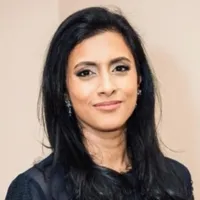
Episode 242 · June 17, 2025 · 10:38
Melanie Naranjo
Chief People Officer, Ethena
Your 'People Problem' Is A Business Communication Challenge
Episode 242 · June 17, 2025 · 10:38
Your 'People Problem' Is A Business Communication Challenge
Key moments
In Melanie's words
“What ends up happening is that we solve, we identify issues faster and we solve them faster, and there's just more cross-functional insight and visibility.”
“drops in engagement lead to drops in productivity, which lead to drops in business attainment, right? And ARR attainment and revenue, revenue growth, all that stuff, right? But that's not what a CEO hears.”
“Every piece that you move has a ripple effect. And if you're not thinking about all the different pieces, then you're not thinking like a true business leader, and that's what you need to do to partner effectively with a CEO.”
Transcript
Read the transcript2,042 words
HostWelcome to the Built by People podcast, where we share the stories and insights of the world's top HR leaders. Join us as we dive deep into the minds of HR executives, uncovering their strategies, challenges, and triumphs in shaping today's workforce. I'm excited to welcome Melanie to the Built By People podcast. Melanie, thank you so much for joining us today. As a starting question, I always love to ask if you could share a little bit more about your career journey.
GuestSure. Happy to be here. My cat's happy to be here. She's very interloping, but it's fine. We welcome her. I am the Chief People Officer at Athena. We're a compliance training company. We do everything from harassment prevention training and cyber Security Hotline and Case Management. And I got in here through a very roundabout way, I would say, always HR. I don't have anything cooler to my background than that, but I would say I started in the fashion industry at Coach, the handbag company. I did a couple summers there as an intern, started in talent acquisition, then went to the L&D team. Then I went over to Business Insider, the media company. I was there for about 7 years, and that's really where I cut my teeth, if that's how the saying goes, in HR, and then you know, realized I really had a passion for everything to do with learning, engagement. It seemed like a very natural next step to come to Athena, where literally our entire business is around building training, specifically compliance trainings.
HostMelanie, can you tell us about a time when you noticed a business challenge and how you approached it from a people perspective? Could you walk us through that thought process and some of the specific solutions you implemented?
GuestSure. So, I have an— a particularly interesting one to me anyway. We realized that our product team and our sales team were not talking to each other directly enough. And I think this is a classic problem. Sales team is talking directly to the market and they're seeing what gaps are being identified, what people are resonating with, what people want. The product team is doing a bunch of research and they're having to play a prioritization game because of course they want to approve everything for the company, but they can't approve everything. They've got to be selective with the existing resources. And what was happening is that sales felt like product was Sales was not prioritizing the right things or wasn't listening to them. Product felt like sales didn't understand that they can't prioritize everything. And so, we would run into certain issues and it would feel like there was just misalignment. Anyway, long story short, most people would not think of this as a people problem, but I do because it involves people and it is impacting the business. And at the end of the day, I see my job as helping drive performance across the business. In order to help us hit our business goals. And so, this really was a communication issue. And so, we ended up implementing, after a series of interviews where I asked what was the underlying issue, there was some stuff I learned, we ended up implementing a progress to goals pulse check that was cross-functional across leaders. And every 2 weeks, leaders had to answer 3 questions async that were basically, give us an update on your progress to goals, what have you been working on, what's working. Second question is, what's working really well? Third question is, what are the blockers? What might hold you back from hitting your goal? And then we have a rotating question that could be, what are we spending too much time on? What should be— what aren't we investing enough in? Just to surface things that people might not otherwise share. And at the end of that, once everybody's put in their answers, our CEO will review everyone's responses, tag people in to say, hey, seems like there's a cross-functional misalignment here. Hey, this is a big issue. We're going to talk about this at our next leadership meeting. And what happens is What ends up happening is that we solve, we identify issues faster and we solve them faster, and there's just more cross-functional insight and visibility. I didn't know the product team was doing all that. Oh, I didn't know the product team had pushed back this product. I didn't know the sales team was running into this issue. Why is Melanie, head of HR, trying to roll out training at the end of quarter when we're trying to close our last-minute deals? And so, it just surfaces these problems really quickly. It facilitates more cross-functional discussion, relationship building, ways of working, and it's been really amazing. We've had this going for, I want to say, half a year now, and it's not going away anytime soon.
HostMelanie, can you tell us about your experience partnering with CEOs and how you've learned to translate HR initiatives into business outcomes? Can you share a specific example of when you had to adapt your approach?
GuestSure. I think where a lot of HR professionals go wrong, and I have too, to be candid here, is we use terms that mean business things to us. So, things like engagement, right? That to me is business-related because drops in engagement lead to drops in productivity, which lead to drops in business attainment, right? And ARR attainment and revenue, revenue growth, all that stuff, right? But that's not what a CEO hears. When the CEO says, oh, morale is down, the engagement survey scores were high, what they're hearing is, okay, so like employees are a little unhappy, maybe they're a little disgruntled. Thanks for thinking about that, but I'm over here trying to like make money for the business, right? And so, really what I've had to really think about is, okay, at the end of the day though, what I'm talking about, how does that impact either our ability to drive our business forward or our ability to stay in business, whether it be like our burn rate, for example, or ability to allocate resources elsewhere across the business. If we wanna talk about more specific example, it could literally be something as simple as if I'm saying, that I want us to invest in manager training, and this manager training is going to cost us $30,000, and I have the budget for it. Okay, cool. But that budget could be used somewhere else. Have I asked the question about, is this the best place to spend the budget, or should we free it up and give it to another department? Or if I say, hey, we don't have the budget, but I think we should get the budget. Okay, cool. Have you figured out where we're going to get that budget from? Have you figured out how it's going to impact our cash out date? And if so, is it worth it? Is that investment worth the potential loss or in our runway? And so these are just questions that I, as a people leader, didn't previously think about. As you partner more closely with a CEO, you start to understand that everything, every piece that you move has a ripple effect. And if you're not thinking about all the different pieces, then you're not thinking like a true business leader, and that's what you need to do to partner effectively with a CEO.
HostMelanie, can you tell us about a situation where you successfully bridged the gap between different departments to solve a complex business challenge? What was your approach and what were the results?
GuestSure. If we go back to the product and sales one, for example, just because there was more complexity that went into it and we were really proud with the outcome by the end of it. One of the things that we realized was happening was that the— they just weren't talking to each other. And as a result, the trust was eroded a little bit. And so if you go to someone, you're like, I would just want you to figure it out with them, go talk to them. Sure, they could do that, but that doesn't really solve the problem. Or maybe they're hesitant to talk to each other. And something that we actually did was we just got everyone to fill out a couple of qu— like very brief. So 3 questions about themselves. What's something that people often misunderstand or don't know about my job? What's the hardest part of my job? What do I love about my job? And we had everyone review everyone's answers beforehand. And then when we met live, we asked some questions about it, and it was really fascinating to see the things that caught people by surprise. For example, when a sales leader is pushing back on quota, it's not just like another business decision to them, right? It's literally impacting their livelihood. Or as I was saying, for a product person, they feel bad when they have to say no to something. That's not fun for them, but it is literally their job to prioritize. Or me in HR, right? I don't like being the quote unquote fun police. I don't like being the person who has to come in and say, actually, that's against the law. I can't do that. I wanna do the thing too, right? And it just was fascinating to see all these things that had never been spoken about that really helped build that connection and bridge that gap to your point, such that as we were talking about these things, they're like, this thing is really, it's a time suck. I spend so much time with this. I had no idea you were spending so much time on that. I actually have a faster way to do it. I can lend this resource to you. Or, I didn't realize you were bogged down on that. My thing can wait. Let's push it to next quarter. And so really just opening up these discussions to better understand what your cross-functional partners are struggling with, are prioritizing, the different constraints they're working on, helps the entire business function more effectively. It's not an excuse for not doing your job, it just helps you make more informed cross-functional decisions as a team.
HostMelanie, what parting advice would you like to share with our community?
GuestLead with humility and curiosity. The worst thing you can do is just assume you are right and other people are wrong, and if they disagreed with you, it's 'cause they didn't understand you or they're just not with it and they don't get it. You probably have room to grow too, or maybe they're, they don't get it, but you didn't build a compelling case argument to help them get it, right? There's always a growth opportunity. So approach with humility. If you don't get what you want, ask questions. Why was this a no? What would it take to turn this into a no? If you know that somebody else is more effective at something than you or has had more success, whether you think they're effective or not, ask the person and say, hey, I know when this person speaks, you really pay attention. Help me understand what about the way that they speak really gets your attention, and how can I better emulate that? Go talk to the person themselves. Don't make it political. Hey, I have noticed you're really good at getting so-and-so's attention and building a compelling case argument. I'd love to pitch my thing to you and poke hole— have you poke holes in it so that I can deliver a better argument next time around. Like, partner together, be curious, be humble. That is the best way to grow and get ahead in your career and build stronger, more healthy, well-functioning teams.
HostMelanie, thanks so much for joining us today on the Built by People podcast. It was a pleasure to have you involved.
GuestThank you. Happy to be here.
More conversations like this