Episode 241 · June 17, 2025 · 12:47
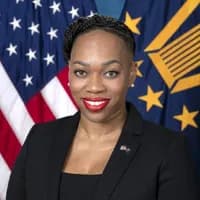
Jillian Plummer
Director, Employee Health and Wellness, Quest Diagnostics
Gillian Plummer, Director, Employee Health and Wellness at Quest Diagnostics
Episode 241 · June 17, 2025 · 12:47
Gillian Plummer, Director, Employee Health and Wellness at Quest Diagnostics
Key moments
In Jillian's words
“My career journey is— it did not start in HR, it started in marketing... essentially you're marketing to your employees.”
“These aren't just cost avoidance strategies. They're driving productivity. They reduce long-term spend.. And that essentially leads to healthy employees that are leading healthier lives, et cetera.”
“employees and their managers have much more impact on their mental health than a therapist or doctor. That is, that's huge.”
Transcript
Read the transcript2,000 words
IntroWelcome to the Built by People podcast, where we share the stories and insights of the world's top HR leaders. Join us as we dive deep into the minds of HR executives, uncovering their strategies, challenges, and triumphs in shaping today's workforce.
HostI'm excited to welcome Jillian to the Built by People podcast. Jillian, thank you so much for joining us today. And as a starting question, I always love to ask if you can share a little bit more about your career journey.
GuestYeah, thank you so much for having me on the podcast today. Very excited to share some insights My career journey is— it did not start in HR, it started in marketing. I worked at one of the largest advertising agencies in the country, started there when I first graduated school, led PR for Boston Red Sox, did public relations and marketing for JetBlue, Saucony, Lucky Brand Jeans, Juicy Couture. That then led me to growing and leading one of very large quick service brands in America and internationally, then to fitness and then here I am at Quest Diagnostics over the last 7 years. I came to Quest to help lead our Walmart and Quest joint venture, which then led me into more strategic work in marketing. I then led sports diagnostics and developed product, launched product, and then here I am in HR leading our employee health, specifically our health and wellbeing for our 50,000 employees. So I have about, I would say, a good 15 years of marketing in the back, which actually helps a lot for HR roles, I will say, because essentially you're marketing to your employees.
HostYeah, that's a great point, Jillian. And at Quest, you oversee employee health and well-being, you said, for 50,000 employees. I'm curious to get your perspective on how you approach balancing better health outcomes with managing healthcare costs, especially in a self-funded environment?
GuestYeah, about— so I'll just level, we roughly have around 50,000 employees. 40,000 of our employees are frontline employees. So those are non-exempt employees for the most part. About 80% of our employee population is on our health plan. So that's really where costs can come from, right? That's where it drives. And so really balancing better outcomes with cost management starts with understanding what is driving behind both. So we take a data-driven approach, an employee-centered approach, and we're proactively identifying risks through insights and investing in preventative care and also our benefits programs like virtual care, mental health access, chronic condition support. And these aren't just cost avoidance strategies. They're driving productivity. They reduce long-term spend.. And that essentially leads to healthy employees that are leading healthier lives, et cetera. High-level view there, but really that's how we are managing it by looking at and understanding what is driving the cost, right? Working with our health plans, working with programs we have, understanding what engagement rates are, understanding the pockets of opportunity across the country.
HostLillian, what trends are you noticing with your employee population and what is your plan of action for these trends, if any plan is needed?
GuestYeah, so across our country right now, really, and with our company is we're seeing a rise in mental health and financial stress. Those are two that we're seeing increasing. We're also seeing chronic conditions still are relevant, of course. Those are your metabolic syndrome, type 2 diabetes. So in response to those items, we have launched a financial wellness programming helping our employees understand financial literacy. It's confusing. And even I sometimes am tripped up with finances and need that extra support. I think we all do. And also we're engaged with leadership in our regions. So the way that Quest is broken out is in regions. And so every region has a president. And so we work with our regional presidents and our leadership teams to really embed the health and well-being into our daily culture. Which then essentially gets turned to our frontline employees. Our frontline employees are folks that are in our laboratories. We have 30+ laboratories across the country. We have 3,500 patient service centers where you get your blood drawn. So our phlebotomists, we have call centers, and our logistics drivers, and those that are in aviation as well. So our employees are going to listen to their managers and supervisors. Also, a stat that I just recently read from WorkHuman says that employees and their managers have much more impact on their mental health than a therapist or doctor. That is, that's huge. So, as leaders, we have a tremendous opportunity and responsibility to shape a culture of trust, support, and wellbeing every single day. So, all in all, our strategy is focused on meeting employees where they are, literally and figuratively, with tailored solutions segmented out between risk factors, social determinants of health, and more.
HostJillian, I'm curious to get your perspective on how you're leveraging data and analytics to drive insights within Quest or reflecting on other past professional experiences where data analytics helped you drive strategy.
GuestYeah, this is like reminding me of my marketing life. And so this is where the marketing flex comes into play quite well. But we leverage data to create targeted strategies by our regions. Our job families, risk level. So whether we have a diabetic population, hypertension population, depending on what that risk is, for example, like we can see where our diabetes or hypertension is trending upward and then deploy specific condition outreach mechanisms, coaching support. We also use pulse surveys or engagement surveys and worksite-level data to adjust programs in real time. And ensuring they're relevant and impactful. So we also— I've implemented a lot of different segments as well, and I always say that it's not a peanut butter spread approach across the board. You really have to dial into different populations, different segments, and deploy tactics, strategies and tactics that work for that. And that's all driven by data. That's all information that we utilize.
HostJillian, with 40,000 frontline employees, what strategies have you found most effective in meeting employees where they are and providing meaningful health support?
GuestYeah, so similar to what I just said about we don't do the peanut butter spread approach, we've shifted from that one-size-fits-all model to a tiered, worksite-specific approach. So that means whether it's pop-up wellbeing events, mobile resources, So this last year and into this year, we saw that breast cancer was something that was on a rise. So we then deployed more preventative measures for our female population. We are 80% female. And so we launched a mammogram campaign, which we still have going on this year, where we're having mobile mammogram vans going to laboratories and meeting our female population where they are. If they can't go out and get their mammograms, we're gonna, we're gonna meet them at their job. We launched a Healthy Quest Employee Business Network, and that is where we have thousands of employees across the company, exempt and non-exempt. It's literally split in the middle. We offer weekly programming. We've created this culture of health and wellness. We have employees that are vested in wanting to learn more. We have guest speakers. We have peer-to-peer support. We've, we've built a trusted group of employees that are, that are speaking to each other and learning from each other. That is just been such a critical piece. And so we're also looking at our laboratories and looking at how we can put in better food choices and shaping the culture there. Also with our gym access, ergonomics, and really tying into those centers and, like I said, meeting our employees where they are. We also equip our leaders, managers, and supervisors with health advocacy training so they can model and encourage healthy behaviors, and it's really just making wellness visible, accessible, and personable. And we just have to remember that wellbeing is not a nice-to-have. It directly impacts our bottom line from turnover to productivity. There's sometimes we see absenteeism, turnover rates, et cetera. If we really look at the data and information and health and peel that onion back, we can see that a lot of it is from employees that maybe are not exercising regularly, or have certain health conditions that are, you know, or financial stress that it's just in the back of their mind while they're working 24/7.
HostJillian, what have you done to support employee wellbeing and how has that led to better health outcomes?
GuestThis is a loaded question, but it's totally fine. But so some examples that, that I'll talk through is we focus on 3 pillars within our, we call it Healthy Quest, our employee health and wellbeing program at Quest Diagnostics. And the 3 pillars that we look at is culture, prevention, and programs. So for example, culture, we have our Healthy Quest Employee Business Network. What I just talked through, it's this thousands of employees that are vested in their health and wellbeing, motivating, encouraging, inspiring stories. I have employees in there that have lost 100 pounds, 150 pounds, have found their purpose, their best life. It's just a really wonderful group of employees. Then we have prevention. So we have a product called Blueprint for Wellness, which is our yearly biometric screening. We have a health risk assessment and a biometric screening we do for our employees. We have about 80% of our employees across the organization. You don't have to be on the medical plan to participate in that screening. We've had employees that have caught cancer that have— we've saved their— it's saved their lives. And so that is very powerful. We also do, for preventative screenings, colorectal cancer. We have a product called EnsureOne.. And we send it to all employees 45 years and older and their spouses. Again, you don't need to be on the medical plan. And we do a big push for that as well. So those are just some examples. Again, our mammogram trainings we launch has been very powerful as well. And then when we look at programs, we have programming that helps from financial wellness to physical to intervention programs. So type 2 diabetes, weight management, We just launched a really wonderful program to all 50,000 employees. Like, it's like fresh, hot off the presses, just launched, where we're meeting our employees where they are from a physical component, mental, financial. And so very excited for that. We already have a 10% engagement rate in that program for all employees. That's huge. We literally have been— we just went live. Really proud of that one. But participation has led to measurable outcomes. So when we look at measuring our outcomes, we can see that we're reducing certain health metrics in areas, we've increased our preventative screenings, which is really great. That's what we want. We have higher engagement in programs. And if we don't have higher engagement, or we see that there's health metrics that are not going the way that we want it to go, these are opportunities for us to dig in and to figure out what's not working and how do we help support our employees in, in in different areas. But more importantly, we're seeing this cultural shift where health is a shared value and it's not just a benefit, which I think is really important.
HostJillian, what parting advice would you like to share with our community?
GuestSure. Yeah. So think beyond programs and build a culture. You can have the best vendors, the best incentives, but if leadership isn't modeling wellbeing, it won't stick. So start with empathy, lead with data, and listen to your people. Employee wellbeing is not a perk. It's a strategy for performance and sustainability.
HostJillian, thank you so much for joining us today on the Built by People podcast. It was a pleasure to have you involved.
GuestYou are so welcome. Thanks for having me.
More conversations like this