Episode 238 · June 13, 2025 · 13:28
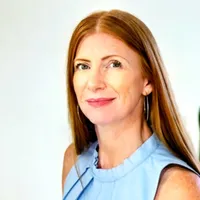
Matt Poladian
Chief People Officer, Liferay, Inc.
Stop HR enforcing rules: Empower core management to drive your company's success.
Episode 238 · June 13, 2025 · 13:28
Stop HR enforcing rules: Empower core management to drive your company's success.
Key moments
In Matt's words
“HR is just a partner to the business. It's not law enforcement.”
“Getting our team to be business people first and then people second.”
“Middle managers are not on their way to somewhere. They are, they've already arrived. Somewhere very important for the company.”
Transcript
Read the transcript2,135 words
IntroWelcome to the Built by People podcast, where we share the stories and insights of the world's top HR leaders. Join us as we dive deep into the minds of HR executives, uncovering their strategies, challenges, and triumphs in shaping today's workforce.
HostI'm excited to welcome Matt to the Built by People podcast. Matt, thank you so much for joining us. And as a starting question, I always love to ask if you could share a little bit more about your career journey.
GuestThanks, Dave. It's really good to be here. Thanks for having me on. My career journey did not start in the HR space, which I think is becoming more and more common, but at least it was a little unusual as I started in the business strategy and marketing space. I worked for a marketing agency at the beginning of my career, and my intention was to pursue a career in marketing strategy when I went back to business school. So I spent about 6 years in marketing, thought I want to get a master's, went back to school, and it was in that moment that I found that I was really interested in organizational development and some things that kind of were outside the scope of marketing. And it started to make sense to me because a lot of the maybe additional projects I took on when even when I was in a marketing agency were more related to people development and things that you would traditionally call HR, although I didn't have a name for it at the time. So during business school, I took an internship in human resources, actually launching the first employee survey of— at a company and just fell in love with the idea that you can connect business to the people component and actually really help a business thrive. And I saw that very clearly in when we were working through with leaders the results of that first employee survey and how it was actually enabling teams to do quite a bit more. That really wrote the rest of the story. I start from that internship, moved into a couple of global companies, one in the medical device field, worked in the entertainment industry as an HR business partner at the Walt Disney Company in various roles there, and then landed here where I am at a tech company called Liferay, running all aspects of global HR.
HostMatt, how have you approached the rebranding of HR in your company, and what impact has that had on the perception of HR within your organization?
GuestYeah, that's a really great question. And branding, it's interesting. You're asking a rebranding question to a guy who started in marketing, and I understand the value of making sure that you're connecting what you're saying you're going to do, that kind of the brand promise to what you actually do. And, and so I think part of it, so to answer how did we approach rebranding, first to just say there wasn't really an HR brand when I walked in. We were a more dispersed model. There wasn't a centralized HR function. And so first was just to say, okay, let's actually build something that is cohesive for our global company and inform people what HR is and does, because they may have a different perception of it based on where they came from or their experience up until the time I came. So that was the maybe the problem to solve was just giving people a definition of HR and that HR is just a partner to the business. It's not law enforcement. Right. And I think that is one of the things that we had to undo a lot of wherever you sit, whether it was a US-based team or teams in one of our other regions, it seems like their experience with HR had a lot to do with enforcing the rules rather than creating teams and spaces for people to be successful. And that's really what the rebrand was. We want to serve and influence the business so that our company is successful, not enforce rules so that we can take it out on people. And I'm not saying that's the way that any HR leader sets out to, to create their team or the brand that HR team leaders would create, but I do Do you think it's maybe the reputation that HR has inadvertently gotten? And so it was really to help people see this other side, but we really needed to learn more about the business. And that's one of the things, what was a big component of rebranding was not necessarily the biggest one, wasn't just the messaging and the education to people outside of HR is actually teaching the HR team how important it is for them to understand our business. We have a very technical product. We have a lot of people that are really smart, sophisticated engineers, but I don't know that our HR people really appreciated that and how it translates to business success. So really getting our team to be business people first and then people second.
HostMatt, can you share a story about a time when investing in core management development led to significant improvements in team performance or company culture?
GuestGoing back to what I said about the rebranding. So we wanted people to see that what we do as an HR team is not necessarily enforce rules, right? And so what is it that we do? And one of the things that we talked about a lot is we want to enable teams to do what they set out to do, but we didn't really have articulated goals anywhere in the organization. And so if we want to rebrand in a way that says we're here to partner with you on business success, we all need to have a shared understanding of what business success is. So we implemented the first ever goals system. First, it was very— listen, like for anyone who's listening, it does not need to be a six-figure implementation. When you're looking at how do you launch goals or how do you look at goal setting, it could be very simple, like a spreadsheet that's shared among leaders and teams. And we started there. We actually did it very easily the first year. And when we saw that people— and we focused more on how do you write a goal, how do you write a SMART goal? And these are things that I think are table stakes at a lot of companies, but I don't know that there's the right maybe training put around them. So we made sure that we, we helped people understand How do you develop a goal? And then we implemented a tool. We use Lattice to make sure that those goals can be tracked. That's probably the most— if you were to ask people at Liferay what was the biggest improvement in team performance or the biggest development, that they would probably say pre that implementation, we didn't have a clear understanding of what these teams were set out to do. They were writing code and submitting it. Now we have a better understanding of how that all fits with what other teams are doing and where we're coming from as a company.
HostMatt, could you give us an example of how you've enabled middle management to become effective leaders and what strategies you've ensured or you've used to ensure their success?
GuestYeah, so I have a passion for middle management training and middle management effectiveness. There's this idea that I've heard a lot people don't leave companies, they leave managers. And that, that I've heard it said recently, instead of calling them middle management, we call them core management, that they are really the nucleus of who a company is. Those people who are working day to day with our people. I will talk about some enablement things, but the first is a mindset shift. Middle managers are not on their way to somewhere. They are, they've already arrived. Somewhere very important for the company. And if we can't really open up the talents and the gifts of those managers, then we as a company are really missing out. We talk a lot. I've even heard and cringed a little bit when HR leaders talk about if we could just get managers to do the right thing. Maybe it's that we haven't actually spent time with them and understood what is it like to be both most Managers, core managers are both individual contributors and team leaders. And that's, that is a hard middle space to live in. And so just, I think it's, so to answer your question about enablement, first is just the mindset of us as HR, and then doing things that if we really understand them, then let's talk about what are some things that we can do to help expand their understanding. We launched a leadership development assessment. It's basically a traditional 360, except it's attached to each of our core values. So how does a leader basically respond to and embrace the core values that we've set out to do? And it allows their teams to give that feedback on a regular basis. And the big thing that I love about it is the leader takes it as in a traditional 360, and so does the team., and we then spend some time with those managers talking about the gaps. So that's been a big enablement is, okay, so I thought I was doing this as a manager. My team says I'm not. Where, how do we explore that gap and maybe close that gap a little bit through other— honesty unblocks understanding, right? And giving as much honest feedback to managers opening that up with their teams and then talking to them about how to respond well. Our natural human responses are not always— maybe the first response is not always the best. So working through how do you filter that? So the LDA, Leadership Development Assessment, has been one. Another really good, I think, middle management principle, how do you open up and unlock some of these gifts, is just helping people understand what a review is and how to give effective feedback during a review. It should be a summary of ongoing conversations you're having with your people. And how do you make that more of a summary, make it less formal, make it— if you have to deliver hard feedback, make it an easier pill for people to swallow so that they have a shared vocabulary with their people about how they're doing. So those are the two kind of big things that we've really doubled down on, really an understanding of themselves and then an understanding of how to communicate with others.
HostMatt, what parting advice would you like to share with our community?
GuestI'm trying to think of what the best advice has been that's given to me, right? We're all passing down wisdom from generation to generation or mentor to mentee. And one of the best pieces of advice that I've been given is that it's important to know what season you're in and where the leaders you're around are at. I've worked at companies that are— have been in a variety of seasons. One that was pre-acquisition, one that was just a growing conglomerate, one that, that is a small privately held business still trying to build startup stage. There, there isn't a one-size-fits-all to the work we do. And it's been really helpful for me to say, okay, I need to take stock in do I understand where I am as a leader and where my leaders are? And let's build from there and not just do what I heard about on the latest podcast or what I read about in the latest HBR article, but really understanding where are— where am I as a leader? Where are the people that I'm working on in their leadership journey? And then knowing the business that we're— they're a part of, what matters most to those business leaders, the strengths, weaknesses, opportunities, and threats, that SWOT analysis. So what having that kind of understanding that just because someone next door might be doing something doesn't mean it's right for the company and the place and the team that we are right now. We really have to really understand one another. And that gives— I think that just makes us more relevant as HR leaders.
HostMatt, thanks so much for joining us today on the Built by People podcast. It was a pleasure to have you involved.
GuestThanks, Dave. Good to be here.
More conversations like this