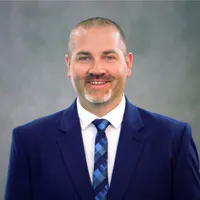
Marie Garrigue
Chief People Officer
Fitness Connection USA
Unlock Franchise Potential: Bold HR Leaders Redefine Business Value
Thesis
“HR leaders must be bold, deeply understand their business's operating model, and proactively identify innovative solutions that provide value and support, especially in complex environments like franchising, while navigating legal boundaries.”
What you'll take away
- 01Proactively identify business pain points and offer HR solutions that align with legal boundaries, especially in complex structures like franchising.
- 02Build strong rapport with internal operations leadership and external stakeholders (like franchisees and their associations) to ensure HR initiatives are trusted and adopted.
- 03Provide accessible, scalable resources and individual support to educate and empower operators on employment issues, particularly during periods of rapid change.
- 04Be a bold leader who steps outside traditional HR boundaries to find value-adding solutions by deeply understanding the business operating model.
- 05Leverage technology (e.g., applicant tracking systems) to address critical talent challenges, ensuring clear communication regarding ownership and roles to maintain compliance.


What most organizations get wrong
- Pushes back on the conventional wisdom that franchisors cannot provide HR support to franchisees, demonstrating how to do so compliantly through a 3-part system.
- Advocates for HR leaders to transcend traditional HR roles, urging them to be bold, understand the entire business, and provide value beyond typical HR boundaries.
In Marie's words
“Franchisors don't often provide human resource type support in any way to their franchisees. Of course, during COVID in the restaurant space, it was very busy, very difficult for operators to stay in business with their people. And our franchisees were really screaming for help related to how to stay afloat, how to keep people in their roles, how to keep them happy because they kept leaving, and how to stay in compliance with all of the various regulatory challenges or changes that were happening.”
Highlights the severe challenges faced by franchisees during COVID and the critical gap in franchisor HR support.
“What we were able to do was to put together a 3-part system that allowed us to provide support to our franchisees, like I said, in 3 ways. The first was really these large-scale platform opportunities. For example, applicant tracking system, being able to provide that to our franchisees as an opt-in, let them participate in what we were doing. For a reasonable cost.”
Describes the innovative, multi-faceted approach to supporting franchisees while maintaining legal standing.
“I mean, that there's very clear case law on that, and we made sure that we weren't violating any of those things, but still provided access to our franchisees to the large population of applicants that we're trying to get hired.”
Emphasizes the delicate balance between providing necessary support and adhering strictly to legal precedents in franchising.
“Look, I think my two biggest pieces of advice are to be bold as a leader, be ready to step in and find places that you can provide value, whether that's purely in an HR space or even if it steps outside the boundaries of HR and understanding what your business needs.”
A powerful summary of her philosophy on effective HR leadership, advocating for strategic business partnership.
The problems this episode addresses
- Franchisees struggle significantly with attracting, hiring, training, retaining, and managing performance of talent, particularly in high-turnover industries like restaurants.
- Franchisors are often legally restricted from providing direct HR support to franchisees, creating critical support gaps during crises or rapid regulatory changes.
- Decentralized talent acquisition processes can lead to franchisees being invisible to a large applicant pool if not integrated with corporate platforms, hindering their hiring efforts.
- Operators need accessible and reliable resources to navigate complex and rapidly changing employment regulations (e.g., Department of Labor, FLSA, COVID-related mandates).
- Building trust and rapport with both internal operations leadership and external franchisees/associations is crucial for successful HR program adoption and scalability.
In this episode
Built by People podcast features insights from world's top HR leaders
Built by People
I spent half my career in operations directly and the other half in HR
How to Get Out of Debt in the Workplace
Marie developed a way to support franchises with HR guidance during COVID
CKE Restaurants: HR guidance for franchisees during COVID
One of the biggest requests from franchisees was related to the talent acquisition process
Carl's Jr. on Talent Acquisition Process
How did you create an approach that scaled across multiple operators, yet felt personalized
How CKE Franchise Relationships Became Complex
Bri, what strategies did you use to engage franchisees on employment issues
Employment and Franchisor Engagement
Topics covered
Organizations and entities mentioned
Full transcript
Expand transcript (0 words)
Transcript is not available yet.