Episode 360 · December 18, 2025 · 12:12
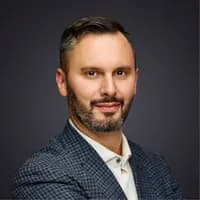
Jonathan Brooks
CEO, Warehouse on Wheels
Rapid Growth Blueprint: Culture, Radical Transparency & AI for Decentralized Teams
Episode 360 · December 18, 2025 · 12:12
Rapid Growth Blueprint: Culture, Radical Transparency & AI for Decentralized Teams
Key moments
In Jonathan's words
“So I am a big proponent of knowing what the temperature in the room is, how the team is operating. Are they synchronized? Are we focused on the right things? So I spend a lot of my time, often say, as the chief evangelist.”
“We're grounded in the foundations of— we all subscribe to the leadership philosophies found in Extreme Ownership, the book. And so everybody gets trained on that. You come to work for us, you get a copy of it. We do a 12-week book club. We send you to the trainings Echelon Front has developed.”
“And in the course of that, I actually give every employee my personal cell phone number. So it's the same number my wife, my kids, and my mama call me on, you know, and it's there for them to use.”
Transcript
Read the transcript2,299 words
IntroWelcome to the Built by People podcast, where we share the stories and insights of the world's top executive leaders. Join us as we dive deep into the minds of executives, uncovering their strategies, challenges, and triumphs in shaping today's workforce. Now let's jump in and get started with our next guest.
HostWelcome to the Built By People Podcast. We're excited to have Jonathan Brooks be with us today. Jon, thanks for joining us.
GuestThanks for having me. I really appreciate it.
HostAbsolutely. Hey, to start off, I'd love to hear about your career journey, maybe the unexpected turns, what ultimately led you to leadership.
GuestYeah, no, it's, uh, it's interesting. So I was working at Arthur Andersen through the collapse, so I was rearranging the deck chairs on the Titanic as that thing was going down. Uh, never worked on Enron or WorldCom. I don't believe I ever shredded documents in Louisville, Kentucky. But, uh, yeah, so I went through that experience, kind of like a death in the family, quite honestly, because I right out of undergrad jumped in, was an intern, went full bore, thought I was going to be a partner at Arthur Andersen. That was a career aspiration, quite honestly. Uh, in the later stages of that, realized I was going to have to move to another city to make partner with Arthur Andersen. I was based in Louisville, Kentucky. So I started working on my MBA at Notre Dame. I oftentimes tell people Notre Dame didn't want me as an undergrad because I wasn't smart enough, but they took my money as a grad student. So in the midst of all that chaos, working on my MBA, kind of got a broader view of the world and realized that there were things out there besides public accounting. And, uh, a classmate of mine actually recruited me to my first CFO job. At his company where he ran HR. And that started a career of CFO, COO responsibilities where I really sort of dug in and tried to not be the typical finance guy. Got involved in operations, sales, and marketing. And during one of those stops, I started working for private equity firms. And so I'm about 7 tours in 7 different private equity firms, varying degrees of success, been fired a time or two, and along that way found this business that we're in, which was storage trailers. Basically, if you can see in the camera there, the, the trailers on the back of a semi, when trucking firms are done with those about year 10, we buy them, give them a fresh coat of paint, fresh branding, a fresh federal, make sure they're safe, dark, and dry. And then we rent them into the supply chains of Fortune 100s to thrift stores. And I was a customer and saw the solution, looked at the market, figured out it was pretty fragmented, and thought, you know what, there might be a buy and build strategy here. So Started in '18 with 2 locations and 4,000 trailers, my first deal. And today we're 37 locations and 37,000 trailers, about 20 acquisitions later. So it's been an interesting run, a blessed run for sure.
HostOh, that's awesome. Thanks for sharing that. You know, speaking of what you're currently doing right now, what are some maybe top priorities that you have within the business?
GuestYeah, it always starts with our culture. So I am a big proponent of knowing what the temperature in the room is, how the team is operating. Are they synchronized? Are we focused on the right things? So I spend a lot of my time, often say, as the chief evangelist. So I'm understanding our most recent engagement survey results. We're looking at meeting contents. I actually use some AI tools that now that we're 37 locations, I can't be in every meeting. And so I'll get nice AI-driven summaries of meetings. I can quickly get through them in the evenings, understand where the the pressure points are and try to help move some of those obstacles. So for me, it's really finding the right pulse. I'm excited because we're about ready to test a new tool. We're going to take all of those meeting notes and some other communication channels in our organization, our engagement surveys, and we're going to actually use AI tools to create a weekly podcast. So we're going to have a 30-minute generated kind of notebook LLM type model. So on Saturday morning, I'm going to get a bit of a pulse. And so I'm really excited to roll that tool out and see exactly how effective that is.
HostOh, I love that. That's great. You know, speaking of maybe things that you're proud of as well, what's one initiative you rolled out recently that you're really proud of? Sounds like the podcast is one of them. What's maybe another?
GuestYeah, so we've been in this process over the last 9 or 12 months of reinventing our commercial strategy. So during COVID our offering was in high demand. The phone just rang. I mean, demand was there. It was easy to find opportunities. And post-COVID, it's harder. And so we've gone on this journey of evolving to what I call Commercial 2.0 and rolling out a new sales go-to-market strategy. And I believe it was the month of November, we added more new customers than we ever had in the history of the business. So it was just this affirmation that the effort, the thought process, what we've rolled out, the tools we've taught our team to fish with are really working. So really proud of that.
HostCongratulations. That's awesome.
GuestThanks.
HostYou know, as we look more towards your employees, and I think you'll have a really unique perspective on this next question with 37 locations, employee communication is becoming harder and harder across every organization. You know, what's one area where you're trying to improve engagement through better communication, and how are you approaching making sure employees actually see, understand, act on the information that is sent out to them?
GuestYeah, that's a great question. And really, I've been thinking about that since the beginnings of this, because I knew that I wanted to build what I'll call a decentralized organization. Organization. So we're grounded in the foundations of— we all subscribe to the leadership philosophies found in Extreme Ownership, the book. And so everybody gets trained on that. You come to work for us, you get a copy of it. We do a 12-week book club. We send you to the trainings Echelon Front has developed. We're really all into that philosophy. And then the other thing we do is when you join the company, once a month, we get all those folks together and I introduce myself. I talk about the strategy, where we're headed, the current state of things. And in the course of that, I actually give every employee my personal cell phone number. So it's the same number my wife, my kids, and my mama call me on, you know, and it's there for them to use. And folks do. I feel like the buck stops with me. In the words of Extreme Ownership, you know, I got to own it. And so I give folks that opportunity. Now, I start those calls by oftentimes saying, did you talk to your boss? Because I want to respect the lines of authority and I can't be everywhere and fix everything. But if that's happened and they still feel that frustration, then that's where I want to help. That's where I want to move those rocks. So that's really big. We also get together every quarter and have a very transparent discussion about the business, myself and the other members of the senior leadership team. And then the last probably key tool is we do a semiannual engagement survey. So we use Gallup's Q12 questions and measure engagement. But the real powerful part of it is we ask 3 open-ended questions. What's the single best idea you have to improve the business? What's the silliest thing we're doing as an organization? Those are pretty interesting. And then what does working at WOW Warehouse on Wheels mean to you? And we take all of that feedback and we respond to it. Either we respond to it in the quarterly all employees, the monthly newsletter, or through some other means in sort of our human resource system or our payroll system. We've got posts and things that we can share there, but specifically acknowledging to the to team member, we heard you and here's what we think about it. We don't agree because of this, or, hey, that's a great idea. We're going to do that. Or, hey, we did talk about that and we're doing this with it. So really, to me, you can measure engagement and you can get all the surveys you want, but if you don't actively respond and address that feedback, then I think you're missing a golden opportunity. And so we make a point to do that.
HostI love that. That's great. What tools or platforms are most essential for your operations today?
GuestYeah, so that's a great question. It's funny because we're not a heavy IT environment. We don't have to have an ERP, you know, we're not making widgets. We're, we're buying used trailers when truckers are done with them and, and we're renting them to people. So we have some core basic systems. We've sort of sold our soul to the Microsoft universe. So those sorts of things. But for me, it's really, you know, the tools we use to do the engagement surveys. And measure those results. And then the human resource system that we use with our payroll provider that actually allows team members to go on and post gratitude because we're a big gratitude place. So one of the things we do is every week we get all our key leaders together on a 30-minute phone call. And at the end of that phone call, I always ask in with one question: who's got some gratitude for me? And people start raising their hands and they start acknowledging and talking about team members in the last week that have done something positive for the organization. We do that then also within the information systems where people go on and post gratitude, and I read every one of them. We acknowledge them. We call them out in our quarterly meetings. It's really, I think, a powerful tool to really drive that cohesion and that culture that we want to represent.
HostWonderful. If we sat down, John, you know, again, in 12 months from now, what would you have hoped has changed most in your organization?
GuestOh, wow. That's a great question. I think really even more acceleration to our growth. So since 2018, from 2 locations to 37, my vision is 100 locations and 100,000 trailers. So I hope we're well on our way to, to achieving that objective. I hope that our employee engagement scores are 5s all across the board. Probably never happen, but you know, it'd be interesting. I think just keep doing the things we're doing, that it's a place where we have minimal turnover, where people want to work, where they feel rewarded and appreciated. If we could say that 12 months from now, I'd feel really good about where we're at.
HostWell, John, I have one last question for you. This has been awesome. Thank you for your perspective. If you could leave one piece of advice for our community, maybe something you wish you had known earlier on in your career, what would it be?
GuestIt's funny, I did a LinkedIn post a while back and I acknowledged that early in my career I was a bit of a bull in a china shop. My emotional intelligence quotient was probably pretty low. And it was funny to me to see all my former Andersen colleagues and people early in my career actually engaging with it, liking it and commenting, and they never comment on anything. And so it took me back for a minute, but then I had to quickly add a comment to say, thank you. I appreciated, one, their honesty, they agreed with me, and two, their patience and friendship through all these years. So I think if you're new to the executive role, what I would tell you is, It's about the people. And so that emotional intelligence piece, as smart as you may be, as good of a strategic mind as you may have, without that EQ piece, it's going to be hard and you'll gain a lot of lumps on your bald head like a guy like me. And so avoid that. And then I think it's building an environment where people continue to learn. One of the unique things I think we've done here is we literally have a director of learning and development in a company our size of call it 250 employees. I often joke, I found a frustrated PhD in academia that wanted out, and he's joined our team and been such a blessing, Dr. Mark Mann. And that environment where we're always learning, where we're pushing the envelope of developing our people and understanding what's important to them and what's their aspirations for their career, I think has been just so meaningful to our success. And again, that retention factor and the culture that we've built.
HostThat's great. Well, John, thanks again for joining us on the Built By People podcast. It was a pleasure having you today.
GuestBlessing to be here. Thank you so much.
More conversations like this