Episode 304 · August 13, 2025 · 8:22
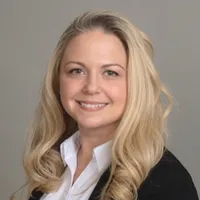
Heather Krentler
Chief People Officer, Thomas Cuisine
Your Company's Culture Won't Build Itself: Leaders Must Intentionally Engineer It.
Episode 304 · August 13, 2025 · 8:22
Your Company's Culture Won't Build Itself: Leaders Must Intentionally Engineer It.
Key moments
In Heather's words
“That pivot taught me the power of understanding your unique wiring and aligning it with your work. It also laid the foundation for me to become a Gallup Strengths Coach, which has greatly deepened the impact I've had on the organizations I've served.”
“My answer is that while founders provide the nature, leadership must provide the nurture. So if they're not aligned, it will fail.”
“You can teach skills, but teaching values is significantly harder and definitely not where I'd advise your time and money be spent.”
Transcript
Read the transcript1,450 words
HostI'm excited to welcome Heather to the Built by People podcast. Heather, thank you so much for joining us today. And as a starting question, I always love to ask if you could share a little bit more about your career journey.
GuestYeah, absolutely. And thank you so much, Dave, for having me on the podcast. It's a real treat. Like so many of my peers, I did not start out in HR. I began in advertising, moving from role to role, working really hard to be good at something instead of leaning into what I could naturally be great at. After a lot of informational interviewing, I kept being drawn to HR, and thankfully, a former employer gave me a shot as a recruiter. I've really loved the field ever since. That pivot taught me the power of understanding your unique wiring and aligning it with your work. It also laid the foundation for me to become a Gallup Strengths Coach, which has greatly deepened the impact I've had on the organizations I've served.
HostJim Collison: Heather, can you tell us about a time when you had to scale culture across a dispersed workforce? What specific challenges did you face and how did you overcome them?
GuestWell, much of my career has been in founder-led companies where the values aren't just aligned, they originate from the founder. It's very personal. At some point, these companies grow so fast that the culture risks becoming diluted unless it's intentionally nurtured. Every founder has asked in one way or another, when I'm no longer here, how do I make sure the people are still cared for? My answer is that while founders provide the nature, leadership must provide the nurture. So if they're not aligned, it will fail. At Thomas Cuisine, we've grown significantly over the past 40 years. As growth stretches direct connections between leadership and the frontline team members, you have to trade quantity for quality of touchpoints. That's why we've built frameworks around leadership, communication, and engagement to preserve connection and meaning. We hire leaders based on values. And if you're lucky enough to have a strong founder's vision, like we do, use it as your source of truth. You can teach skills, but teaching values is significantly harder and definitely not where I'd advise your time and money be spent. We also embed values into how we do business, who we partner with, how we evaluate, how we reward our people, We talk about them constantly. We weave them into the entire fabric of our culture. Our founder, the late Thad Thomas, left us that gift I mentioned, the gift of his founder's vision. So we start every weekly town hall with a mission moment where team members share how the vision speaks to them and how it's alive in their work. So with over 2,000 team members spread across the country, those town halls help our managers reconnect regularly to our why so that they can cascade it to their teams. When your people aren't sitting in front of a screen every day, like ours aren't, word of mouth becomes everything. So values-aligned, well-equipped managers are key.
HostHeather, how does your immersive onboarding program for new managers help maintain cultural consistency across 100+ locations? And what measurable impact have you seen from that approach?
GuestYes, so I'll, I'll answer the end of the question first. We see greater retention with our managers, and I believe that these programs are a huge part of that engagement and retention factor. The first program I'd like to share with you is our new manager orientation, which is a monthly program where recently hired managers from across the country spend a week at our home office in Boise. They connect with our centralized support teams, they build relationships with senior leaders, including board member Matt Thomas, who shares the personal and professional roots of our real foods mission. And they get to participate in behavioral workshops to better understand themselves and each other. The experience helps form a peer network, which is especially valuable for managers in remote roles. And of course, we feed them incredibly well because we take them to some of our local accounts where they get to taste real food in action. And leave inspired by our mission. The second program is our new executive and senior manager orientation. So this is a brand new, freshly launched program, which is designed to immerse senior leaders in our systems, processes, and culture from day one. They begin with a visit to our home office to build key relationships, then they get to go spend time at a similar account location where a peer mentor provides hands-on guidance, and real-world context for their role within our organization. This allows them to get their footing weeks in advance of taking on the responsibility of client and team management. We really wanted our new leaders to feel supported and teed up for success, and we believe this program is going to do just that. Lastly, and arguably the most fun, is we host our annual meeting in Boise every year, where managers get to come together for several days of development, gratitude, and recognition. The event features hands-on experiences with real food innovations, seminars on procurement, leadership, and operational improvements, as well as a values-based awards banquet celebrating our top performers. Thad Thomas wanted this business to be fun, and annual meeting is one of the biggest ways we keep that alive.
HostHeather, when was a time you had to implement significant organizational change to ensure compliance, and how did you get buy-in from operators who were initially resistant to new processes Word.
GuestI've done it clumsily, but I'm getting better. The biggest lessons I've learned have been begin every change with a root cause analysis and follow it up with a great sample test in the form of a survey or focus group. Whatever you do, don't just trust your assumptions or what you heard worked for another company. The next step I would recommend is move on to the buy-in process. Get your key stakeholder questions answered and concerns addressed. Iron out the kinks together, and gain alignment. Remember that your naysayers are a gift. That has been a big lesson for me. Listen to them, ask questions, allow them to enrich your decision-making and your approach. And then, and only then, build your communication strategy and make sure that you're including those key stakeholder voices in the messaging. Lastly, I would recommend that you not agonize about it. Not being perfect. It's not going to be. There will always be people who criticize just because you made them change a habit or a behavior. Some of that is natural and part of their developmental process. So just be patient and kind, but firm.
HostHeather, can you tell me about the roadshows you organized to connect leadership with hourly team members and what impact this has had on company culture?
GuestI love our roadshows. So we started those about 2 years ago because we wanted to make sure that as leaders, we didn't become ignorant of what our team members were really experiencing and desiring. It is so easy to just trust what you hear from your day-to-day network and base all of your decisions on that. But the trouble with it is it's filtered and sometimes warped. If you don't regularly pressure test your assumptions against what people really think and feel, you're going to make big mistakes. It was important to all of us, especially our CEO, Alison Patt, that we make those direct connections with our frontline team members and that we make them with diverse audiences at different times of the year. So our leadership team goes to a different major market about once a quarter to visit our locations there. It's been, in a word, invaluable. We focus first and foremost on saying thank you to our people, And then we try to ask really smart questions and get them to open up. It's amazing to see how every unit has a slightly different culture, but they're all rooted in our common values, and I really credit our managers with that.
HostWhat parting advice would you like to share with our community?
GuestNever assume your culture will scale on its own, even with consistent leadership. A lasting culture requires intentional planning, ongoing evaluation, and leaders who are accountable for actively bringing it to life.
HostHeather, thanks so much for joining us today on the Built by People podcast. It was a pleasure to have you involved.
GuestLikewise, I had a blast. Thank you, Dave.
More conversations like this