Episode 332 · September 24, 2025 · 18:30
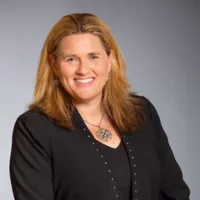
Al Crook
Chief Human Resources Officer, Zurich North America
HR's Evolution: Balancing Human Impact with Data-Driven Business Outcomes
Episode 332 · September 24, 2025 · 18:30
HR's Evolution: Balancing Human Impact with Data-Driven Business Outcomes
Key moments
In Al's words
“The cause and effect of aligning business outcomes with, you know, a staff of employees to deliver them and the mystery of how to make that work really well when you insert the fact that every one of your employees, whether you have a small department of 10 or a huge function with 1,000, that people impact is so important. And yet, because everyone's an individual, mastering that to just the simplest forms is very complex.”
“acknowledge that any change to those benefits is not minor, is not just math, is not just a change in a policy, but it changes the employees' lives and their family lives. So I think the advice I would give is, is give it the care and concern that it really is due.”
“Our most important role that an HR function that I believe we play is ensuring that the business has the right talent both currently and in the future to deliver for our customers.”
Transcript
Read the transcript3,020 words
IntroWelcome to the Built by People podcast, where we share the stories and insights of the world's top HR leaders. Join us as we dive deep into the minds of HR executives, uncovering their strategies, challenges, and triumphs in shaping today's workforce.
HostI'm excited to welcome Al to the Built by People podcast. Al, thank you so much for joining us today. And as a starting question, I always love to ask if you could share a little bit more about your career journey.
GuestYeah, thanks, Dave. Looking forward to the discussion. My career journey, if you look at the last 30 years, you would assume, and I worked in human resources. I found a passion for that. But if I look at the starting point and how I chose HR, I think it's a little more interesting. I went to undergrad in a business major, wanted to be an accountant, but I think I did a very HR analysis and looking at the jobs that were available. After graduation and the jobs I really found attracted me were HR or people management roles outside of college. So I shifted my major to human resources and really have experienced the value in getting to know leadership through the people perspective. But I do think the fact that I started out as a business major and my love for business and finance really played a role. In how I've approached my HR career. In fact, my first job out of college was working for a credit card company in their credit management training program, doing nothing related to HR. But then I've been able to apply that to my 30 years in financial services, HR leadership. So I really have enjoyed working for a few very large companies who do financial services well. Who do insurance and the related services as well, but also have amazing people practices and practices that have been beneficial to my career as I've grown over the past 30 years.
HostJim Collison: Al, it's great that you started with a foundation in business. I'm curious to get your perspective on what triggered that transition from studying business to going into HR, because it's not something, something I commonly hear of from guests.
GuestYeah, it's a really interesting journey for me. I think I have a systems kind of perspective on how things work. And as I was looking at roles that would interest me, I really feel like the ability to understand how to get the most out of the asset of our people was really intriguing to me. The cause and effect of aligning business outcomes with, you know, a staff of employees to deliver them and the mystery of how to make that work really well when you insert the fact that every one of your employees, whether you have a small department of 10 or a huge function with 1,000, that people impact is so important. And yet, because everyone's an individual, mastering that to just the simplest forms is very complex. So I think it's around problem solving, business solutions, And then really, I really enjoy connecting with people and trying to find ways to make them better, at the same time making the company better.
HostYou've been where you are now for, it sounds like just over a decade. I'm curious, what are some of the biggest challenges you're currently facing in HR?
GuestYeah, I would say the one that I think is the most acute right now is the expense and the cost of benefits, especially in the medical area. We, as a large insurance company and a financial services company in the United States, are, you know, I think struggling with what most companies are, most individuals are, which is the rising cost of healthcare and how to balance the needs and the wellbeing of our employees and the expectations they have when they join any company as it relates to the medical benefits. And then how a company manages the cost overrun that continues to be significant. And one of our greatest line items that grows at the highest percentages is really the benefit side. So I think creating an employee value proposition that allows for solid business results while managing, you know, rising benefits costs is a very delicate and a very important dance that really we're working on diligently as we get into the open enrollment and then planning for the future years and just how dynamic that space really, really is.
HostNow, this is a challenge for most, if not all, HR teams, rising cost of premiums in healthcare. I'm curious if you could share any advice to an HR professional going through a similar challenge.
GuestYeah, I think there's plenty to be learned in this space, and I wish I could say it comes from an area of expertise, but I will tell you what we've done that seems to have worked really well. And it is merging the few things that I think matter to our employees as we continue to build a proposition. And one is understanding and recognizing that the benefits we offer are a really important part of why they choose to come to work and give their best every day. And acknowledge that any change to those benefits is not minor, is not just math, is not just a change in a policy, but it changes the employees' lives and their family lives. So I think the advice I would give is, is give it the care and concern that it really is due. Definitely have to look at the numbers. So thinking about my earlier comment about the importance of we're an HR function intended to support the business. We have to keep in mind budgets and costs and ways that we can continue to run a sustainable business. So while you keep the employees very engaged, We also need to be very clear about the culture in the organization and where the budget to fulfill the proper employee value proposition, making changes to different plans, maybe bolstering one, shifting the other is very, very important. And then the other thing that I would say we've really learned is the importance of communication. And we work with some great partners in the industry who help us select our benefits, work on our contracts, all very important. But at the end of the day, we have to make sure our employees understand our plans, the choices they have, why we made them, and how they can be participants in this process as consumers of our benefits versus just receivers of what the company has chosen for them at the different price points that we have. So I think it's around the communication. Merging it to culture, and then keeping in mind the financial aspects of running a sustainable business with these costs.
HostAl, if I shadowed you for a week, where would I see you spending the most time on things that don't feel strategic? And what are the things you're spending the most time on that are strategic?
GuestSo I think the items that are the least strategic would be, would be just the email traffic. You know, managing day-to-day activities. And while I don't think those are necessarily strategic, they are outcomes of strategies that are in place. So I try as much as I can to enable and invest in my team so that they feel very empowered to lead and develop their own teams and deliver their specific lines of work. And then there's always the noise that gets in between. The aspirations of, of the strategy. And if I look back at the moment of the day, I might look at that and say, that was really not the most, the best use of my time. And I ask myself the other question is, who else would be able to handle that besides someone in human resources? How can I make sure that if there's a breakdown in a system or process that caused that to be unproductive work or not strategic work in my space, to create a better system that allows that to be solved without the, the maybe distracting on that item, and then ensure that we, we deliver those changes. Now, on the strategy side, it's all about talent. We are, you know, most important role that an HR function that I believe we play is ensuring that the business has the right talent both currently and in the future to deliver for our customers. And that's around, again, continuity and sustainability. It's around making sure we know our talent that we currently have. We match up what changes happening in our industry and then the labor market to make sure that the pipeline is strong so we never end up approaching the day of a week or some work where there isn't someone who's been properly trained, developed, and hired to do that work. Our customers need us to be there for them. As an insurance company, it's about, you know, fulfilling that promise of risk management. And solutions once catastrophe might hit. And that's all done by our employees. So talent management is the item that I spend the most time on. It's in my own team, making sure that our team is developing, but also looking at succession planning, looking at development activities and programs at every level to ensure that we have entry-level talent, mid-level talent, senior-level talent that is ready to go at all times to let us win in the market, but also create a place where it's great to work, people feel challenged, and that they have opportunities.
HostTalk about some of the hair-on-fire problems that you have experienced in the past or you are experiencing now in your line of work. What's keeping you up at night these days?
GuestI think the pace of change as I've experienced it over the past few decades is really interesting. And I think it keeps me up at night because I'm a little bit worried that I didn't do everything that I could have the day before, but I also am anticipating tomorrow's challenges. And if I come back to my original point, I think the pace at which our customers' needs are evolving, coupled with the technology that is enabling businesses to do different work, and do things more efficiently, but is also part of the change. And then you overlay that with some challenges and just the interesting part about being a US employer that is an insurance company with the regulations done at the state level, employment regulations, and then some of the changes that are happening as we always experience in different administrations. I think there's, there's a lot to be managing and knowing what's the most important, not becoming too enthralled with the sparkly item of the day, but keeping grounded with purposeful change and making sure that you, you do keep up with the changing environment and the agility that our company needs to have compared to what was a little bit less intensive change, I think, over the past 5+ years. So I would say that keeps me up at night is just the amount of change and making sure that we're staying in front of that.
HostNow, what's a recent situation where things broke down? This could be related to benefits, engagement, turnover, compliance. Curious what happened and how you fixed it.
GuestYeah, I've been fortunate to not have what I would consider a lot of breakdowns, but I will tell you the few that I was reflecting on when I thought about your question just now really have to do with Communication. So a few years ago, we had a change to our— one of our retirement plans and how we paid out our 401(k) matching. And it was a timing issue versus a valuation issue. And we took a shortcut in communication and we assumed the change wouldn't be that large. We high-level communicated that, and we learned a very important lesson that, you know, whenever you affect an employee's pay or even a portion of the benefits, you can do yourself a favor by ensuring that you take a very deep stakeholder review, make no assumptions about the intensity of the change as it would affect the employees, and make sure that you get ahead of that in your, your first communication. So I would say that having very purposeful stakeholder reviews of any changes is a very good investment of time. And what broke down was that we misinterpreted how this, this message would be received. It caused us to have to regroup very quickly and come up with some countercommunication that I thought was very effective. But ideally, you don't put your employees through any timing where there's a guesswork in between what you've changed and why. And the subsequent changes that we've made, however small or large, have been informed by that deep analysis and deep concern for how the employees across the organization at all levels, in all areas, would receive this information.
HostI want to switch gears and talk about some of the tools that you're leveraging to drive efficiency and productivity in the workforce. What tools or partners are most critical to you today?
GuestYeah, we do have a lot of really great partners. I would say that our largest partners deal with some of our more complex offerings. So I'll talk about partners like Mercer, like Willis Towers Watson, who help us intensively with our benefits and our compensation strategy to make sure we have market-leading programs, market-competitive pricing, and communication that aligns with best practices. On our recruitment side, we partner heavily with ADP. They're a very strong provider, not only for our payroll, but also for our contingent hiring and hiring at different levels in the organization that help us normalize our staffing. So those are the most, I think, important partners because they bring deep-level expertise at a national level that we would never ever get if we tried to do it on our own and are so critical to our employees.
HostAnd now if, if I could wave a magic wand and fix one system or process for you, what would it be and why?
GuestWell, first thing I would ask for is more than just one, but I've seen that play out in the movies when you, when you rub the, the, the lamp, but I would take one. I think the one item I would offer up is just how employees get answers to the massive amount of policies, both in the company and maybe labor laws that apply. So if I could apply some AI agent across all of the policies that Zurich has, all of our benefits, couple that with the relevant state, federal, or local laws that might be informing that, and then also tie it to our providers who deliver, like Vanguard does for our K, and have them have one source to, through an AI agent, intelligently get them quick answers so they can have their issue resolved quickly, get back to work serving their employees, or if they're doing it on their own time, not spend time doing unproductive work searching through layers of policies to try and find their answer. When they just end up calling or reaching out to someone. So I would love an agent that brought all that together for a wonderful employee experience.
HostThat's a great idea, Al. As we close up, what parting advice you'd like to share with our community?
GuestYeah, I think that's a— there's so many opportunities for the HR community. I would, I would give a few points of advice. The first would be It never— I learned too late was the value of data in the HR practice. The advice I would give is make sure you understand your business goals very deeply as it relates to the customer's expectations, and then translate that as best you can into the measurements you use to drive the business in your people practices. For too long, we had limited data that supported our red, amber, green, or thumbs up or thumbs down assessment of our own performance. And what, what I know now is that we need to be able to measure that. So it's important to the business. It's important to human resources. My team has a measure for that. We not only have a measure, we have a benchmark and/or a service level agreement that we've agreed to so that we can assess how we're doing. We know what good looks like. We know how far away we may be from it or where we are excelling, and that's all data-driven. The only other bit of advice I would, I would give to this community is really to be excited about the cycle we're in right now. What many see are challenges are really the expectations they have for the HR and people function to help solve those challenges. As I mentioned earlier, I'm a problem solver. I love to dig into root causes, and I am excited whenever The people practices and the HR teams that I've worked with and I see around the US and many other companies solve those problems for the business in a way that only HR can. That's why we are a distinctive function. I think it's the most exciting function in the business as it relates to the employees that we support. And I would just encourage everyone to lean into the opportunity and not get drug into some of the complexity, some some of the negative energy, some of the, the changes that are happening, they're all great opportunities for us to continue to thrive.
HostAl, thank you so much for joining us today on the Built by People podcast. It was a pleasure to have you involved.
GuestMy pleasure, Dave. Thank you for having me.
More conversations like this