Episode 160 · April 15, 2025 · 13:14
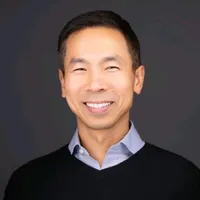
Leander LeSure
Chief People and Diversity Officer, Smarsh
TRANSFORM SPONSOR: Leander LeSure, Chief People and Diversity Officer at Smarsh
Episode 160 · April 15, 2025 · 13:14
TRANSFORM SPONSOR: Leander LeSure, Chief People and Diversity Officer at Smarsh
Key moments
In Leander's words
“How can you grow my business if you don't know my business?”
“The people function participants lack a bit of courage. We are one of the few functions that has a horizontal view of the organization structure and talent, a diagonal view of the organizational structure and talent, and we don't leverage that knowledge and understanding.”
“culture is what you tolerate. If you think about that for a second, culture is what you tolerate. You can tolerate high performance and delivery, which is a good thing. You can tolerate the lack of performance and delivery. Which one do you want to choose?”
Transcript
Read the transcript1,754 words
SpeakerWelcome to the Built by People podcast, where we share the stories and insights of the world's top HR leaders. Join us as we dive deep into the minds of HR executives, uncovering their strategies, challenges, and triumphs in shaping today's workforce.
HostI'm excited to welcome Leander to the Built By People podcast. Thank you so much for joining us. And as a starting question, I always love to ask if you could share a little bit more about your career journey and how your experiences have shaped your perspective on leadership and culture.
GuestDave, first, thank you for the invitation. This is a space and subject that I'm very passionate about, having spent 30 years doing it. So I look forward to this dialogue. About 30 years ago, Dave, I left graduate school. I have a labor and industrial relations degree from Minnesota. And my first job was a manufacturing job with Philip Morris Tobacco. It was not the job that I thought I would take out of graduate school, but what the manufacturing job did for me, it gave me a frontline view of how people impact production and operations and to see their hands on unfinished products all the way through to that production line., and it was a very impactful experience. Leaving there, I spent the next few years in industries like consulting. I spent some quality time at Pizza Hut. The second place where I spent most of my career was in financial services with American Express for about 10 years. Since Amex, I lived abroad in London working for Western Union. Came back to the States and worked in media with Getty Images, and now I'm in a private equity-owned company. That's the extent of my 30-year experience, Dave.
HostLeander, early in your career at Pizza Hut, you learned the importance of truly understanding the business. How has that, how can you grow my business if you don't know my business mindset, shaped your approach to building an intentional workplace culture?
GuestThat is a really good question about Pizza Hut. I had the responsibility in the late '90s to be the HR manager for 140 Pizza Hut restaurants from West Palm Beach County down through Key West, which was amazing territory, right? I had most of wonderful territory in sunny Florida. But what was unique about that territory is that you had affluent customers of Pizza Hut all the way through Fort Lauderdale, through some of the not-to-do neighborhoods, all the way down through Spanish-speaking Miami and down to vacationing Key West. And I would visit these restaurants as part of my responsibility. The question you ask about how can you grow my business if you don't know my business, that's not something that I coined. There's a short story where I was in my office in Boca Raton and a restaurant manager from Miami called me and said, Mr. Lajure, I need your help. I can't keep or find employees for my restaurant. Can you help me with my staffing? I'm sitting in my office, Dave, and I pull out this big standard operating procedures book that took you through how to staff a restaurant. And I'm reading this book to this restaurant manager. He's quiet and I'm not hearing any back and forth, him asking me follow-up questions. When I was done with my monologue to him, basically reading him standard operating procedures. He jumped in and said, have you been to my restaurant? I said, no. He said, do you know how my restaurant makes money? I said, yeah, you sell pizza. He said, but do you know what goes into the selling process and preparation process to create a pizza? I said, no. He said to me, How can you grow my business if you don't know my business? I get the chills when I say that because it hit me not just in the head, but in the heart, because he was running a restaurant and he needed help from me and I wasn't very helpful. I get in my car from Boca Raton and I drive down to this restaurant in South Miami. And from that experience, that was in 1990. '87, almost 30 years ago, to now, it left an impression. I cannot add value to any entity, a restaurant, a business unit, or a global organization if I don't know the business, and therefore I can't grow the business. That was the story related to Pizza Hut.
HostLeander, you've spoken about HR needing to be at parity with other business functions rather than being subservient. How do you embed HR as a true, a true strategic partner in leadership decisions?
GuestThis is a great question and is an exact reflection of the story I told about Pizza Hut. I expect and I hope to form and have formed functions of that understand the business and the coming together of those HR functions, recruiting, talent management, total rewards, how they come together to create intentional solutions and value for the business. I look to create an operating model that's focused on the business through HR business partners. I look to ensure that the COEs, talent management, total rewards, and recruiting, that they're in alignment with those needs. What's wonderful about that is when that operating model works, it does create enhanced value for the business because there's very little light between what the people function is doing and what the business requires. And the last thing I'll say related to culture, I think that most people come to work to create value. And the culture that I create for the people function is that I want each one of us to contribute to the organizational success, and therefore they have value and they're inspired to support the business.
SpeakerLeander, you believe that investing in people leaders is key to shaping workplace culture.
HostWhy is this so crucial and can you share specific strategies you've used to develop leadership expectations that reinforce strong company values?
GuestThat's a great question. I'm gonna go back a little bit to the question you asked about culture. One of the things that I found in my career, Dave, is that the people function participants lack a bit of courage. We are one of the few functions that has a horizontal view of the organization structure and talent, a diagonal view of the organizational structure and talent, and we don't leverage that knowledge and understanding. We hold back a little bit, which is my point about lacking courage, in that we haven't seen The power of bringing that knowledge and perspective to the table to ensure that the business is set up for success and nothing is impeding our ability to succeed. And sometimes the imp— things that impede business success are structure and people. And I've been in too many Nine Box talent review sessions where we're having a conversation about the business outcomes and we know that there is an employee sitting in a strategic role or critical role, and we know that person's not capable and we don't have the courage to one, give a clear assessment of that person's lack of capability. And number two, to act upon that. How many times will most of my peers or any executive say that, yeah, I wish I had acted on that talent because I knew that person wasn't the right person, and we wonder why the results didn't show up in the business. So this cultural question you asked earlier, I think about it in a way of behavior of courage as HR professionals, having the courage to see and act.
HostIn your current role, you've structured your accomplishments into 3 areas: culture, uplifting talent, and shifting to a pay-for-performance culture. How have these initiatives driven meaningful business results?
GuestIt's a great question, Dave. And the uplifting of talent, I have a lot of passion about that. I always believe that my job as an employee advocate, a talent broker, is to ensure that there's tight alignment between talent readiness. That could give us and secure organizational and business results. And my job is to broker that talent and ensure that talent is in the right seat to deliver. It takes courage to have that objective conversation in terms of that alignment between talent and are they ready for the business outcomes and results. So talent uplift is key. The second thing is, and I'm not saying anything on this podcast that peers and executives and HR professionals don't know, but this topic of culture is really important. And I can't own what I'm about to say. I heard it somewhere and it stuck. This person talked about culture is what you tolerate. If you think about that for a second, culture is what you tolerate. You can tolerate high performance and delivery, which is a good thing. You can tolerate the lack of performance and delivery. Which one you wanna choose? So the one thing I chose to do when I came to my current organization is to look at our pay for performance philosophy. I found that we did not tie rewards to performance. There was a lot of separation between the two. Everyone basically got the same merit increase and same, uh, bonus allocation irrespective of rating. And what that did for our high-performing population, it left them feeling a bit unmotivated, and we weren't optimizing the output of our highest performers. We made a shift in that last year. And what I've seen between 2023 and 2024, we have now retained our highest performers at about 90% retention. So pay for performance and having the right talent in the job, which is what I call talent uplift, are some meaningful things that I do to drive business results.
HostWhat parting advice would you like to share with our community?
GuestYou and I have talked over the past few minutes about culture. We talked about talent. We talked about business results. Culture, talent, and business results. That's a three-legged stool. Any of those legs that are weak, it's gonna be a wobbly seating position. So I would ask that each of us continue to look at those three things as equal participants in stability and sustainable results. Talent, culture, and business results.
HostLeander, thank you so much for joining us on the Built by People podcast. It was a pleasure to have you involved.
GuestThank you, Dave. I really enjoyed it.
More conversations like this