Episode 159 · April 15, 2025 · 7:50
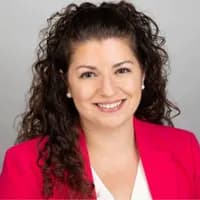
Erin Miller
Chief People Officer, Terra Dotta
Beyond Micromanagement: How Trust and Autonomy Drive High-Performing Teams
Episode 159 · April 15, 2025 · 7:50
Beyond Micromanagement: How Trust and Autonomy Drive High-Performing Teams
Key moments
In Erin's words
“your name has come up as a trusted confidant for our employees and we wanna test having you join our people team. That was my accidental falling into HR and work with people.”
“Encouraging first-time managers and even long-term managers to set goals, set the guardrails, but then give people time and get out of their way and see what they can do when you give that give some of that trust and autonomy to them.”
“And so I always encourage HR professionals or people managers to really start with self, understand what are their strengths, what are areas where they might feel triggered, and be able to work through those before you go into situations where you might have to mediate.”
Transcript
Read the transcript1,235 words
HostWelcome to the Built by People podcast, where we share the stories and insights of the world's top HR leaders. Join us as we dive deep into the minds of HR executives, uncovering their strategies, challenges, and triumphs in shaping today's workforce. I'm excited to welcome Aaron to the Built by People podcast. Aaron, thank you so much for joining us. And as a starting question, I always love to ask if you can share a little bit more about your career journey.
GuestAbsolutely. So my career journey, I started in sales in college. One of my first jobs was actually selling books door to door for the Southwest company, and it was a wonderful experience. I feel like it really built my grit and my character. After that, my first 10 years selling advertising, both for newsprint and online for The Fool, The Motley Fool. And it was during my time at The Motley Fool that I wanted to get out of sales, wanted to have a little bit of a career change, and I went to our chief people officer and I said, hey, I really wanna stay with The Motley Fool, but I think I need a career change and I would love to explore options to stay with the company. And he said, yes, your name has come up as a trusted confidant for our employees and we wanna test having you join our people team. That was my accidental falling into HR and work with people.
HostExcellent. And you've given talks in the past about the power of praise and trust. Can you explain what this concept means and why it's particularly important for first-time managers?
GuestYes, I would say trust was something that I really learned at The Motley Fool. They were really good about setting goals and putting in a few guardrails, but then getting out of people's way in order for them to achieve their goals. And with my work with people development, it was really wonderful for me to go on the journey of understanding that individuals can reach goals in different ways. You and I might have the same goal, but we might take a different path on how to get there and how to achieve it. And so with my talk on the power of brazen trust, as first-time managers, I think there's a stress instinct that when things aren't going well, that's when they double down, that's when they micromanage, that's when they get all over their people, and they don't always achieve the results that they think they will with that approach. Encouraging first-time managers and even long-term managers to set goals, set the guardrails, but then give people time and get out of their way and see what they can do when you give that give some of that trust and autonomy to them.
HostErin, how can HR professionals better recognize and manage their own biases and blind spots when acting as mediators in workplace situations?
GuestYeah, that's one thing that's very near and dear to my heart, just because I think it's work that I really try to do every day, all the time, whether it's personal or professional. Where are my biases? Where are my blind spots? Where am I coming into a conversation where I might have some preconceived notions, where I'm not truly letting the course go on the path that it needs to go? And so I always encourage HR professionals or people managers to really start with self, understand what are their strengths, what are areas where they might feel triggered, and be able to work through those before you go into situations where you might have to mediate. Understanding where you're coming from, understanding and being self-aware will really lead to better outcomes.
HostErin, in your experience, what's the key difference between how seasoned managers and first-time managers handle stress and control in their leadership roles?
GuestYeah, so I think it goes back to what I brought up before. In my experience, a lot of first-time managers, when they start to feel stressed or maybe their team isn't performing in a way that they want them to, their response typically is micromanagement, doubling down, trying to gain control. And I think with more seasoned managers, they self-regulate. They're the Steady Eddie or the Steady Erin, and they're not getting too high, not getting too low, but they're really leading with kind of a calm presence and understanding what are the risks, what are the issues, and then what are the guardrails they can put in place, and then actually let their people solve the problems versus them getting involved to dictate how those problems should be solved.
HostErin, when it comes to starting with self as an HR professional, what specific practices or self-reflection techniques have you found most valuable?
GuestYeah, so I think everyone needs therapy. If you don't have a therapist, get one. The other thing, all kidding aside, I do a lot of journaling. I also have a lot of books that I love reading and referring back to. One of my favorite business books is by Marshall Goldsmith, What Got You Here Won't Get You There. It's a really wonderful book that talks about the different stages of leadership from starting out and then becoming a VP or a CEO, and just how your approach and how you work with people really needs to adjust the higher you climb the ladder. I'm also a big fan of taking assessments. I'm a big fan of the Kolbe A assessment, the Enneagram, the Predictive Index. I think you could name 20 right off the cuff, but again, the more you understand about yourself, what are your strengths, what are your blind spots, the better, because I really think you double down on your strengths and for your areas where you're weak, you find a partner to help you.
HostErin, how do you recommend HR leaders find the right balance between trusting their team's process while still maintaining appropriate oversight and accountability?
GuestYes, I think it's always important to trust but verify in the high-stakes moments. And for some of the lower stakes, maybe where there's a couple areas where if something gets messed up, it's not the end of the world, it can be fixed, cart launch, give people that full runway and just see what happens. Experiment when the stakes are low, I think is what I'm trying to say.
HostErin, what parting advice would you like to share with our community?
GuestAs for HR professionals, I think right now, and given just the last probably 5 years, I want to say start with self, focus on self-care, get good sleep, eat good food, try to exercise, because the more we can show up as an HR professional in a holistic way, in a steady way, the better we are going to be in those sticky situations and the better support we're going to be for those people that rely on us. And also have some fun along the way. If we have to spend 40 to 60 to 80 hours a week with our colleagues, let's have a little fun while we do it.
HostErin, thanks so much for joining us on the Built by People podcast. It was a pleasure to have you involved.
GuestWonderful. Thank you so much.
More conversations like this