Episode 293 · July 28, 2025 · 12:10
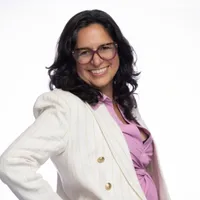
Tina Gupta
SVP, Head of Talent Management, New York Life Insurance
HR's New Mandate: Driving Talent Transformation with AI & Soft Skills
Episode 293 · July 28, 2025 · 12:10
HR's New Mandate: Driving Talent Transformation with AI & Soft Skills
Key moments
In Tina's words
“my passion was not necessarily about bringing people into a company. It was really about how we help people grow, develop, and become and perform at their best when they're in a role.”
“we're leaning in really proactively to AI. We have ChatGPT and Copilot for every single employee. We are really, really pushing the use. In fact, our CEO recently sent a memo about becoming, you know, from 12,000 employees to 12,000 innovators.”
“One of the leaders in my team built a GPT, which is really to help our leaders use— not everyone was going into ChatGPT to help write their reviews anyway, but this was the— I front-loaded with all of our insights, the way that we talk about performance, our models., and helping our leaders to write their media performance reviews.”
Transcript
Read the transcript2,160 words
IntroWelcome to the Built by People Podcast, where we share the stories and insights of the world's top HR leaders. Join us as we dive deep into the minds of HR executives, uncovering their strategies, challenges, and triumphs in shaping today's workforce.
HostI'm excited to welcome Tina to the Built by People podcast. Tina, thank you so much for joining us today. And as a starting question, I always love to ask if you could share a little bit more about your career journey.
GuestAbsolutely. Thanks for having me. I'm excited to be here. So I work as the head of talent management at New York Life, and I've been in my role just over 2 years. The journey has been a mix of always being in the people field, which started with talent acquisition. Most, like, the first half of my career was in the TA space, and I quickly realized during that time that my passion was not necessarily about bringing people into a company. It was really about how we help people grow, develop, and become and perform at their best when they're in a role. So, I pivoted to the internal talent management field, and the last 15 years or so have been really focused on How do we help our employees thrive? And as I like to describe it, live their lives with joy at work. The last 10 or so years have been much more concentrated in highly transformational-focused efforts. So companies going through divestitures, mergers, acquisitions, all, you name it, we've been there. And so a lot of change management and driving our talent practices through change.
HostTina, how is New York Life approaching talent transformation, especially in this age of AI? Can you talk about some key initiatives that you're implementing to prepare your workforce for the future?
GuestAbsolutely. So New York Life, we're a 180-year-old company, so we have a huge legacy and highly successful in those 180 years. We have a strong culture. We have a culture that's led with empathy and care for its employees and for our customers and our clients. It's been a fascinating transformation as we think about the pace by which AI is infiltrating the workforce, but also as we think about the insurance industry in general, like everyone has different needs, the speed by which customers want information and access to things that they need from us from a client perspective. The agents that work for New York Life, they want to have systems that are more seamless and that kind of Amazon effect. The industry has been disrupted even before we started to have this additional layer of generative AI. Speed, and so on. We've already been transforming the last few years, and we've really been thinking about the new behaviors and capabilities and things that we need for our employees and leaders to take us forward. With the insurgence of AI, that's actually helped us tremendously, and particularly me in my role, because I truly believe in building a future-ready workforce. And this has now really forced us to say, this isn't happening in 5 to 10 years, and how can we slowly it's 5 to 10 months, and maybe in the next few weeks, we need to really start to think about this. The good news is that we're leaning in really proactively to AI. We have ChatGPT and Copilot for every single employee. We are really, really pushing the use. In fact, our CEO recently sent a memo about becoming, you know, from 12,000 employees to 12,000 innovators. So, proactive push on how we use AI. I'm co-leading a work stream called Ignite AI. And that's really about a massive investment in our employees, about how we're giving them— we're looking at it in 3 ways: the mindset, the skillset, and the toolset to succeed when it comes to using AI within the company. And really not just giving them tools and hoping that you're gonna use it and everything will be great, but actually thinking about how do we help you think through problem solving and when AI can be a teammate and how, and rethinking how we think of it as a tool. As not just a tool, but as something that can really enable and unleash our work. Some really proactive and cool things happening at New York Life in that space.
HostTina, can you share some specific examples of how you're integrating AI into your talent management processes to support things like career development and optionality for employees?
GuestAbsolutely. I'm really proactively pushing the use of AI within my— I've got a couple of more scrappy examples and we've got a few more sophisticated examples. We recently built two GPT GPTs, which I can share a little bit about. One of them was for everyone's favorite part of the year, the performance management process, which is historically cumbersome and a ton of data, and it takes everyone time. One of the leaders in my team built a GPT, which is really to help our leaders use— not everyone was going into ChatGPT to help write their reviews anyway, but this was the— I front-loaded with all of our insights, the way that we talk about performance, our models., and helping our leaders to write their media performance reviews. It was excellent, very well received, and saved, I think, collectively hours and hours of time. We also recently created a GPT for engagement survey. Again, lots of data, lots of insights, takes hours to go through the data, and the GPT, you could plug in the dataset and ask questions, and it would help you like really make sense of what your employees were feeling. It would compare year on year, it would compare to previous other organizations and so on. For the enterprise, we've actually launched Eightfold AI, and we're helping our employees really think about what have I done in the past, what skills do I bring to the table, and how can I maybe use them as I think about my future career? And we're having our enterprise launch of that initiative, which is the career hub powered by AI in, in a couple of weeks. So exciting times.
HostI wanted to talk with you, Tina, about workforce planning. Obviously a very hot topic, especially with the emergence of AI. Curious to get your perspective on how you're gathering and analyzing data to understand your current talent needs and also forecast for future needs.
GuestIf you spent any time with me, Dave, you'll know that my passion is really about having data-informed talent practices. So using data with everything that we do, and when we think about some of the decisions we make about hiring or promotion, or do we retain who's leaving, when we think about investments in learning, all of those areas. We have been really on a journey to enhance our data. What we, what I found quite early on in my journey at New York Life, but similar to other companies, is there's bits of information, it's not consistent, and it's not as detailed as we'd need. So actually the last couple of years we've been spending really building up our data on employees. The work we're doing on our career hub effort is really about finding out more about who is everybody, not just what they're doing today, but what they've done before. And what do they want to do next? And so using all those data points to help build a picture of where we think we have the skills we need, adjacent skills we can train on, and how we can help employees as we think about disruption, whether it's through AI or just roles that are changing and more digitally native workforce, how are we going to help them to grow, evolve, and develop so that they're prepared for the next iteration of their role or journey?, but also where is it just not gonna happen and we're gonna have to look externally and build and bring in that workforce and infuse talent into the organization. So we've actually started to have a much more joined-up talent approach using various data sets.
HostTina, as a leader in talent management, how do you balance maintaining New York Life's very established culture while still bringing in fresh perspectives and driving transformation and innovation within the organization.
GuestAnd I always joke about this one, the fact I've made it here for 2 years and they continue to, I think, like me is a good sign. Like the company actually was ready for some support on how do we take our legacy and use that to like, and the breadth and the good and all the experience and skills and all that we've done that's been really strong up until now. And what I found as part of that is a lot of appetite. For change. Historically, I think the question has been, how do we change? And so bringing in more of a change management practice and a much more of an approach which uses a mix of theory, a mix of where the organization's at and where we're going, and then really understanding the vision of the company and translating that into much more of a talent and change management strategy has been really successful. I think the other thing that's helped a lot is showcasing early wins and small things that have helped with quite significant impacts and changes. People are starting to see the benefits of changing and being able to embrace new ways of working and learn new skills like AI. We're really celebrating them. We're finding moments to celebrate people's impacts in a number of different ways. For example, we recently released a new category of recognition in our Uplaws Awards, which is all about AI. So if you're using AI, that's great. Next week we have a huge event where we're celebrating all of the, the the ground-up work that's been done with AI tools in our AI Impact on board with the journey, approaching it with a positive lens.
HostTina, a lot of our conversation today has centered around AI. What do you view as the most critical skills and capabilities that both organizations and individuals need to develop within the workforce over the next 5 to
Guest10 years? You know, I wish we could predict what's gonna happen in the next 5 to 10 years. I think predicting the next 2 to 3 years is an interesting one right now. There's a few no regrets things and ways that we've actually really started to think about what would historically be called softer skills. And that would be things like the ability to adapt to a workforce that is constantly changing because change is no longer a point in time, it's no longer episodic, it's happening all the time. So, learning about resilience and adaptability and some of those skills that were less, you know, teachable in a traditional sense. We're starting to look as we hire talent, how do we make sure that we're getting folks that are more adaptable, who are able to mold more quickly as things change and adapt is one area. I'd say other things such as learning agility. So in today's era, including myself, like I haven't had to learn something really vastly new in many years. You use your expertise. And you're rewarded and recognized for that expertise. But more recently, the insurgence of AI has forced me to learn. I've had to learn how to create GPT, I've had to understand what Copilot can do, et cetera, et cetera. So, learning, like the learning agility and the mindset are some of the other areas. So, it's more of the traditional softer skills. I think the other skills are gonna be either more automatable or easily accessible. In, in ways that they haven't been to date. And so looking at those other softer and more behavioral aspects are probably the more emerging skills now.
HostTina, what parting advice would you like to share with
Guestour community? I would say this is a real moment for HR. We are in the driving seat and really at the forefront of innovation and change. And I think the companies need us in ways they haven't Advice to everybody is find ways to be relevant, lean in really heavily, be a lifelong learner. This is your moment to just try and figure things out and adapt and learn, but really lean in. Take the reins, drive things forward, try and insert yourself in your AI journey because the company really needs you more now than ever before in many ways. Just make yourself indispensable by having that
Hostseat at the table. Tina, thanks so much for joining us today on the Built by People podcast.
GuestThanks for having me.
More conversations like this