Episode 277 · July 15, 2025 · 16:07
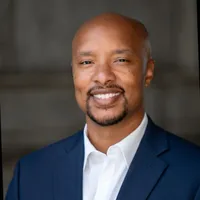
Shari Chernack
Chief People Officer, Isaacson Miller
The Hidden Burden: Empowering CHROs with Networks & Next-Gen HR
Episode 277 · July 15, 2025 · 16:07
The Hidden Burden: Empowering CHROs with Networks & Next-Gen HR
Key moments
In Shari's words
“We coined the singularity of the head of HR or CHRO role is that a CHRO is in many cases a business partner to the executive team, maybe coaching team members through certain things, maybe even occasionally needing to manage employee relations issues where there may be a complaint about or challenge with one of the senior leaders, and the CHRO or chief people officer needs to mediate, needs to document, needs to make sure that things are being addressed properly. So, all of that creates a certain kind of formality between the CHRO or chief people officer and the rest of the executive team that isn't the same as almost any other role.”
“CHROs and chief people officers are privy to some of the most sensitive information in the company and are not necessarily able able to share it. If I'm doing an investigation, I'm not able to, or I really shouldn't talk to my fellow C-suite leaders about it unless they need to be informed or involved. So there's also a lot of information that is held by the CHRO or chief people officer, and that might feel very heavy.”
“My hot take for a long time has been that HR has a little bit of a guild mentality that we should loosen a little bit. And if we need an analytics expert or we need a technology expert, HR has not traditionally nurtured those career paths. We might not have as much talent as a data function or a technology function might have. How can you create a blended team that has the skills if your team does not have the inclination or the capability to develop those skills through learning and development.”
Transcript
Read the transcript2,287 words
SpeakerWelcome to the Built by People podcast, where we share the stories and insights of the world's top HR leaders. Join us as we dive deep into the minds of HR executives, uncovering their strategies, challenges, and triumphs in shaping today's workforce. I'm excited to welcome Sheri to the Growth Built by People podcast. Sheri, thank you so much for joining us today. And as a starting question, I always have to ask if you could share a little bit more about your career journey.
GuestSure. Thanks for having me. My career journey is maybe a little bit unorthodox for an HR leader. I've spent about two-thirds of my career in consulting at the intersection of people and transformation after starting out in change management and essentially branching out into all of the different aspects of transformation from a people standpoint. So talent, organizational design and effectiveness, culture, leadership. In the third of my time that I haven't accounted for, I've been in-house for a number of roles. My last three internal roles have been in HR, one heading up culture, engagement, communications, and change management. My previous role was head of people for Industrious, which was a late-stage startup at the time. And then my current role, I am chief people officer at Isaacson Miller. I've been in that role for 4 months.
SpeakerJeri, based on your experience and research at Mercer, can you describe the unique challenges CHROs face today, the singularity of the role? And why addressing these challenges has become increasingly important since the pandemic?
GuestSure, absolutely. Mercer is where I came from before my current role at Isaacs Miller. In addition to being a client-facing consultant there, I spearheaded and co-led a new survey called Voice of the CHRO, where we heard from chief people officers and CHROs across organizations of different sizes and sectors with a variety of tenures, both in their current role as well as in the head of HR or head of people role, especially in that first year that we did the survey. Unprovoked, there was a lot of feedback from some of our respondents about feeling lonely or isolated in the role. We coined the singularity of the head of HR or CHRO role is that a CHRO is in many cases a business partner to the executive team, maybe coaching team members through certain things, maybe even occasionally needing to manage employee relations issues where there may be be a complaint about or challenge with one of the senior leaders, and the CHRO or chief people officer needs to, to, needs to mediate, needs to document, needs to make sure that things are being addressed properly. So, all of that creates a certain kind of formality between the CHRO or chief people officer and the rest of the executive team that isn't the same as almost any other role. If you think about what how the CFO might help other team members with budgeting or procurement processes, how the CIO might help people. There's nothing quite similar. And so when CHROs talk about their isolation, their feelings of isolation and loneliness, on the one hand, they, like all of their fellow chiefs or senior-most leaders, are at the top of the pyramid and they don't have anyone else on their team that they can necessarily talk to in the same way as one can speak with a peer.
HostBut then they also have, by necessity in many cases, a slightly different, uh, dual relationship with their peers relative to the relationship that their other people have. And then there's one other aspect that I think also adds to that kind of loneliness, isolation, feeling of heaviness, which is, uh, that CHROs and chief people officers are privy to some of the most sensitive information in the company and are not necessarily able able to share it. If I'm doing an investigation, I'm not able to, or I really shouldn't, talk to my fellow C-suite leaders about it unless they need to be informed or involved. So there's also a lot of information that is held by the CHRO or chief people officer, and that might feel very heavy. And when I did that research, and also based on just the network that I have, there is a lot of value in external networks, whether formal or informal, so that CHROs and chief people officers can find a little bit of an outlet, can find community, can seek occasionally help and advice from one another. And then a lot of the respondents also talked about working, for example, with coaches and finding that a very valuable way to address certain things that couldn't be addressed in any other way in the workplace.
GuestSure.
SpeakerYou mentioned in our past conversation the high turnover rate among HR leaders since the pandemic. Could you share a specific situation where you witnessed or experienced this firsthand, and what were the root causes that needed to be addressed?
GuestIt's a little bit anecdotal in the sense that there's usually only one HR or people function leader at a time. Turnover can take place at that level and also at other levels in the organization. There was a survey that came out. I believe the company that conducted it was Workvivo. It was in 2022, and 98% of employees who responded to the survey felt burnout. Some of that was by virtue of the pandemic and the amount of work that it created. The Great Resignation was going on simultaneously. A lot of organizations were trying not just to recruit, but also to hold on to their employees at a time when it seemed like every day brought a new resignation. The Great Resignation created a lot of opportunities for HR leaders that may or may not have panned out as they thought they would. You had a lot of people taking new roles, maybe finding that the alignment with their CEO and others in the C-suite was not as they imagined and ended up exiting fairly quickly. So I believe in some of the studies that came out, it showed the average tenure of CHROs and chief people officers being at one of its lowest points during the Great Resignation, one of its lowest levels, I should say. But then in addition, I also saw a lot of turnover in my professional network along the lines that I described, which is, hey, I went to work for this leader, not feeling a lot of alignment. I don't see a long-term opportunity here. So there were some instances in which people felt like there was a great opportunity that didn't fully materialize as they thought it would.
SpeakerShari, what specific strategies or approaches have you implemented to help CHROs navigate the competing demands of being a confidential advisor, a data custodian, and problem solver while maintaining their own well-being and effectiveness?
GuestYeah, a lot of the work that I've done with CHROs in that regard has been through coaching and mentoring. Some of the specific strategies are around, um, helping them figure out how to share and seek advice.
HostThere's also a networking and connection element as well.
GuestSo every CHRO has a slightly, uh, different background, Some people have come up through a business partner and employee relations route, and they're very strong at solving those kinds of people interaction and relationship challenges.
HostSome people come up through total rewards, compensation, or benefits, and they may have a really strong understanding of data and analytics around compensation, rewards, and/or in general. They may have a lot of insight into what leads people to stay or leave relative to benefits, compensation, and employee value proposition. When you think about the fact that not every CHRO and chief people officer needs to know all of the areas, but not everyone has the same strength, that ability to network, to have a sounding board, to have a kitchen cabinet of people to reach out to about things that maybe have never been encountered or where deeper expertise is needed, that's another thing that can be really valuable. And then the third is around developing and building one's team. When it comes to building one's team, that can be through development and skill building. It can be also through bringing people into the HR or people function. And my hot take for a long time has been that HR has a little bit of a guild mentality that we should loosen a little bit. And if we need an analytics expert or we need a technology expert, HR has not traditionally nurtured those career paths. We might not have as much talent as a data function or a technology function might have. How can you create a blended team that has the skills if your team does not have the inclination or the capability to develop those skills through learning and development. That can also be really helpful in helping CHROs and chief people officers bridge some of the talent gaps on their team. I'm also a big believer in hiring to one's weak flank. It can feel somewhat taunting or intimidating to bring in somebody with more expertise in a certain area, but it's enormously helpful because it grows the entire team. It raises the bar. It often fills gaps that other C-suite members might feel without those hires in place.
SpeakerTerry, looking at the results of your work in this area, how have you seen successful CHROs transform their teams to focus more on analytics, insight generation, and technology? What tangible outcomes have you observed from those transformations?
GuestSo some of it is about building those capabilities along the lines of what I just mentioned, giving people skill-building opportunities, whether that is participating in courses, participating in cross-functional projects, shadowing members of other teams, maybe doing a stint on another team as a way of building some of those skills around analytics or technology. I've actually seen a number of instances in which HR team members have become part of a task force around AI, around advanced technology that's been incredibly successful and mutually beneficial because the HR team member gets a deeper understanding of technology and AI, and the rest of the team gets somebody who understands all of the human factors of technology adoption. The work factors as well. So how those tools can transform work, how they can transform individual roles. And also HR owns two of the levers that can be used to really reinforce the need for people to begin to use AI, experiment with it. Just as an example, they are responsible for learning, so they can embed it into learning plans. And then they also are responsible for performance management. So, they can embed it into organizational goals. They can make it a requirement for certain functions or certain roles, consultatively with the leaders of those roles. So, I think those are some very tangible ways to begin infusing certain skills onto teams, and that, if done right, should be mutually beneficial for the HR or people team, and for other teams where there is a cross-sharing and cross-pollination of expertise.
SpeakerWhat parting advice would you like to share with our community?
GuestI'm going to share some advice that was shared with me, and I think it's the best piece of advice I've gotten about my career, which is you own 51% of your career, you're the majority shareholder, which means that you are responsible for your own career growth, your own development. It's really important to take the driver's seat, to understand where you as an HR leader have the opportunity to grow and develop, whether that is specific skills like we've discussed around analytics and technology, or whether it is certain kinds of leadership skills. You, as the HR leader, have to know when an opportunity or a role that you're in no longer feels like the right one and either act to improve it or act to move your career in the right direction. So, I think that majority shareholder notion can be daunting, but it can also be very empowering. The other thing I would say, if I may offer a second piece of advice, is there's a lot of really good content and information about the future of work, AI, all the things that are changing. And sometimes that's also important for people to think about where they are, where their organizations are in terms of readiness, in terms of capability. Because not everybody is at the same point.
HostSo I used to say some of my clients may not be in the present of work.
GuestWe would be skipping over quite a few steps to go right to the future of work.
HostIn some cases, it might make sense that we're going to leapfrog over a whole series of steps where people may not have had some of the technology in place that they could have had for the last 5 or 10 years and are going to leapfrog over it. But the future of work looks different for every organization. It's great to understand what is out there, the trends, and then to think about how they apply or may not precisely apply in the same way in your organization based on where it is, based on tolerance for change, based on other things that are going on, based on how high-touch your organization is, just to name a few factors that will differ by company or organization.
SpeakerCheri, thank you so much for joining us today on the Built by People podcast.
GuestGreat to meet you as well.
More conversations like this