Episode 225 · June 3, 2025 · 15:04
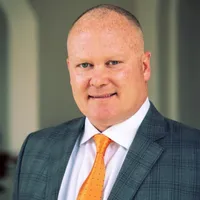
Rodney Bolden
Head of Industry Engagement and Learning, Morgan Stanley
Solving the Great Detachment: Financial Wellness and Ownership Drive Loyalty
Episode 225 · June 3, 2025 · 15:04
Solving the Great Detachment: Financial Wellness and Ownership Drive Loyalty
Key moments
In Rodney's words
“The Great Detachment is a term that was coined by Gallup to identify the current low levels of employee engagement in the workforce. Only about 32% of US workers are engaged at work and 17% are actively disengaged.”
“Over 7 out of 10 employees said that they have to hide aspects of themselves at work. So this company said, no, don't hide. We think that where you are, your identities have value.”
“Over 8 out of 10 employees that receive equity compensation say that equity compensation is the most effective way to keep them motivated and engaged in their role. So think about that. When do you get over 80% of employees agreeing about anything?”
Transcript
Read the transcript2,326 words
HostWelcome to the Built by People podcast, where we share the stories and insights of the world's top HR leaders. Join us as we dive deep into the minds of HR executives, uncovering their strategies, challenges, and triumphs in shaping today's workforce. I'm excited to welcome Rodney to the Built by People podcast. Rodney, thank you so much for joining us. And as a starting question, I always love to ask if you could share a little bit more about your career journey.
GuestSure, absolutely. And thanks for having me, Dave. So I actually— this is my 38th year in financial services. I started out years ago on the wealth management side as a financial advisor. And then about 18 years into my career, I switched over to financial wellness, which was my passion for many years. I continue to do a lot around financial wellbeing and financial wellness, both in my role at Morgan Stanley, but also in the community at large. But 2 years ago, I was asked to take on a new role. I've always been a data geek and love research. When talking to folks about their financial wellbeing, I always like to ground the conversation and what are some of the key financial wellbeing stats? What the challenges of Merck's workers. So I was asked to take on the role of Head of Industry Engagement and Learning, which really is our thought leadership research role. So I work with external partners like the Employee Benefit Research Institute, Society for Human Resource Management to craft surveys of both employees and HR professionals to identify what are the current and evolving trends in workplace today.
HostRodney, thanks so much for that great introduction. I wanna dive in by asking you to share a specific example of how this concept of the great detachment has impacted employee engagement within an organization and what strategies you've used to address it.
GuestOh, absolutely. That is a big topic right now. So first, let's talk about what is the great detachment, because when I talk to HR professionals at conferences, when I present, I always ask how many people have heard of the Great Detachment. Only about 10% raise their hand. So the Great Detachment is a term that was coined by Gallup to identify the current low levels of employee engagement in the workforce. Only about 32% of US workers are engaged at work and 17% are actively disengaged. And it's the lowest it's been since 2014. And it's understandable because when you look at fewer than 4 in 10 employees feel that someone's invested, strongly agree that someone's invested in their career at work, that someone respects them at work or cares about them as a person. So if I don't feel respected, I don't feel cared for, I don't feel like someone's helping me along my career, I'm certainly not gonna be invested at work. And what that has led to is a phenomenon that Forbes coined soft quitting. Now, Dave, you've heard of quiet quitting, right? Everyone has. Soft quitting takes it to the next level. This is the person that basically has ghosted the workforce. So you're gonna sit in a conference room at a meeting and you're not gonna say a word, or if that meeting isn't absolutely mandatory, you're probably not gonna show up. And the problem is that many employees today— Gallup also found that 50% of employees wanna leave their current job. But quit rates are not ticking up like they did during the Great Resignation because people are seeing what their job environment, companies are laying off. So they're staying put, but they're just not satisfied. And that's what the low engagement is. So when I talk to companies and hear about some of their stories of, hey, that resonates, that works, I'm going to talk about a company where they actually did something. So this— not allowed to name company names, but this company is an information technology company, consistently is on the list of best places to work. But what they did was they started by creating a culture of trust, respect, and belonging. 84% of— according to the Randstad Annual Work Monitor survey, 84% of workers said that they wanna work for a company where there's a sense of community, and 64% said they're willing to quit if that's not there. So starting with that, and how do you— so let's talk trust. How do you gain trust? What they did was they encourage employees to show up at work being their authentic selves. That's key because that same Randstad Work Monitor survey found that over 7 out of 10 employees said that they have to hide aspects of themselves at work. So this company said, no, don't hide. We think that where you are, your identities have value. And another thing that's big is that they encourage work-life balance. They have a lot of benefits to help employees navigate some of those challenges and encourage, take your time off, spend time with your family. And so they don't just talk the talk, but they actually walk the walk. Another thing that they do is providing financial empowerment resources. According to the American Psychological Association, their annual Stress in America survey, consistently at the top of the list when asked what's stressing you the most, finances. And finances, if you're stressed about finances, research that we've done shows that you're also distracted from work and you're less productive at work. This company said, no, we're gonna invest in your financial wellbeing. By providing you with access to financial professionals, by providing you with regular financial education, by providing you with online tools and support. And that has helped because what that shows— remember I said building a culture of trust, respect, and belonging? That shows that they respect the journey that those employees are going through. And lastly, I'll say the thing that this company did and does so well is that creating that ownership culture by granting equity compensation as part of an employee's overall compensation. So that lets them know, hey, this isn't just a company you work for, you're part owner of this company. So everything you do has an impact on your own bottom line. And that really changed the mindset at the company.
HostLet's talk about that a little more, Rodney. Tell me about a time when implementing equity compensation had a significant impact on employee retention and engagement. What were the key factors that made that successful?
GuestSure. In our annual State of the Workplace survey that we do at Morgan Stanley, what we found is that over 8 out of 10 employees that receive equity compensation say that equity compensation is the most effective way to keep them motivated and engaged in their role. So think about that. When do you get over 80% of employees agreeing about anything? I'm gonna share an example that I heard from Pete Stavros. Who is a partner at KKR, and he also founded a not-for-profit called Ownership Works. They work on— with companies within KKR's private equity portfolio to build that ownership culture. And Pete was telling me about one particular organization where they were turning over their full staff every 3 years. That's how bad turnover was. Where, think about it, You have somebody there 3 years now, oh, Dave's not here anymore. All that intellectual capital possessed by Dave, that's gone. So what they did was let employees know you are now owners and granting that phantom equity as part of the incentive to reengage employees. But they just didn't do that because when you look at employees at this particular company, you saw employees that were all of a sudden when the liquidity event, getting a half a million dollar payout, but their annual salary is like $30,000. We all see what happens with lottery winners when they get that payout. The key that helped here is bringing in financial coaches to work with the employees, help them understand, okay, you're about to get this big payout, but let's take a look at your finances today. What are you doing? What's going on? The, Third thing that they did was building a culture where employees were told, now that you're an owner, we want your input, we want your advice. And what happened, Dave, was amazing, where you had employees speaking up and saying, hey, say truck drivers, I know that the computer says this is the most efficient route to go, but actually let me show you a better route that I found. That saved the company money and time. So by doing that, by granting that equity compensation, it helped them. Oh, by the way, I forgot the best part. Remember I said how they turned over every 3 years? They increased retention by 90%. So incredible, incredible success story about how just building that ownership culture went a long ways toward combating any of that employee dissatisfaction, employee turnover, and employee engagement.
HostRodney, can you provide a real-world case study where a company's benefit strategy successfully addressed the diverse financial well-being needs of its workforce? What lessons can other HR professionals learn from this example?
GuestAbsolutely. So example that comes to mind is a large healthcare system here in the Northeast, one of the largest in the Northeast. So based upon some employee engagement data, they found that their employees are saying, hey, we are overwhelmed in our financial lives and we really want you to help us. So what they did was first conduct a financial wellness needs assessment and think about healthcare system, Dave. You have folks that are working the maintenance staff all the way up to the most senior specialized doctors working in there. All different incomes, all different family situations. And with— they had thousands, tens of thousands of employees. So by doing that financial wellness needs assessment, they were able to then hone in on who is having challenges with what. And they took a multi-pronged approach. They rolled out a digital solution so that for those busy doctors and nurses, they can go online at any time of day or night and say, hey, I'm having trouble with budgeting, and watch a webinar on budgeting or watch a quick video on budgeting depending on their time, but also having onsite education where onsite, hey, we're going to come out and we're going to have our benefit providers provide you with regular financial education, but not just education, one-on-one consultations with a financial professional. In that way, they were able to meet everyone where they were on their journey.. But here's one part that many HR professionals forget. Dave, you could throw the best party in the world, right? You think about the biggest stars. You got Beyoncé, you got Taylor Swift. Doesn't that sound like a great party? But imagine if your invitations fall short, where in inviting people, you don't share key information or it just doesn't resonate. Ah, Dave's having another party, whatever. This benefit communications is where I see many employers falter. So they made sure that it was going to resonate. Let me give you one quick example of where a company, where something happened where they want, they had the best intentions of their benefit communications, but it fell short. So this particular company had a lot of factory employees, manufacturing factory employees. That had Spanish surnames. And so they said, okay, we see that they're really not engaged with some of these benefits and we're paying a lot. 'Cause as I know you have a lot of seniors, Charles, benefit budgets are huge. Why aren't they using it? Oh, maybe it's a language barrier. Let's translate the communications into Spanish. Employees got it and looked confused. You know why, Dave? They were from the Philippines, so they had Spanish surnames, but they actually spoke Tagalog. Just taking that step to understand how your employees want to be communicated with. Do they want still snail mail? Do they want a quick email or quick video? Or do they want that one-on-one benefit counseling? That's some of the things. That we look at in our research that we support with like the Employee Benefit Research Institute and Greenwald Research in their annual Workplace Wellness Survey. And we see differences by race, ethnicity, and also gender and generation in that, how you wanna be communicated when it comes to your benefits.
HostRodney, what parting advice would you like to share with our
Guestcommunity? The biggest thing is you don't know what you don't know.? And the only way to find that out is to ask. So too many companies— too few companies, I should say— today are actually doing that thing what the healthcare company did, that financial wellness needs assessment, going out to your employees. And then it's not just doing that survey, doing that assessment, but disaggregating the data across various demographics, whether it's income level, position in the company, veteran status, disability status, race, ethnicity, gender, even geography to identify, even though the large set data set says one thing, but maybe when you dig in this particular group, working parents need more caregiving support, or maybe veterans need better help understanding retirement resources because they were on the US Armed Forces retirement plan. So they have— they still have funds in there, but they also now part of this new 401(k), which they didn't have before. So they need to understand that. So that's the biggest thing is survey your employees, identify where they need help, disaggregate the data across all different demographics within your workforce, and then take action.
HostRodney, thank you so much for joining us today on the Built by People podcast. It was a pleasure to have you involved.
GuestThank you, Dave. It was my pleasure.
More conversations like this