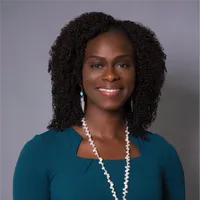
Renee Kaspar
Chief Human Resources Officer
eXp Realty, LLC
Beyond AI: HR's 'Head & Heart' Approach for Future-Ready Talent
Thesis
“Successful HR leadership, particularly with the rise of AI, requires a balanced approach of data-driven insights and human-centricity to foster purpose-driven agile teams and develop a 'generalist of generalists' workforce through internal talent marketplaces.”
What you'll take away
- 01Balance 'head' (analytics) and 'heart' (human-centricity) in HR leadership to drive business growth and employee potential, using data to inform human-focused strategies.
- 02Cultivate a purpose-driven culture by helping employees connect with what is meaningful to them, creating an 'Office of Flow' where work aligns with individual purpose.
- 03Proactively integrate AI into HR practices, augmenting teams and preparing the workforce to become 'generalists of generalists' by developing broader skillsets.
- 04Implement internal 'talent marketplaces' to effectively utilize existing employee skills for agile projects, address labor shortages, and promote internal career development.
- 05Reimagine traditional compensation and reward systems to emphasize contribution and interaction with new tools rather than seniority in an AI-driven work environment.
What most organizations get wrong
- A law degree, initially a perceived misstep, ultimately provided a foundational skill for HR by fostering proactive problem-solving rather than reactive litigation.
- Challenges the traditional hierarchical career path, asserting that future career growth will be determined more by the ability to do the work and adapt to new tools (like AI) than by seniority.
- Advocates for 'shopping in your own closet' by leveraging internal talent marketplaces as a primary strategy, shifting focus from constant external recruitment to internal development and redeployment of skills.
In Renee's words
“So for me, it's using the analytics to help really tell the story, to understand the movement I need to make with the people... And I, I came up with the expression for myself, head and heart as well.”
This quote encapsulates the guest's core philosophy of balancing data-driven decisions with empathy in HR leadership.
“My goal has been how do we help all of our employees at eXp feel that sense of purpose? What do we all do? How do we power people with what is meaningful to them?”
This highlights a proactive approach to employee engagement by focusing on individual purpose and connection to work.
“My CEO coined this term last week, was it becoming a generalist of generalists? How do we understand ops better? How do we understand marketing better? How do we understand all of these different functions so we become more of a utility player?”
This provides a forward-looking perspective on the evolving skill requirements for employees in an AI-augmented workplace.
“The best way to navigate that is to find the talent within your own company. It's kind of like going in your own closet, shopping for the clothes rather than going out to buy them.”
This offers a vivid metaphor for the talent marketplace concept, advocating for internal mobility over external hiring.
“I often tell those early professionals, like, 'cause I love doing that myself, like, you'll learn a lot, you'll grow a lot, you'll see the best in class, and how it's done. And then once you've kind of absorbed that and you understand it, you can bring it back out and help create it, build it, and design it outside of— in a smaller place.”
This offers valuable advice on career development, suggesting that experience in large companies can build foundational skills transferable to startups.
“I think the world in which we know will be totally different in the next 5 years. So I would say invest, understand, keep learning, keep pushing your skillset, and just stay curious.”
This is a direct and urgent call to action for HR professionals regarding the transformative impact of AI.
The problems this episode addresses
- Organizations struggle to effectively balance data-driven decisions ('head') with human-centric approaches ('heart') in HR, impacting both business outcomes and employee well-being.
- Maintaining and enhancing employee engagement is challenging when individuals feel disconnected from their purpose or the company's mission.
- Traditional external recruitment strategies are becoming insufficient to address the looming global labor shortage and the need for specialized skills.
- Outdated compensation and reward systems (e.g., merit increases, rack-and-stack) fail to motivate an AI-augmented workforce whose value is increasingly defined by contribution and skill breadth.
- HR departments need to rapidly adapt to the integration of AI and new technologies, including developing frameworks for managing AI and upskilling employees for a 'generalist of generalists' future.
In this episode
Intro
Dave Zirin shares a little bit about his career journey
The Journey of a CHRO
How do you strike the balance between head and heart in HR leadership
The Balance between Analytics and People-First HR
Renee says being powered with purpose influences culture and engagement
EXp's 'Power With Purpose'
How do you see the role of HR evolving with these emerging tools
The Role of HR in AI and the Future
How we reward people is gonna be incredibly important as we move into AI
How to Reward Your Team in the AI World
Thomson Reuters is building a talent marketplace to help build more agile teams
Have Companies Created a Talent Marketplace?
Renee has experience transitioning between large corporations and startups
Return to Small Businesses: Effective HR Leadership
Renee, what advice would you like to share with our audience
AI Expert Renee On The Future
Topics covered
Organizations and entities mentioned
Full transcript
Expand transcript (2836 words)
Welcome to the Built by People podcast, where we share the stories and insights of the world's top HR leaders. Join us as we dive deep into the minds of HR executives, uncovering their strategies, challenges, and triumphs in shaping today's workforce. I'm excited to welcome Renee to the Built By People Podcast. Renee, thank you so much for joining us. And as a starting question, I always love to ask if you could share a little bit more about your career journey.
Hi, thanks, Dave. I'm so excited to be here. It feels like a long and winding journey. And what I think is a little bit different for a lot of CHROs and me is I didn't start off in HR. And I've noticed in some of your podcasts that's similar to some of the others that you've talked about. So I became a lawyer. I think it was a dream and desire of my parents. And I realized when I got out that it was a little bit more their dream than mine. Because it was a win-lose kind of scenario, and that was not my makeup or who I was. And so what I found myself doing as a lawyer was I would do everything pro bono and I would just help people solve their problems, but get very frustrated with the fact that I was reactive rather than proactive. And all of a sudden this whole concept of HR became clearer and clearer to me. But I couldn't get in right away. It was like the '90s. So I was then, I, I went out, I networked, I did all this stuff, and I became a salesperson for Pfizer first. That was my first job. And I learned so much in that job and had no idea what a gift it was at the moment. That I was doing it. So I, I went from sales into recruiting at Pfizer and then eventually landed my first HR business partner role at Cigna. I stayed in healthcare for about 10 years and then, and kind of navigated my way around. I did M&A work at GE and had a lot of fun doing all this stuff. And then eventually I wound up moving into the tech world, starting over with Fidelity as they were transforming their tech space. And then while I was at Fidelity, an old GE boss called me. She had gone over to Amazon and she said, you wanna join us at Amazon? So I was like, that sounds really cool. So I went to Amazon and started my tech career. I did Amazon, I did eBay, and then I, I worked at Thomson Reuters in their tax and accounting space, in their tech space. And so it was all kind of this consistent tech theme, which was exciting. And then I I got tired of the big businesses and I took a year off to rethink who am I, what do I want to do? Like, I feel like there's a lot of churn. And I took classes at MIT on AI and business strategy, started to learn about the future of work and got really excited by that as well. And I got some calls for startups. I got a lot of calls for startups and I, and I was a little nervous about that concept, but I stepped into a CHRO role at a tech startup. About 2018, and, and I did the tech world and startup world for about 4 or 5 years. And here I am back in the public sector as a CHRO. So it's been kind of circuitous, and I always say it's a little bit like chapters. It's been fun, but it all started with that law degree and realizing it wasn't the right thing for me.
Renee, you've had experience working in both analytics-driven and people-first organizations. How do you strike the balance between head and heart in HR leadership, and why is this balance crucial for organizational success?
That's a really awesome question. And it's like one of my favorite things to mentor people that are entering into the space is that— so you balance it because analytics help tell the story. They give us the insight and the information. It's the questioning and the probing and the understanding of those analytics. But we're in it for the people. And we're also now in a new space, a space that we've never been in before with AI. And the human centricity that's absolutely necessary for a company to be successful. And then our real job as leaders is to drive the potential of every human, every team in order for a company to grow and, and evolve. So for me, it's using the analytics to help really tell the story, to understand the movement I need to make with the people. And I, I came up with the expression for myself, head and heart as well, 'cause when I was at Amazon, Amazon was all analytics. Everything was about how do you drive those numbers? Where, and when I went to eBay at the time that it existed the way it did with PayPal and all those things, they were so human-centric and it was so beautiful to see that. But they were struggling at that time from a revenue standpoint. And so it, when I finally landed at, uh, Thomson Reuters, it basically, it was a moment in time where I realized you needed both to really thrive. And we were able to do that with the team. And now wherever I go, right before this call, I was talking to my CEO about Moneyball and how do we create more of a Moneyball kind of community here. So everywhere I've been since Thomson Reuters, I've added analytics, talked to people about the importance of it to really drive the business forward, but how we also remember that we're dealing with humans. And so when the call came in today about, hey, how do we Moneyball our company? I started doing a lot of research this morning about what are the analytics, but then how do we humanize those analytics if we go that route?
Renee, can you share your perspective on the concept of being powered with purpose and how it influences culture and engagement?
Yeah, so it, it's a slogan I came up with at the end of last year, actually. It was really, I stepped back and I started thinking about in my lifetime when I've been the most successful, when I've enjoyed my work the most. I wasn't thinking about my next step. I wasn't thinking about anything other than the purpose that I was like engaged with. Like, what am I trying to solve for? Like, am I connected to something that's important to me? And in the moments when I was connected with something that was important to me and I felt that sense of purpose, I continued to excel. In the moments that I was disconnected from a sense of purpose, I actually went the other way. Those are the moments I had a greater sense of failure. So thinking about that, my goal has been how do we help all of our employees at eXp feel that sense of purpose? What do we all do? How do we power people with what is meaningful to them? And so we're moving into an agile workforce. We are calling it our Office of Flow, which is all about that concept of how we flow naturally and we lose track of time and everything just comes together when we're in that perfect alignment with our purpose.. And so we're moving the company in that direction right now. And so throughout the year, I'm actually gonna be conducting interviews with various people myself on what's their purpose so that we can help connect people with their own purpose, 'cause that's what makes people great.
Renee, as an early adopter of AI and technology, you referenced your time at MIT as an example. How do you see the role of HR evolving with these emerging tools? While also focusing on maintaining the human element in HR practices.
That is huge. And it kind of goes back to my Moneyball reference a few minutes ago. So we bought an enterprise-wide ChatGPT account, and basically my entire team right now is augmented. And we see it. We see the delivery, the changes, the ability to move things a little bit faster. But we know that's not the end game. We know that that's the beginning of how AI is going to contribute to the workforce. We know that eventually eventually we'll be managing AI and AI will start to move things forward. What I think the HR organization really needs to be keeping their eye on is how are we developing people's skills? My CEO coined this term last week, was it becoming a generalist of generalists? How do we understand ops better? How do we understand marketing better? How do we understand all of these different functions so we become more of a utility player? Because as we get supported by AI, we're gonna need to be more generalist-based than we are going to be specialist-based because the knowledge base will come from AI. So I think that's one of the pieces. I also think it's building the workforce like that. We're also gonna go into the concept, I think, um, I spoke about this earlier with you before the call, is talent marketplace. So we're gonna go into the concept of talent marketplace as well, which is enabling people to jump on other projects so they can grow those skills, right? So, I think how we reward people is gonna be another incredibly important thing as we move into AI. And we're stepping back and we're starting to think about the traditional merit increases, the, the rack and stack, the COLAs, all the ways that we've done it in HR. That needs to change in, in this new AI world. 'Cause I think it's all gonna be about contribution more so than it's gonna be about seniority. How are you able to interact with these tools? What can you do? What is your knowledge base? How wide is it? There's so much complexity to it, but we're kind of jumping on it now because we, we really did buy into a lot of services.
Renee, it's the first time I'm hearing about this concept of a talent marketplace. Can you explain that concept a little bit further and how it's helping create more agile and innovative teams?
Yeah, yeah, absolutely. It's something that I worked with over at Thomson Reuters about 7 years ago, and now it's really augmented with great technology. So the concept of it is basically every employee kind of puts out their skills, their desires, they put out what they hope to do, where they want to grow. They then put it in a marketplace, and then the company begins to build projects particularly around these agile teams, and you begin to connect people with projects, A, so they can develop, B, because they may already have that skillset and they can be an amazing contributor. But it's the concept of creating a, looking for talent within your own home rather than constantly recruiting, because we're gonna have a labor shortage and we all know that. So the best way to navigate that is to find the talent within your own company. It's kind of like going in your own closet, shopping for the clothes rather than going out to buy them. We can all find something to wear if we shop and we find something we haven't worn in a couple years, right? It's that concept of finding something you already have because it usually does work. And so it's, it's that connection piece. So there are a lot of tools and technologies out there. We are building our own at the moment to, to align with our agile teams that are working on specific projects. In that talent marketplace that we're building, each employee will put in who they are, what they love. They're putting in their DiSC profile, they're putting in their LinkedIn profile. We call it the document, the manual of me, sorry, not the document of me, the manual of me. So it's a little bit about how I work, what I like. So basically now they've created this profile and then the AI will begin to sync them with projects and tag them, hey, this project may be interesting for you. So I think it's a really important strategy for all companies going forward, to be honest with you, because talent is gonna be limited based on the, the labor shortage we're expecting. AI is going to change what people know and what they do. And, um, I think that is a tru— like the, the straight line hierarchical growth that we've seen over the past 20 years is not gonna be the way that it was. I go from senior director to VP to AVP to SVP. It's gonna be about how you can to do the work, at least in my opinion. And that's why we're kind of taking that step.
Renee, you have a lot of experience transitioning between large corporations and startups. What key lessons have you learned about effective HR leadership in different organizational contexts and sizes?
In the bigger companies, it's interesting. In the bigger companies, there's more resource, there's more that, that centers of excellence and everybody has their domain. And it's kind of a little bit more like a production line in some ways. Like you go to talent, you, you go to talent management to, to kind of figure out your talent marketplace or your strategy around talent. You go to talent acquisition to go recruit, or you go to, you go to compensation or total rewards to figure out how to do that. And so it's all broken up and it's a little bit more choppy. You have some of the best and the brightest and the most capable people in those spaces. And I think from that perspective, you're, you're learning a lot and you're growing a lot, and there's a lot of opportunity in that HR leadership space, right? I think in the small startups, you have to be a little bit more of a jack of all trades in, in the leadership role. You have to know the domains. You have to have a little bit more breadth and width of experience. In, in all of these spaces because you can't build those COEs. And so, as a leader in a small organization, you tend to make Swiss Army knives. Like, the people that work for you have to become Swiss Army knives, which is a great development path for people because they're learning how to do all of the various things they, they wouldn't otherwise be able to do at a larger company. The thing about larger companies, and I say this to a lot of early professionals that go to the startup first, The thing about the big companies is they'll teach you incredibly solid skills and they'll invest in you a little bit more than a startup has the capability to financially. And so I often tell those early professionals, like, 'cause I love doing that myself, like, you'll learn a lot, you'll grow a lot, you'll see the best in class, and how it's done. And then once you've kind of absorbed that and you understand it, you can bring it back out and help create it, build it, and design it outside of— in a smaller place. How do I word this? It's— I've always been a builder, so for me it was exciting, but it gave me the opportunity to kind of put my own thumbprint on something that I saw that was fabulous, but it needed to be tweaked at a big company. And then I brought it to a small company. And you refine it. And hopefully that answers the question, but I do see that as a difference.
Renee, what advice would you like to share with our audience?
If the audience is more like my— people like myself, I would most likely say the focus really needs to be on AI because it's going to happen fast and furiously. We can't take our eye off of it. I think the world in which we know will be totally different in the next 5 years. So I would say invest, understand, keep learning, keep pushing your skillset, and just stay curious. That's what I would say.
Renee, thank you so much for joining us on the Built by People podcast. It was a pleasure to have you involved.
Thank you. Really appreciate it.