Episode 354 · December 16, 2025 · 16:09
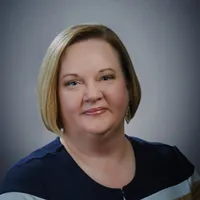
Nick Avery
Chief People Officer, Carta
Beyond rigid plans: Culture and AI radically transform HR for successful change.
Episode 354 · December 16, 2025 · 16:09
Beyond rigid plans: Culture and AI radically transform HR for successful change.
Key moments
In Nick's words
“when it comes to integration, a plan is great and being able to kind of deploy plan B quickly is even better.”
“Communication is key and it sounds basic, but it's, it's true.”
“I'm contemplating just canceling them all and, you know, freeing up time and concentrating on connecting with people in other ways.”
Transcript
Read the transcript3,080 words
IntroWelcome to the Built by People podcast, where we share the stories and insights of the world's top executive leaders. Join us as we dive deep into the minds of executives, uncovering their strategies, challenges, and triumphs in shaping today's workforce. Now let's jump in and get started with our next guest.
HostWell, Nick, thank you so much. Really excited to have you on the podcast for the Built by People and really just excited to learn more about you and learn more about what you've done in your career and get to know you a little bit better and also bring you into our community. So Nick, thank you for joining us today.
GuestJames, great to be here. Thanks for having me.
HostWell, all right. As a first question, I always love to open up. You know, people are always focused and wondering what's happening this next quarter. What are we doing? So for you, what is the top priority that you have coming up this quarter?
GuestSo we are operating in a very exciting and fast-moving part of the private markets. And we say we're building an ERP for private capital, which is all about connected, insight-driven portfolio management. And we've recently done two acquisitions. So one of them was an LP analytics firm in the UK and the other was a loan operations firm that we acquired here in the US. And so, look, the next quarter for us is all about integration, getting those people on board and embedding them in all things Carta. And, you know, as I'm sure a lot of your listeners will know, that takes a fair bit of time, effort, and energy.
HostYeah, especially when you're working across multiple borders, multiple countries. Yeah, and I guess looking at that, one of the, one of those next questions that we usually talk about is obviously what are the biggest challenges facing you, right, in the HR space? I would love to dive into that a little bit more because now this becomes very much a very cohesive goal as a company, and I'm sure multiple people in multiple countries trying to organize around that information. So for you, looking at that as, as a challenge, How are you going to overcome that type of challenge for the company to help organize everybody into that?
GuestI think that having done a few of these integrations over the course of my career, one thing's pretty clear and they kind of live or die by the success of the cultural integration that you achieve. And culture is a funny thing. You know, we talk about culture development and culture management, like it's something that can be kind of planned and orchestrated, but really it isn't. It's far more accidental and it's a collective experience. So, you know, I think what I've learned is that when it comes to integration, a plan is great and being able to kind of deploy plan B quickly is even better. So, you know, as we think about these two acquisitions and now the integrations where, you know, we're working to a plan. So, like every good HR person, we've got our work streams all carved up and people working across them and they've identified areas where we need to bring people up to speed to either merge the GTM sales folks or to, you know, build new products or bring people across and harmonize benefits. But really what we've got to do is appeal to the hearts and minds of the people that are coming across and make them feel like they're part of this bigger company. You know, 6 weeks ago, most of them didn't know this was about to happen and, you know, now here they are. So that's the— Yeah. Trey.
HostYeah. Well, and it's interesting that you're talking about it because one of the things we've heard a lot of is it's around communication, right? And being able to deliver the right communication to the right departments at the right time to make sure that there is that adoption of what we're trying to do. So I am curious, how have you, how do you guys communicate that out? How do you get that, those teams bought in? How do you make them aware of? Hey, we might need help over on this side. It might be out of your purview right now, but we need to, we need to bring you into that. How do you get them to buy into that, that new goal and that mission?
GuestYeah, it's not one thing. It's, it's many things. So we were very thoughtful around how we announced this to both, both of the companies that we bought, but we've been very careful to also spend time with them in the weeks that follow. So we sent a bunch of people to the UK where one of the companies is, and we had people on the ground there for a week. We ran a bunch of learning sessions with them, teaching them, you know, the history of Carta, but also sharing with them the vision for the future and really importantly showing them how they play a role in that future. And I think that's landed pretty well so far. So more of that, I guess, is pretty important. And then, you know, at a management level, we've had two of our executive team who are assigned as like the accountable executives and their job is to make sure that at every touchpoint across the two companies that we're, you know, we're surfacing the issues that need to be addressed and answering questions that people have so that there's not this risk of, you know, people falling into assumption. And that's where things go off the rails is where people assume one thing, but in fact, the opposite is true. And so, you know, that's, that's where, you know, you're right. Communication is key and it sounds basic, but it's, it's true.
HostYeah, no, it is. It's one of those. It's been interesting to hear from other leaders, right? Where it seems that that ends up being the ultimate thing that has to be the main driver, even though it sounds so simple, right? Hey, we just, we should let them know. And it's like, well, everyone hears things a little bit differently. So how do we get that communication to them in the right way? So now thinking of that, I'm curious if I were to come in and shadow you for a week, uh, where would you see me spending most of my time, um, on things that maybe don't feel as strategic?
GuestWell, you'd spend a lot of time in meetings, and they don't feel strategic very often at all. And, you know, it's, it's a tough balancing act. We, we, we want people to be back in the office. We want people to connect. We want them to spend time with one another. But, you know, meetings can often be a time suck as much as they are an opportunity to connect. So, I've recently been wondering about the need for one-on-ones as an example. So, I'm contemplating just canceling them all and, you know, freeing up time and concentrating on connecting with people in other ways. I know conventional wisdom says that you should have one-on-ones. There's a lot of literature that says that one-on-ones drive engagement and in the absence of one-on-ones, engagement falls and it's binary, but I think it's more nuanced personally. So, you know, a lot of meetings, but look, there's a lot of tactical things you do in a job like this that you don't imagine until you get into it. So, I could be doing another 100 things beyond meetings as well, everything from handling a structure issue to a performance challenge, a real estate inquiry, or any number of things. Yeah.
HostNo, I actually really like that because I think we've all been in organizations where it seems like you're stuck in meetings a lot, right? And then all of a sudden you see, oh, I've got another one-on-one meeting I've got to get to and take care of that, and it ends up being which is always good, right? You get that personal connection. But always at the end of the day, sometimes like, I don't know if we needed to have that this week, right? I think we all get into that moment. So I appreciate it. I think that's great. You know, looking at obviously more of like, you know, the hair on fire things, right, that tend to come up right now. What is keeping you up at night?
GuestYeah, well, not too many things keep me up at night. I sleep pretty well other than Australian football, which just happens to be at a very inconvenient time of the night. So it's pretty hard to keep up with that from here in New York. But I think the challenge that we're all facing in this space is really AI. And someone described it to me recently as a tsunami that's coming at us. And I don't think it's a tsunami that's coming at us. I think it's, you know, it's like we were out on the ocean already and we kind of bobbed over the top of it and we watched it go past and now we're trying to catch up to it. And, you know, I think We've done a pretty good job here at driving adoption. No issue there. I mean, we're an AI-centric company. And so, you know, when you think about AI in the terms of personal productivity and yeah, I mean, tick. The next challenge though is embedding AI to make us more efficient collectively. And that's where agents come in. And I think, you know, that's something that is more difficult to wrestle down and deploy. And then there's a bunch of tools that are available and some of them are good, some of them aren't very good. We will assess those as they come along. But yeah, look, I think that's something that gnaws at me a little, is that, you know, we've got to work on that. And we've recently built an AI strategy for the people team, and we're sort of midway through standing that up.
HostYeah, well, I'm going to skip one of our questions, go to this one, because as we're talking about tools, I am curious, are there any tools right now, um, or partnerships that you find are like, these are absolutely critical, we have to have these in place for us to really function properly and well and efficiently within our teams?
GuestWell, yeah, I mean, we're a Workday shop, so, you know, that's, that's mission critical. And I think Workday very quickly bringing themselves up to meet this challenge. And so we're keen to see what's possible with them. It's a core part of everything we do. It's like a central nervous system and you kind of can't operate without it. So obviously Workday, we've got a couple of others that are important to us. We use Lattice, you know, that's a, sort of performance management, I guess, a career development and connectivity tool. We use Jira, which is a tool that's really important in a sort of a more technical sense, and, you know, we're starting to use that as we become more agile and adopt, you know, sort of product-centric ways of working. And then another area where I think there's some really interesting potential, we're a BetterUp partner, And we use them in a pretty traditional coaching sense at the moment, but they've got a very interesting performance intelligence capability they're deploying and we're looking to test that. And I have some, you know, I've got really great hopes about that. I think, I think that's got a lot of promise.
HostYeah, no, I love the amount of tools that are being used to, from what I'm hearing, enhance obviously you guys, but also Understanding the employees and how to better work with them, probably on all fronts, not just a communication front, but obviously performance and how do I understand them? How do I work with them? And all those things. So that's, that's amazing. I love hearing that because, you know, it's, I think it's hard for a lot of companies to sift through that right now. Right. Everybody talks about AI. It's, you know, like you said, it's the tsunami. It's bobbed over. We're now trying to catch up to what's there. So how do I, how do I sift through the noise of everybody saying we're AI, right? Like what, what does that mean and how does that actually affect me in my day-to-day operations?
GuestYeah, I almost don't want to hear another vendor tell me that they're an AI tool. So, you know, I expect that they've got AI in there now. So I'd rather hear about the outcome and how they're driving something that's different than we've seen before. That's most interesting.
HostYeah, totally. I guess looking at all these tools, right? And, and looking at what could or what would you want out of them if you were to fix something or you had the wand, right? And you can just say, hey, this boom, this is what I need. What is something that you think, man, that would really enhance and help us right now?
GuestI think the area that I'd call out is performance management. I think it's one of the worst things ever invented by HR and forced upon organizations. I mean, I really just hate it. I can't think of anything which disappoints so many people so consistently. And 50 years from now, they're going to be studying why we were so obsessed with performance management processes. And I'm really excited about the opportunity for AI to play a role in that. Performance management processes are different to measuring performance and providing feedback. Those two things we tend to conflate in HR, but they're separate. It's very important to measure performance. It's very important to give people feedback. I think too many people rely on their performance management process to do that and wonder why it doesn't deliver good outcomes. So, I think AI has a lot of— there's a lot of opportunity with AI tools to bring sort of real-time performance feedback. I like it. I've recently started watching baseball. If you look at baseball players, when they come off the field, they go into the dugout. The first thing that they do is they reach for the iPad. And the iPad presumably has a bunch of data on it around how they've just performed in that most recent inning. You know, I think we can, we can approximate that in the world of work and that's the future and that's what AI is going to do for us.
HostYeah, no, I think you nailed it, right? And prior to this, we were talking about sports, right? And having the data is really important. That's how I am able to rank myself, right? And I think that's the bigger part is being able to then use that data for my own personal growth. Right, and be able to set my own growth goals as well while aligning with the company and to what they're trying to achieve. So, I couldn't agree more with that. In some of the closing questions, if I were to come back in 12 months, what would you hope has changed in the HR org?
GuestSo, I'm relatively new to Carter and the CPO role here. So, in 12 months, if you came back, I'd expect you to see a a refreshed leadership group that's up and running and a bunch of people in new roles and importantly working in a new sort of operating model. So, you know, I shared with the team about 4 weeks ago that we're going to become a product-centric people team. And, you know, what that means is really deploying the principles of product management. So, you know, think a set of defined users, clear product sets, and a roadmap that shows us where we're going. So, you know, I think you'd come back and you'd see all of that up and running. But more importantly, I think you'd come back and you'd see that we've been able to successfully bring those businesses I mentioned earlier on at Carta. I mean, that's ultimately the work that we do. It's about, you know, how we're impacting the business and I'd hope that they've been successfully integrated by then.
HostYeah. Well, I mean, to give you guys a plug, the last few companies I've worked at, we've used Carta and I love it. It's incredibly easy. I can track everything on my side as an employee of that. It makes my life easy, right? I love seeing the weekly and monthly updates of how much I've, I've vested so far. So I love it. To leave the company or to leave more to the people listening to the podcast, what parting advice would you like to share with our community?
GuestI would like the community, all of us, to take on more risk. We're not a control function. And I think sometimes we've been either led to believe or have become comfortable and want to believe that we're a control function. And, you know, if we set rules and deliver processes, then we'll get the kind of outcomes that these companies want and need. But I think we're at a time where something different's needed. Now's the time for big ideas. It's the time for innovation. And I think that we've got to remember what Einstein said about insanity, trying to solve problems with the same thinking that created them is just nonsense. I think that's what we should be mindful of. And I promise that that's what we're going to do here at Carta is rethink everything.
HostI love it. I love pulling in Einstein for that. Well, Nick, thank you so much for joining us today on the Built by People podcast. It's been a pleasure having you involved, and hopefully we'll hear more from you over the next few months. So thank you.
GuestThanks for having me, James.
More conversations like this