Episode 353 · December 8, 2025 · 13:09
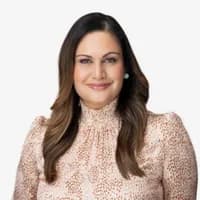
Valentina Gissin
Chief People Officer, Curana Health
Unlearn HR Best Practices: Drive Business Impact with First Principles
Episode 353 · December 8, 2025 · 13:09
Unlearn HR Best Practices: Drive Business Impact with First Principles
Key moments
In Valentina's words
“Don't design the things that you know have worked somewhere else. Solve problems from root causes and design from first principles. And don't measure yourself based on vanity metrics. Measure yourself based on business outcomes.”
“The amount of noise hitting providers from every which direction is only increasing. And so clarity and simplicity for them is incredibly important.”
“Bias for action on the healthcare frontline could be very dangerous. We actually wanna bias for conservatism. And so we're going to most likely create that umbrella set of cultural tenets.”
Transcript
Read the transcript2,047 words
IntroWelcome to the Built by People podcast, where we highlight the stories and insights of the world's top HR leaders. Now, let's Let's get started and welcome our next guest.
HostI'm excited to welcome Valentina to the Built by People podcast. Valentina, thank you so much for joining us today. And as a starting question, I always love to ask if you could share a little bit more about your career journey.
GuestYeah, I would love to. So my career journey is very much shaped by the fact that I am an immigrant and an only child. And so while I wanted to be an artist when I was younger, immigrant parents were like, do you mispronounce that? Did you mean doctor or lawyer? And so I became a lawyer and spent, you know, the first 5 years or so of my career as a tech lawyer doing some really cool new stuff that was coming out around in that time around the intersection of law and technology. And then went and pursued my dream of being a screenwriter, which I did for some period of time. During that time, I became financially responsible for my parents.. And so I had to leave the arts and go briefly back to the law. And then I was recruited out of the law very serendipitously by Bridgewater Associates to run the core sort of central security program for the investment assets of that, which is the world's largest hedge fund, which was an incredible opportunity in a lot of different ways. I didn't know anything about, you know, how to practically do security. Security. I didn't know anything about managing people, and suddenly I was responsible for $160 billion worth of IP, which was a really cool job. And I was hired to do that as sort of a general management associate, which was sort of a Bridgewater-like Swiss Army knife. Ray Dalio was one of these creatures. The CEOs were all these creatures. And so, when it was time for my management rotation, I was very happily drafted into building out and scaling the core people function. Which was the investment associate program. So it's like being responsible for the lawyers at a law firm or the, uh, bankers at a bank. It was the brilliant people who did the work of understanding the world and beating markets. And what I learned in that role was just the way that I do people now, which is I didn't report up into HR, I reported up into the investment engine. And I wasn't gold on HR metrics. I was gold on like, Valentina, we need to start beating emerging markets in a year. Go do things with people to make that happen. And so it really shaped my personal philosophy and approach to people, which is don't design the things that you know have worked somewhere else. Solve problems from root causes and design from first principles. And don't measure yourself based on vanity metrics. Measure yourself based on business outcomes. And so I took that show on the road. I went and was in a senior HR leadership position at Chewy. And then this is my third sort of CPO stint. And I really have been sort of gravitating towards complex problem sets and increasingly mission-driven organizations.
HostAltina, what ultimately brought you to Carvana Health? And what about the mission of the organization feels most personal or energizing to you?
GuestYeah, absolutely. So Curana approached me. I was becoming very fascinated and obsessed with the healthcare economy and just ecosystem in this country, as you know, one of the most FUBAR things in the world besides, you know, perhaps the world itself. And Curana is, you know, Garner was a digital health company. Curana is, that is going to solve, you know, huge pieces of this problem at scale. Curana is solving them in a very targeted way for a particular segment of our population, which is our seniors, are one of our most vulnerable and often overlooked segments, and also one that is exploding in size. And so the notion, and also, you know, I had my own personal experience with my parents and having become financially responsible for them at the age of 33 and then being in care, the importance of having a trusted resource that you can know is actually invested in the longevity, the happiness, the health, and the dignity of your aging parents, aging grandparents is, is so important at this moment in time. And so for a company like this to be able to really succeed and do this well would be so transformative for that population that it became very clear to me that like taking my particular toolkit of building really high-performing, high-output cultures in the complexity of healthcare services would be a fascinating experiment and potentially like a really cool and interesting outcome that could impact a lot of— Healthcare HR has its own set of challenges.
HostI think about burnout, staffing, regulation, the emotional work, and, and the purpose that brings on that emotion. What do people often misunderstand about building a people strategy in that kind of environment?
GuestYeah, I think, think it's a couple of things. I think one is really understanding what motivates your providers, your frontline, and what their relationship is to your company. Do they understand the goal and mission and are they bought into it? Or is it just a place that they get a paycheck from and their focus is on their day-to-day facility partners and patients? And so really understanding like what can you centrally do that is actually going to make an impact on your frontline's ability to heal and stay in that genius zone is probably the most important thing that we need to be thinking about as people leaders in healthcare. Because the amount of noise hitting providers from every which direction is only increasing. And so clarity and simplicity for them is incredibly important.
HostI want to talk, Valentina, now about building culture across clinical teams. Clinicians and support teams live very different day-to-day realities. What have you learned about building a unified culture across such varied roles?
GuestYeah, we've learned a couple of things. I think first and foremost is, and this isn't that different from say building a culture at a company like Chewy, where while we were one company, we had three very different populations in, you know, a large corporate population, a very large US customer service population, and a very large US fulfillment installment population. And what we did was essentially create an umbrella culture that may manifest differently. The culture in action might look a little different from business unit to business unit. And so, we're doing something very similar here. We're actually in the process of it right now, which is there's a set of foundational values that apply to everyone. And those are things like respect, candor, integrity, and we're currently doing the work of making them differentiated because who doesn't care about respect, candor, and integrity? Any company can say that. But then there's a set of cultural tenets that actually would be counterproductive in a clinical environment, but might be exactly what we want on our corporate health plan team. So for example, bias for action. We want our administrative folks to move fast, build workflows, iterate, improve, innovate, quickly. Bias for action on the healthcare frontline could be very dangerous. We actually wanna bias for conservatism. And so we're going to most likely create that umbrella set of cultural tenets. And then for non-clinical, we call it administrative or corporate staff, an additional set of leadership principles that, um, are specific to the type of high-performance culture you would build in corporate that is very different from the high-performance culture you would build in clinical.
HostValentina, what's one initiative you're especially proud of that's had a meaningful impact on culture, engagement, or retention at Carana Health?
GuestSo, great question. There's many things that I'm proud of. I think surprisingly, one of the most impactful things that we've done is reintroduced the good old-fashioned exit interview. And I am definitely in the new school of a lot of things, but I'm a bit on the old school of exit interviews. I actually think that they are incredibly valuable because it is the time that the gloves come off. And yes, of course, it's all about understanding how to internalize and metabolize the information and that the gloves have come off and the person's probably angry. At the same time, you build that up thematically, and you start to get really rich data that people don't always offer in any other situation because they're worried about damaging the employer-employee relationship. And so we've been able to get insights that our engagement surveys weren't yielding, that our listening sessions weren't yielding, just by bringing back like, you know, a 100-year-old HR mechanism.
HostAnd how has your philosophy on leadership evolved as you've stepped into the chief people officer role?
GuestAre there any moments that reshaped how you think about developing managers? Yes. Many. I would say perhaps one of the most valuable lessons that I've learned, and it's based on— most of my most valuable lessons have come either through mistakes that I've made that I've then thoughtfully, you know, cause analysis, analyzed myself, or from feedback from people who work for me. And that I have found they are so smart. They have the best view. Like, they really, have the best synthesis of your overall leadership are your direct reports, perhaps more so than your manager. And so this was feedback that came to me through one of my direct reports who basically said, you're wielding your influence a little carelessly, and I think you're talking people into taking jobs that might not be the right jobs for them. And she was absolutely right. Like, I, I, I no longer seek to influence. I don't think that influence is actually a useful skill when you are in the C-suite, because what you're doing is talking people into things that you should be getting alignment on. So instead of influence, I interrogate. I try to find out where people are, try not interrogate the person, interrogate the problem, but try to find out where people are and ask questions to drive alignment rather than, you know, using my ability to tell a good story to influence someone's decision, because in the in the end, if you have influenced someone into doing something that they didn't want to do, you'll fall out of alignment very quickly.
HostBelitina, love that perspective. And as we wrap things up here, my final question is, if you could give one piece of advice to rising HR leaders listening today, what would you want them to walk away with?
GuestYeah, I may be a bit of a broken record because I give this piece of advice a lot. But I get a lot of questions from HR leaders who say, you know, how do you become a real business leader as an HR leader? How do you get a seat at the table? And my answer is to stop asking for a seat at the table. Stop asking for permission to touch the business problems and the innards of business processes and organizational development. Find a real business problem that has a people or process root cause, because they almost all do, and solve it., and then find another business problem and solve it, and then take your seat at the table. Drive faster product delivery because you fix the product comp model. Create more room for clinical judgment by introducing just-in-time guidance directly into the clinical workflow. Find people and process solutions to business problems. They are everywhere. And after you make the company better in a couple of ways through people and process that people don't consider, HR, you will get your seat at the table.
HostBeltina, thank you so much for joining us today on the Built by People podcast. It was a pleasure to have you involved.
GuestIt was a pleasure to be here. Thanks so much, Dave.
More conversations like this